UN Chief Urges NPT Revival at 11th Review Conference 2025
Synopsis
For the first time in decades, global nuclear warheads are on the rise — and UN Secretary-General António Guterres is sounding the alarm. At the opening of the 11th NPT Review Conference in New York, he warned of 'collective amnesia' around nuclear weapons and called AI and quantum computing new accelerants to an already dangerous crisis.
Key Takeaways
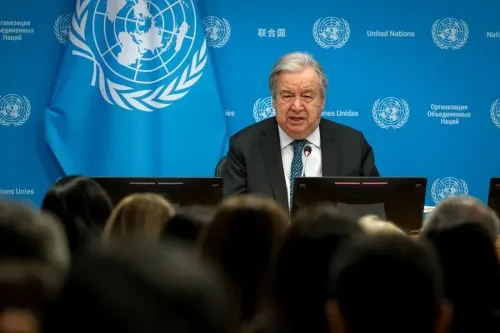
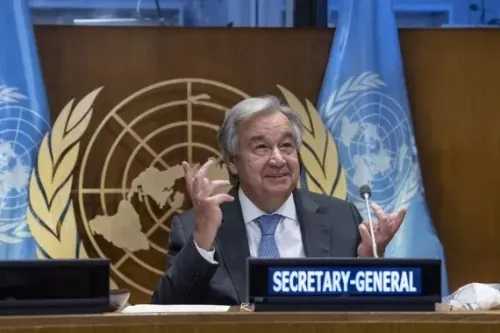
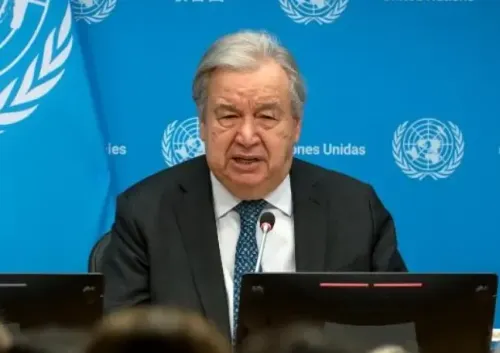
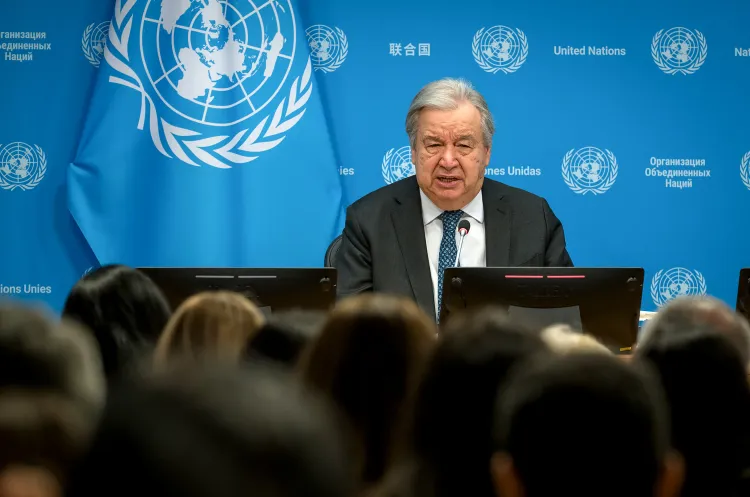
UN Secretary-General António Guterres opened the 11th NPT Review Conference at UN Headquarters, New York on April 27, 2025 , warning the treaty is actively eroding.
For the first time in decades , the number of nuclear warheads globally is on the rise , reversing a long disarmament trend.
Guterres called nuclear testing "back on the table" and described a dangerous state of "collective amnesia" around nuclear weapons.
He urged states to reinforce the norm against nuclear testing, strengthen IAEA safeguards, and agree on measures to prevent nuclear war.
The UN chief flagged artificial intelligence and quantum computing as new compounding threats to nuclear security that the NPT must address.
The conference runs through May 22, 2025 , and involves 191 state parties to the NPT, the world's most subscribed arms-control treaty.
UN Secretary-General António Guterres on Monday, April 27, issued a stark warning at the opening of the 11th Review Conference of the Parties to the Treaty on the Non-Proliferation of Nuclear Weapons (NPT) in New York, calling on member states to urgently "breathe life" back into the landmark treaty before the threat of nuclear annihilation becomes irreversible. The conference, hosted at United Nations Headquarters, runs through May 22, 2025.
Key Developments at the NPT Review Conference
Guterres opened the high-stakes gathering by painting a sobering picture of global nuclear security. He warned that the NPT — long considered the bedrock of international non-proliferation architecture — is actively eroding, with commitments left unfulfilled and trust wearing dangerously thin. Notably, he flagged that for the first time in decades, the number of nuclear warheads is on the rise, reversing a decades-long trend of gradual disarmament.
"This conference provides a timely opportunity to stand together and safeguard humanity from the grave threat of nuclear annihilation," Guterres said, according to Xinhua news agency. He described the current global atmosphere as one of "collective amnesia" — a dangerous forgetfulness about the existential consequences of nuclear conflict. "Nuclear sabers rattle once more," he warned, adding that nuclear testing is now "back on the table."
What the UN Secretary-General Said
Guterres outlined a three-pronged path forward: reinforcing the norm against nuclear testing, strengthening safeguards under the International Atomic Energy Agency (IAEA), and reaching multilateral agreement on concrete measures to prevent nuclear war. "We need to breathe life into the treaty once more," he stressed, urging all signatory states to honour their standing commitments under the NPT framework.
He also called for renewed political will around disarmament, framing it as "the only true path to peace." His remarks carry particular weight as geopolitical tensions — from Russia-Ukraine to North Korea's missile programme and Iran's nuclear activities — continue to strain the global non-proliferation regime.
New Technologies Compound the Nuclear Threat
In a dimension that sets this review conference apart from earlier editions, Guterres specifically highlighted the compounding danger posed by rapidly evolving technologies, including artificial intelligence (AI) and quantum computing. He argued that the NPT must now grapple with the complex nexus between nuclear arsenals and next-generation technologies — a challenge that did not exist when the treaty was first signed in 1968.
This comes amid growing concern among arms-control experts that AI-enabled early-warning systems and autonomous weapons platforms could dramatically lower the threshold for nuclear escalation, potentially bypassing human decision-making in crisis scenarios.
Impact on Global Security and What Happens Next
The NPT, which entered into force in 1970, remains the most widely subscribed arms-control treaty in history, with 191 state parties. However, successive review conferences — including the 2015 edition — have ended without consensus, reflecting deep divisions between nuclear-armed states and non-nuclear nations demanding faster disarmament progress.
The 2025 Review Conference faces a particularly fraught environment. Critics argue that nuclear-weapon states, including permanent UN Security Council members, have consistently failed to meet their Article VI disarmament obligations, eroding the treaty's moral authority. Meanwhile, states outside the NPT — India, Pakistan, Israel, and North Korea — continue to develop or expand their arsenals.
"With your support and engagement, the treaty can remain an active and strong foundation for a world free of nuclear weapons in our fast-moving age," Guterres said, striking a note of cautious optimism even as he acknowledged the scale of the challenge ahead. The outcome of this four-week conference will be closely watched as a barometer of whether multilateral nuclear diplomacy can still deliver results in an increasingly fractured world.
Point of View
' but what mainstream coverage misses is the structural hypocrisy at play: the very nuclear-weapon states that dominate the Security Council have systematically failed their Article VI disarmament obligations, making the NPT a treaty that binds the weak while exempting the powerful. The addition of AI and quantum computing to this equation is a genuine escalation risk that policymakers are dangerously underprepared for. India, which remains outside the NPT, watches this theatre with particular strategic interest — the outcome of this conference will shape the regional security calculus for years to come.
NationPress
20 Sept 2026
Frequently Asked Questions
What is the NPT Review Conference 2025?
The 11th Review Conference of the Parties to the Treaty on the Non-Proliferation of Nuclear Weapons (NPT) is a major multilateral summit held at UN Headquarters in New York from April 27 to May 22, 2025. It brings together 191 state parties to assess compliance with and progress under the NPT, which has been the cornerstone of global nuclear arms control since 1970.
Why did Guterres warn about nuclear weapons at the UN in April 2025?
Guterres warned that the NPT is eroding, commitments remain unfulfilled, and — critically — nuclear warheads are increasing globally for the first time in decades. He described a dangerous 'collective amnesia' and said nuclear testing is 'back on the table,' urging immediate recommitment to disarmament and non-proliferation norms.
How does artificial intelligence threaten nuclear security?
AI and quantum computing can potentially automate early-warning systems and weapons platforms, lowering the threshold for nuclear escalation by removing human decision-making from crisis scenarios. Guterres specifically flagged these technologies as new compounding dangers that the NPT framework must urgently address.
What does the NPT require of nuclear-weapon states?
Under Article VI of the NPT, nuclear-weapon states — the US, Russia, UK, France, and China — are legally obligated to pursue negotiations in good faith toward nuclear disarmament. Critics argue these states have consistently failed to meet this obligation, which has undermined the treaty's credibility and fuelled frustration among non-nuclear signatories.
Which countries are outside the NPT?
India, Pakistan, Israel, and North Korea are not parties to the NPT. North Korea withdrew from the treaty in 2003. All four countries possess or are believed to possess nuclear weapons, and their arsenals operate outside the NPT's verification and safeguard mechanisms.