UN chief warns mass atrocity risk rising amid 120+ global conflicts
Synopsis
With more than 120 conflicts raging in 2025 and autonomous weapons lowering the threshold for mass harm, UN Secretary-General Guterres told the General Assembly that the Responsibility to Protect norm — now 21 years old — is being tested as never before. His message: the international community keeps arriving too late, and the cost of that pattern is measured in mass graves.
Key Takeaways
UN Secretary-General António Guterres warned on 7 July that mass atrocity risk is rising sharply amid more than 120 active global conflicts in 2025.
Emerging technologies — including autonomous drones and online disinformation — are amplifying the danger, according to Guterres.
The session marked 21 years since world leaders adopted the Responsibility to Protect (R2P) principle at the UN.
The report discussed was the 18th since R2P was adopted, calling for stronger implementation for a new era of geopolitical risk.
Guterres urged member states to ratify and implement the Convention on the Prevention and Punishment of the Crime of Genocide .
The UN chief cautioned that early warning signs are 'too often ignored' and responses remain 'too little, too late.'
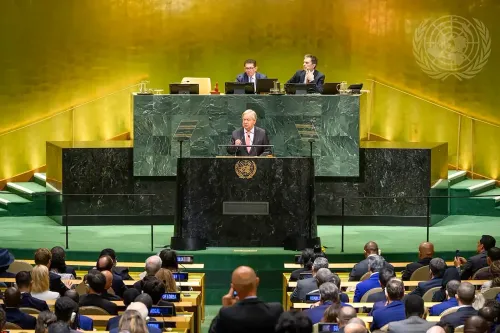
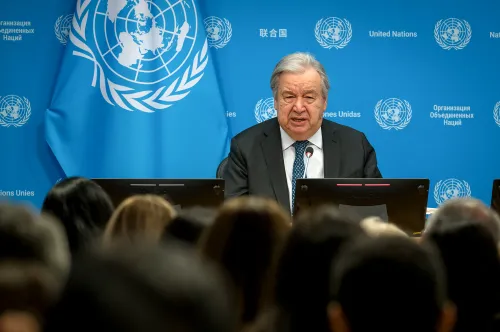
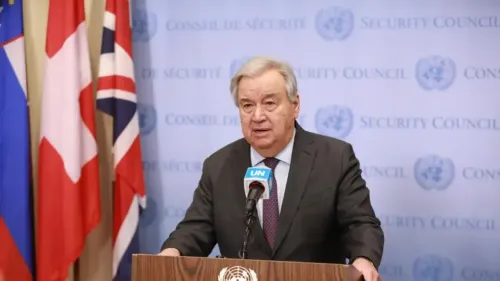
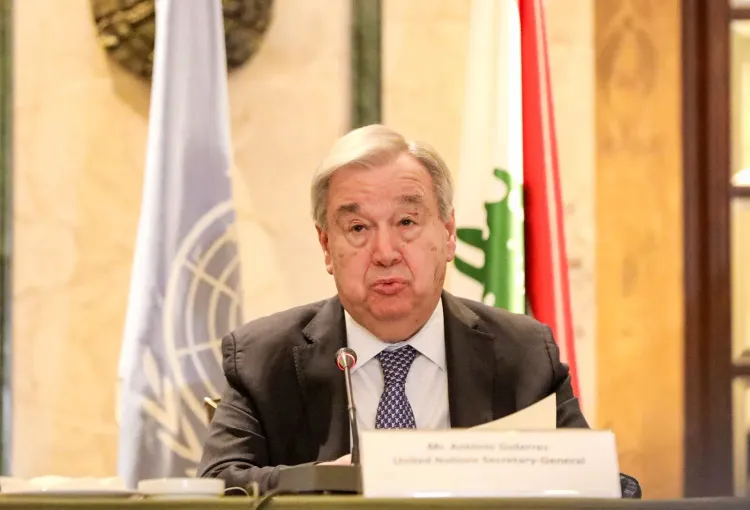
UN Secretary-General António Guterres on 7 July issued a stark warning to the UN General Assembly that escalating global conflicts, widespread impunity, and emerging technologies are sharply raising the risk of mass atrocities — urging member states to act 'before warning signs become mass graves.' The remarks were delivered on his behalf by his chef de cabinet, Earle Courtenay Rattray, during a session on the Responsibility to Protect (R2P).
Scale of the Crisis
Guterres noted that in 2025, the world was contending with more than 120 active conflicts, which he described as 'more protracted, more complex, and more interconnected' than at any recent point in history. He warned that early warning signs are routinely dismissed, and that international responses have repeatedly arrived 'too little, too late.'
'We see widespread violations of international law and a growing sense of impunity,' Guterres said in his prepared remarks.
How Technology Is Amplifying the Threat
The secretary-general flagged a new and accelerating dimension to atrocity risk: autonomous and semi-autonomous weaponry, including drones capable of inflicting mass casualties, combined with the near-instant spread of online hate speech, misinformation, and disinformation. Critics and rights groups have long argued that the international community has been slow to develop legal frameworks that keep pace with these technologies.
Notably, this convergence of conventional conflict and digital incitement has been a feature of several recent crises, from the Sahel to Myanmar, where social media platforms were found to have amplified violence.
The R2P Commitment at 21 Years
Guterres recalled that 21 years ago, world leaders enshrined the Responsibility to Protect principle — a commitment that each state bears primary responsibility for shielding its own population from genocide, war crimes, ethnic cleansing, and crimes against humanity. When national authorities fail, UN member states have collectively committed to timely and decisive action under the UN Charter.
The report under discussion at the session was the 18th since the R2P commitment was adopted, and it takes stock of two decades of progress while making specific recommendations to strengthen the norm for what Guterres called 'this new era of instability and geopolitical risk.'
What the UN Is Calling For
'The Responsibility to Protect commitment is more vital than ever,' Guterres said, urging member states to join and implement relevant international legal instruments, including the Convention on the Prevention and Punishment of the Crime of Genocide. He stressed that while prevention must begin at the national level, it can and must be supported through collective international action.
'Let's ensure that atrocity prevention and protecting populations becomes a permanent and universal practice everywhere,' he said.
What Comes Next
The session's recommendations are expected to feed into broader UN reform discussions on conflict prevention architecture. With geopolitical fault lines deepening between major powers, analysts warn that the Security Council's ability to authorise collective action under R2P remains structurally constrained — a tension the secretary-general's report does not fully resolve.
Point of View
But the structural problem goes unaddressed: the Security Council — the body that must authorise collective R2P action — is paralysed by great-power rivalry on virtually every active conflict. Twenty-one years of R2P have produced a robust norm and a thin enforcement record. The 18th report may sharpen the language, but without a credible trigger mechanism that bypasses veto gridlock, atrocity prevention remains aspirational. The real test of this session is whether any member state tables a concrete proposal — not just a recommitment to a principle that perpetrators have learned to ignore.
NationPress
5 Oct 2026
Frequently Asked Questions
What is the Responsibility to Protect (R2P) principle?
The Responsibility to Protect is a UN commitment adopted 21 years ago under which every state bears primary responsibility for protecting its population from genocide, war crimes, ethnic cleansing, and crimes against humanity. When a state fails to do so, UN member states have collectively committed to taking timely and decisive action in line with the UN Charter.
Why did Guterres issue this warning in July 2025?
Guterres was addressing the UN General Assembly during a session on R2P, coinciding with the release of the 18th report on the commitment's implementation. He cited more than 120 active conflicts in 2025 and warned that impunity, autonomous weapons, and online disinformation are compounding atrocity risk.
How are emerging technologies increasing the risk of mass atrocities?
According to Guterres, increasingly sophisticated and autonomous weaponry — including drones — can inflict mass casualties with limited human oversight. Simultaneously, online hate speech and disinformation spread and amplify instantly, as seen in recent conflicts across the Sahel and Myanmar.
What action is the UN calling for?
The UN is urging member states to join and implement international legal instruments, particularly the Convention on the Prevention and Punishment of the Crime of Genocide, and to treat atrocity prevention as a permanent, universal practice rather than a reactive response.
Who delivered Guterres' remarks to the General Assembly?
Guterres' remarks were delivered on his behalf by his chef de cabinet, Earle Courtenay Rattray, at the UN General Assembly session focused on the Responsibility to Protect.