CM Yogi: 157 UP Railway Stations Now Modernised
Synopsis
Uttar Pradesh Chief Minister Yogi Adityanath announced on 31 October 2026 that 157 railway stations in the state have been modernised, highlighting clean coaches, improved hygiene, and attributing the progress to political will and clear governance policy.
Key Takeaways
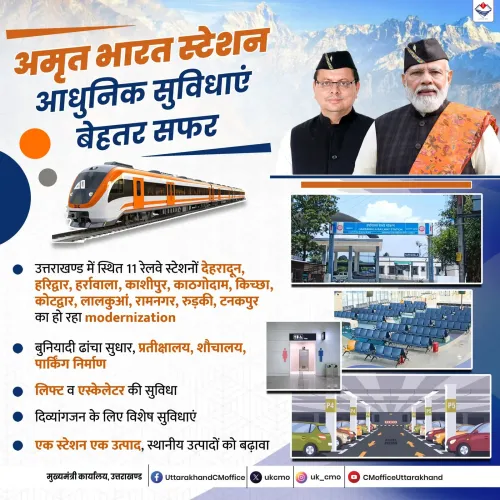
157 railway stations in Uttar Pradesh have been modernised, according to CM Yogi Adityanath's post on 31 October 2026 .
The Chief Minister emphasised cleanliness and hygiene at both stations and coaches as key markers of the improvement.
He attributed the transformation to 'political will, clean intent, and clear policy' — framing infrastructure outcomes as a governance argument.
Railway station redevelopment in UP aligns with the national programme that gained momentum after 2014 under the Ministry of Railways .
The Swachh Bharat Mission (launched 2014 ) placed explicit cleanliness mandates on public transport facilities, including railways.
Uttar Pradesh has consistently featured among the leading states on national station redevelopment lists.
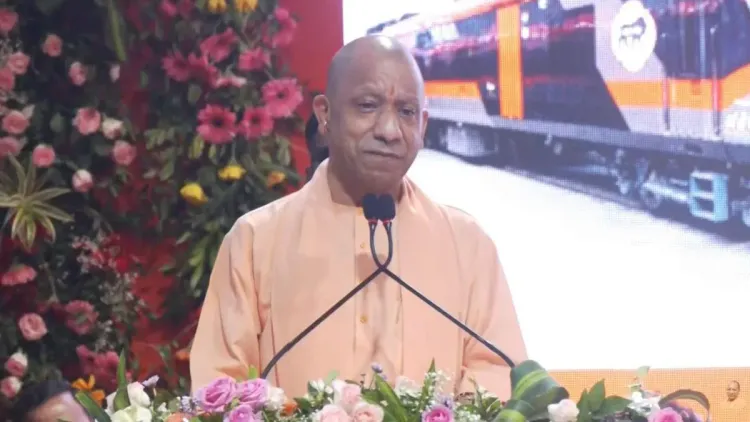
When a state the size of a small country transforms 157 railway stations into modern commuter hubs, the numbers demand attention — and on Saturday, 31 October 2026, Uttar Pradesh Chief Minister Yogi Adityanath made sure they got it, crediting the overhaul to three things: political will, clean intent, and clear policy.
Posting on X, the Chief Minister said, 'उत्तर प्रदेश में 157 रेलवे स्टेशन आधुनिक हुए हैं... रेलवे स्टेशन और कोच साफ-सुथरे हैं। हाइजीन का ध्यान रखा जाता है...' — 'In Uttar Pradesh, 157 railway stations have been modernised... the stations and coaches are clean. Hygiene is being taken care of...' He then sharpened the message into a governance maxim: 'This happens when there is the will to work, clean intent, and clear policy.'
157 Stations and the Scale of UP's Railway Footprint
Uttar Pradesh is India's most populous state and one of its most railway-dense, with hundreds of stations connecting cities, towns, and villages across a vast geography. The railway network here is not a convenience — for millions of daily commuters, it is a lifeline. Station redevelopment programmes received significant federal momentum after 2014, when the Ministry of Railways began systematically listing stations for infrastructure upgrades across the country, with UP featuring prominently on those rosters.
The figure of 157 modernised stations cited by the Chief Minister reflects that sustained push. Improved platforms, better lighting, clean waiting areas, and hygienic coach standards are among the visible markers of the redevelopment drive — changes that affect the daily experience of ordinary passengers rather than headline infrastructure alone.
Swachh Bharat's Long Shadow Over Railway Hygiene
The emphasis on hygiene in the Chief Minister's post is not incidental. The Swachh Bharat Mission, launched nationally in 2014, placed explicit obligations on public transport facilities — including railways — to meet cleanliness benchmarks. Railway stations became a visible test case for the mission's credibility, and their improvement (or lack of it) has been tracked publicly ever since.
CM Yogi's framing — clean stations as evidence of clean governance — maps that legacy onto a state-level political narrative. It is a well-worn register for BJP-led administrations: outcomes as proof of intent, infrastructure as character. The subtext is pointed, even if the post stays studiously descriptive.
The Governance Argument Beneath the Infrastructure Claim
What makes this post more than a routine infrastructure update is the closing line. The Chief Minister is not simply announcing a number — he is constructing a theory of governance: results flow from willpower, integrity, and policy clarity. It is a formulation that implicitly invites comparison with eras when those ingredients were, in his telling, absent.
For Uttar Pradesh — a state that for years ranked poorly on public-service delivery metrics — the transformation of railway stations carries genuine symbolic weight beyond the concrete and glass. Whether the momentum extends to updated official progress reports and independent cleanliness audits will be the next real test of those claims.
Modernised platforms are visible proof. Sustained hygiene standards, maintained long after the ribbon-cutting, are the harder part — and the part that commuters will ultimately judge.
Point of View
But the real payload is the three-part formula: will, intent, policy. This is consistent with BJP-led administrations using visible public-infrastructure improvements as proof-of-delivery ahead of electoral cycles. For Uttar Pradesh specifically, railway hygiene and station quality have historically been soft underbellies of public criticism, making measurable improvement a strategically valuable data point. The implicit contrast with previous governments goes unstated but is structurally present in the messaging.
NationPress
31 Oct 2026
Frequently Asked Questions
How many railway stations have been modernised in Uttar Pradesh?
According to CM Yogi Adityanath, 157 railway stations in Uttar Pradesh have been modernised, with improved cleanliness and hygiene standards at stations and coaches.
What is the railway station redevelopment programme in India?
The railway station redevelopment programme is a national initiative under the Ministry of Railways that gained significant momentum after 2014 , aiming to upgrade station infrastructure, amenities, and cleanliness across India. Uttar Pradesh has featured prominently in these redevelopment lists.
What did CM Yogi say about railway stations in UP?
CM Yogi Adityanath stated that 157 railway stations in Uttar Pradesh have been modernised and that stations and coaches are clean and hygienic. He attributed this to political will, clean intent, and clear governance policy.
What is the Swachh Bharat Mission's role in railway cleanliness?
The Swachh Bharat Mission , launched in 2014 , placed explicit cleanliness mandates on public transport facilities including railways. Railway stations became a key test case for the mission, with hygiene standards tracked publicly.
Which state has the most railway station upgrades in India?
Uttar Pradesh has been among the leading states in railway station redevelopment under the national modernisation programme, with CM Yogi citing 157 stations upgraded in the state as of late 2026 .