Skyroot Aerospace founders: How two IIT-ISRO alumni built India's first private orbital rocket
Synopsis
Two IIT graduates who turned down lucrative tech careers to join ISRO — and then left ISRO to build India's first private orbital rocket. Pawan Kumar Chandana and Naga Bharath Daka's Skyroot Aerospace has done in six years what most space agencies take decades to achieve, and the Vikram-1 mission is only the beginning of their commercial ambitions.
Key Takeaways
Pawan Kumar Chandana and Naga Bharath Daka co-founded Skyroot Aerospace in Hyderabad in 2018 .
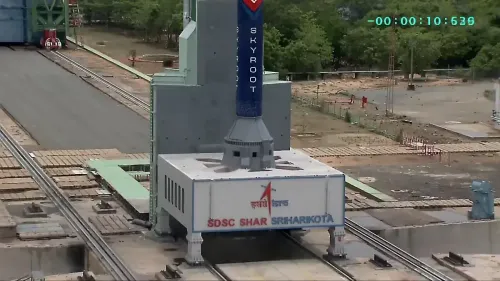
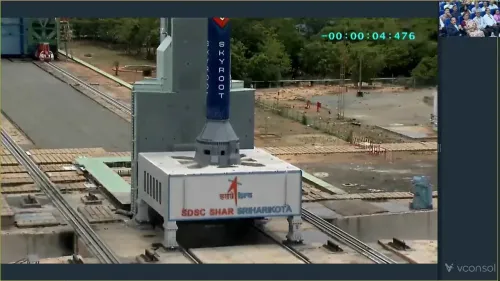
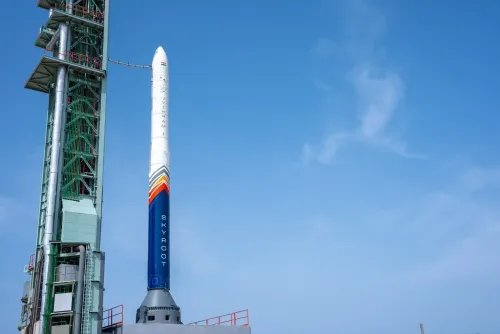
The company achieved India's first private orbital launch with the Vikram-1 mission.
Chandana, an IIT Kharagpur alumnus, spent six years at ISRO's Vikram Sarabhai Space Centre working on the GSLV Mk III .
Daka, an IIT Madras alumnus, specialises in avionics, FPGA systems , and semiconductor technologies.
Skyroot now employs more than 1,000 professionals across rocket design, propulsion, avionics, and launch systems.
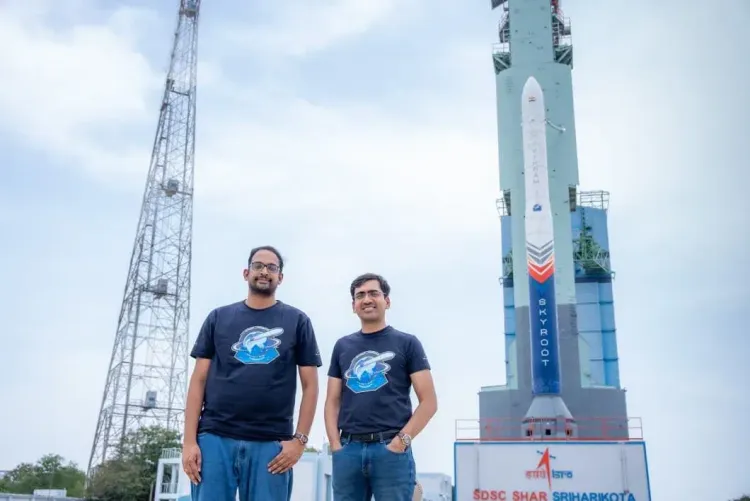
Pawan Kumar Chandana and Naga Bharath Daka, two former Indian Space Research Organisation (ISRO) scientists, co-founded Skyroot Aerospace in Hyderabad in 2018 with a singular goal: make satellite launches as routine and affordable as commercial air travel. That vision has since translated into India's first private orbital launch, the Vikram-1 mission, marking a watershed moment for the country's emerging commercial space sector.
The Founders and Their Roles
Chandana serves as Chief Executive Officer and Daka as Chief Operating Officer, together steering a workforce of more than 1,000 professionals across rocket design, propulsion, avionics, and launch systems. Their complementary expertise — Chandana in launch vehicle structures and Daka in avionics — has been central to Skyroot's technical identity.
Pawan Kumar Chandana: From IIT Kharagpur to ISRO
Chandana cleared the IIT entrance examination in his first attempt and enrolled at the Indian Institute of Technology (IIT), Kharagpur. Resisting the pull of high-paying technology-sector jobs that claimed many of his peers, he pursued his passion for rocketry and was recruited by ISRO directly from campus.
At ISRO, Chandana spent six years at the Vikram Sarabhai Space Centre in Thiruvananthapuram, contributing to the development of the GSLV Mk III — India's heaviest operational launch vehicle. His work earned him an internal innovation award, and the hands-on experience with large cryogenic systems gave him the technical foundation to later design Skyroot's own rocket family.
Naga Bharath Daka: Avionics Architect
Daka is an alumnus of the Indian Institute of Technology (IIT) Madras, holding a master's degree in Microelectronics and VLSI Design alongside a bachelor's degree in Electrical Engineering. Before co-founding Skyroot, he worked as a flight computer engineer at ISRO, where he designed and developed multiple avionics modules for Indian launch vehicles.
His deep expertise in semiconductor technologies and FPGA (Field-Programmable Gate Array) systems has been instrumental in building the avionics stack that guides Skyroot's Vikram rocket series. This is the kind of specialised, mission-critical engineering that typically takes decades to develop within a national space agency — Daka and his team compressed that timeline significantly within a private-sector framework.
Why the Vikram-1 Mission Matters
India's private space sector was opened to commercial players only after the government reformed its space policy framework, creating IN-SPACe as the regulatory and promotional body. Skyroot became one of the first beneficiaries of that liberalisation, and the Vikram-1 orbital launch is the clearest proof yet that the policy shift is producing real outcomes.
This comes amid a broader global race in small-satellite launch services, where companies like Rocket Lab and SpaceX have already established commercial footholds. India's entry through a homegrown private player — rather than a public sector agency — signals a structural shift in how the country intends to compete in the $500-billion global space economy.
What Comes Next for Skyroot
With the Vikram-1 orbital mission now completed, Skyroot is expected to pursue commercial launch contracts for small satellite operators, both domestic and international. The company's roadmap reportedly includes higher-capacity variants of the Vikram rocket series, designed to serve a growing pipeline of earth-observation and communications satellites. Industry observers note that sustained launch cadence — not a single headline mission — will determine whether Skyroot can convert this milestone into a durable business.
Point of View
Raise capital, build a rocket, and achieve orbital insertion in roughly six years says something meaningful about what the IN-SPACe framework has unlocked. But the harder question is whether Skyroot can now win commercial launch contracts against Rocket Lab and ISRO's own small-satellite vehicle, SSLV. A single orbital milestone is table stakes; a sustainable launch cadence is the real prize. India's private space sector is nascent, and Skyroot's next 24 months will reveal whether the Vikram-1 success is a launchpad or a high-water mark.
NationPress
18 Jul 2026
Frequently Asked Questions
Who are the founders of Skyroot Aerospace?
Skyroot Aerospace was founded by Pawan Kumar Chandana and Naga Bharath Daka , both former scientists at the Indian Space Research Organisation (ISRO). Chandana serves as CEO and Daka as COO of the Hyderabad-based company.
What is the Vikram-1 mission?
Vikram-1 is India's first private orbital launch vehicle, developed by Skyroot Aerospace. Its successful orbital mission marks a landmark for India's commercial space sector, demonstrating that private Indian companies can independently design, build, and launch rockets into orbit.
What was Pawan Kumar Chandana's background before Skyroot?
Chandana is an alumnus of IIT Kharagpur and spent six years at ISRO's Vikram Sarabhai Space Centre in Thiruvananthapuram, where he worked on the GSLV Mk III and won an internal innovation award.
What expertise does Naga Bharath Daka bring to Skyroot?
Daka holds a master's degree in Microelectronics and VLSI Design from IIT Madras and worked as a flight computer engineer at ISRO, developing avionics modules for Indian launch vehicles. His expertise in FPGA systems and semiconductor technologies underpins Skyroot's avionics architecture.
Why is Skyroot Aerospace's success significant for India?
Skyroot's Vikram-1 orbital launch is the first by a private Indian company, validating the government's decision to open the space sector to commercial players through the IN-SPACe framework. It positions India as a potential hub for affordable small-satellite launch services in the global space economy.