CM Rekha Gupta Hails India–New Zealand FTA Entry Into Force
Synopsis
The India–New Zealand Free Trade Agreement entered into force on October 20, 2026, granting 100% duty-free access to Indian exports. Delhi CM Rekha Gupta credited PM Modi's leadership for the milestone, which caps negotiations that began in 2010 and benefits Indian farmers, exporters, and professionals.
Key Takeaways
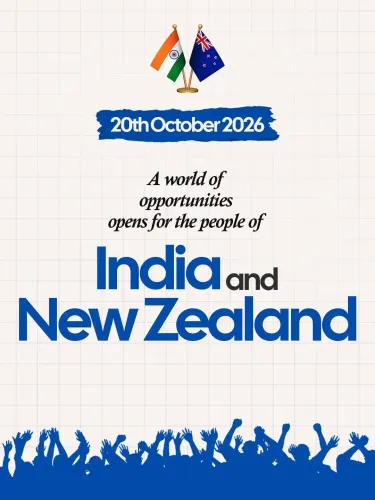
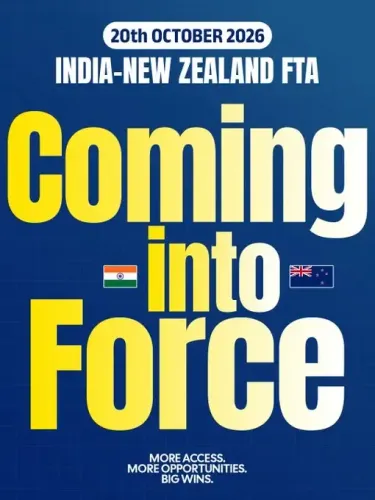
The India–New Zealand FTA officially entered into force on October 20, 2026 .
100% of Indian exports are set to gain duty-free access to the New Zealand market under the deal.
FTA negotiations between the two countries were first launched in 2010 , with the deal revived and concluded under the Modi administration .
Key beneficiaries identified include Indian farmers, exporters, businesses, and professionals .
The agreement fits a broader Modi-era trade strategy that has also produced or advanced deals with the UAE, Australia, and the UK .
Sector-specific utilisation data and joint implementation committee meetings will be the next concrete milestones to track.
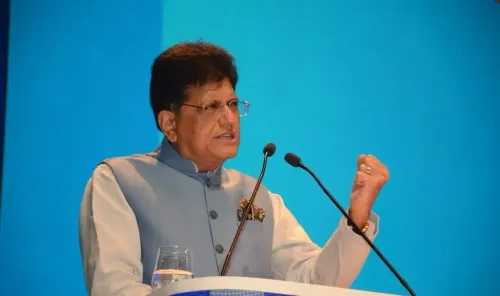
A trade agreement more than a decade in the making crossed the finish line on Tuesday, October 20, 2026, as the India–New Zealand Free Trade Agreement officially entered into force — and Delhi Chief Minister Rekha Gupta was among the first voices to mark the moment, calling it 'a landmark day for India–New Zealand ties.'
Duty-Free Access for Indian Exports — What the FTA Unlocks
The agreement, as described by CM Gupta, grants 100% of Indian exports duty-free access to the New Zealand market. That is a sweeping commitment — covering the agricultural products that Indian farmers have long struggled to price competitively against subsidised rivals, as well as the labour-intensive manufactured goods and services that Indian exporters have increasingly pushed into developed-economy markets.
New Zealand is a Pacific nation and a longstanding Indian dialogue partner in multilateral forums such as the East Asia Summit. While it is not a large economy by global standards, duty-free entry into its market matters as a gateway signal — and as part of a broader portfolio diversification away from India's traditional export destinations.
A Negotiation That Survived 16 Years of Starts and Stops
This milestone did not arrive quickly. India and New Zealand first launched FTA negotiations in 2010, with intermittent rounds followed by a prolonged suspension. The deal's revival and conclusion under the Modi administration fits a clear pattern: since 2014, India has prioritised closing bilateral preferential trade arrangements with developed economies, completing or advancing deals with the UAE, Australia, and the United Kingdom, while simultaneously pressing forward on EU negotiations.
Each of these agreements carries the same structural logic — push open doors for Indian farm produce and labour-intensive exports, while securing services and investment commitments that benefit Indian professionals and businesses operating abroad.
What Farmers, Exporters, and Professionals Stand to Gain
CM Gupta specifically named three beneficiary groups: farmers, exporters, and Indian professionals. For Indian farmers, duty-free access removes tariff walls that previously made competing with New Zealand's own agricultural base difficult. For exporters, it opens a compliant, rules-based developed-market channel. For professionals, any services and mobility commitments baked into the agreement could ease pathways for skilled Indian workers in sectors where New Zealand faces labour shortages.
The real test, of course, comes in utilisation. Trade agreements frequently outpace the industries they are meant to serve — the sector-by-sector uptake data in the months after entry into force will tell the actual story of whether these gains are captured or left on the table.
India's Trade Architecture, One Deal at a Time
The India–New Zealand FTA is not an isolated transaction. It is another brick in what the Modi government has built into an assertive outward trade architecture — a deliberate strategy of locking in market access bilaterally while multilateral WTO negotiations remain gridlocked. For a country whose export-to-GDP ratio still lags comparable emerging economies, every new duty-free corridor is meaningful arithmetic.
Whether the New Zealand agreement accelerates a broader push into Pacific and Oceanic markets — or remains a stand-alone chapter — is the question worth watching as implementation committees convene and the first quarterly trade data begins to flow.
Point of View
Amplifying the announcement is standard BJP political messaging: connect every economic win to the Prime Minister's 'visionary leadership.' The harder political economy question is utilisation — India's past FTAs with ASEAN nations generated significant import surges before export gains materialised, and the New Zealand deal's true scorecard will be written in commodity-level trade data, not press statements.
NationPress
20 Oct 2026
Frequently Asked Questions
What is the India–New Zealand FTA?
The India–New Zealand Free Trade Agreement is a bilateral agreement that eliminates tariffs on goods and is intended to enhance services and investment flows between India and New Zealand. It entered into force on October 20, 2026.
What does the India–New Zealand FTA mean for Indian farmers?
Under the FTA, Indian agricultural products gain duty-free access to the New Zealand market, removing tariff barriers that previously made Indian farm exports less price-competitive.
When did India and New Zealand start FTA negotiations?
Negotiations between India and New Zealand began in 2010, with talks held intermittently before a period of suspension and eventual conclusion under the Modi administration.
How does the India–New Zealand FTA fit into India's broader trade strategy?
It is part of a pattern of bilateral deals pursued by the Modi government — including agreements with the UAE, Australia, and the UK — aimed at diversifying India's export destinations and securing duty-free access in developed markets.
What should we watch for after the India–New Zealand FTA comes into force?
Key indicators to track include sector-specific export utilisation data and any joint committee meetings convened to review the agreement's implementation and address early-stage trade issues.