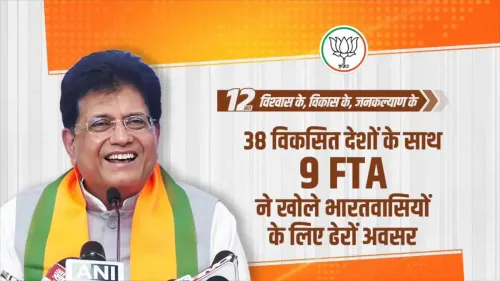
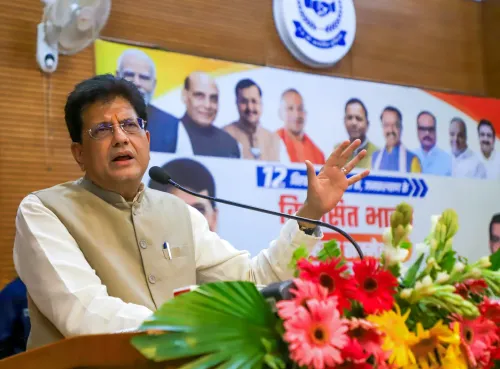
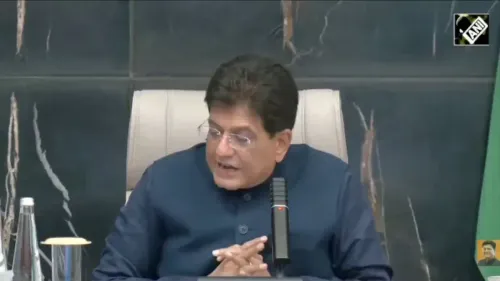
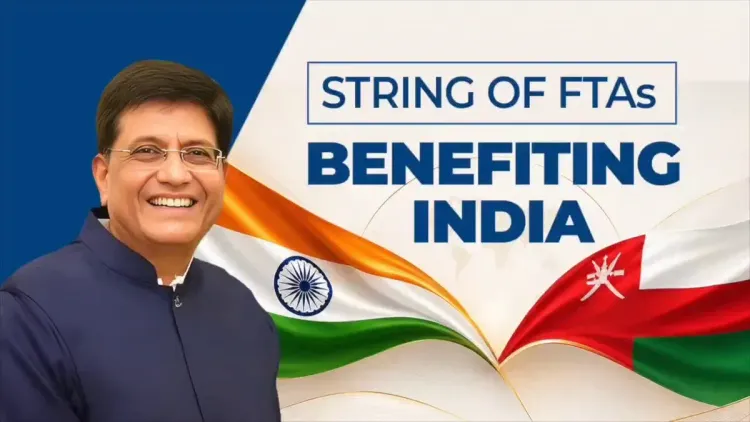
Piyush Goyal flags string of FTAs benefiting India, more ahead
Synopsis
Commerce Minister Piyush Goyal on 1 June 2026 flagged a string of Free Trade Agreements benefiting India — including deals with the UAE, Australia, and EFTA — and signalled that several more are in the pipeline, reinforcing India's shift toward bilateral trade diplomacy.
Key Takeaways
Union Commerce Minister Piyush Goyal posted on 1 June 2026 that a string of FTAs are benefiting India with more in the pipeline.
The India-UAE CEPA (May 2022) eliminated duties on over 80% of Indian exports and helped double bilateral trade within two years.
The India-Australia ECTA (December 2022) liberalised 90% of tariff lines, covering goods, services and investment.
The India-EFTA TEPA (March 2024) secured a $100 billion investment commitment over 15 years in return for market access.
MSME exporters , manufacturers, and agri-exporters are key beneficiaries of India's expanding FTA network.
Potential India-EU and India-US trade deals are expected to be focal points at 2026-27 bilateral summits.
Union Commerce and Industry Minister Piyush Goyal on Monday, 1 June 2026 highlighted a growing string of Free Trade Agreements benefiting India, signalling that several more deals are in the pipeline, in a post on X accompanied by a video.
Context
The minister's post — 'String of FTAs benefiting India, many more in the pipeline' — comes as India has concluded a run of landmark trade agreements over the past four years. The statement underscores the government's confidence in the results of its bilateral and plurilateral trade push and its intent to accelerate further.
Since 2022, India has signed three major agreements: the India-UAE Comprehensive Economic Partnership Agreement (CEPA), the India-Australia Economic Cooperation and Trade Agreement (ECTA), and the India-EFTA Trade and Economic Partnership Agreement (TEPA) with the four-nation European Free Trade Association bloc.
Policy Backdrop
The India-UAE CEPA, signed in February 2022 and implemented from May 2022, eliminated duties on over 80% of Indian exports to the UAE and helped double bilateral trade within two years. The India-Australia ECTA, signed in April 2022 and in force from December 2022, liberalised 90% of tariff lines, giving Indian goods and services providers preferential access to one of Asia-Pacific's wealthiest markets.
The India-EFTA TEPA, signed in March 2024, broke new ground by securing a commitment of $100 billion in investment over 15 years in return for market access — a model that blends trade liberalisation with hard investment pledges. Separately, India-UK FTA negotiations, formally launched in January 2022, have seen multiple rounds of talks through 2024 and remain a closely watched negotiation.
This bilateral and plurilateral strategy marks a deliberate shift from India's earlier multilateral focus at the WTO. The approach is designed to diversify supply chains, reduce dependence on any single trade partner, and support the government's goal of building a $5 trillion economy.
Stakeholders and Impact
MSME exporters, Indian manufacturers, and agri-exporters are among the primary beneficiaries of the tariff concessions secured under these deals. Preferential access to markets in the Gulf, Australia, Switzerland, Norway, Iceland, and Liechtenstein has opened new channels for labour-intensive sectors such as textiles, leather, gems and jewellery, and processed foods.
The investment-for-access framework embedded in the EFTA TEPA is particularly significant for domestic job creation, as it ties market concessions to verifiable foreign direct investment flows into India. Analysts see this as a template that could be replicated in future negotiations.
What's Next
The minister's reference to deals 'in the pipeline' points to active negotiations that could include a potential India-EU free trade agreement and progress on a India-US bilateral trade arrangement, both of which are expected to feature prominently in 2026-27 bilateral summits. Conclusion and ratification timelines for these larger deals will be closely watched by industry and investors.
As more agreements move toward implementation, impact assessments on domestic sectors — particularly those sensitive to import competition — will shape the political and economic debate around India's trade liberalisation agenda.
Point of View
A policy historically viewed with suspicion by domestic industry. The success of the investment-for-access model in the EFTA TEPA may well become the template that defines India's next phase of trade agreements.
NationPress
15 Oct 2026
Frequently Asked Questions
What FTAs has India signed recently?
India has signed three major trade agreements since 2022: the India-UAE CEPA (implemented May 2022), the India-Australia ECTA (in force December 2022), and the India-EFTA TEPA (signed March 2024), which together cover goods, services, investment, and digital trade.
What did Piyush Goyal say about FTAs on 1 June 2026?
Commerce Minister Piyush Goyal posted on X on 1 June 2026 that a 'string of FTAs' are benefiting India and signalled that 'many more' deals are in the pipeline.
How does the India-EFTA TEPA work?
The India-EFTA TEPA, signed in March 2024, commits the four EFTA nations — Switzerland, Norway, Iceland, and Liechtenstein — to invest $100 billion in India over 15 years in return for preferential market access for their goods and services.
Who benefits from India's free trade agreements?
MSME exporters, Indian manufacturers, and agri-exporters are among the primary beneficiaries, gaining preferential tariff rates in markets such as the UAE, Australia, and EFTA countries.
Which India FTA negotiations are ongoing in 2026?
Negotiations for an India-UK FTA have been under way since January 2022, while potential India-EU and India-US trade deals are expected to be key agenda items at bilateral summits in 2026-27.