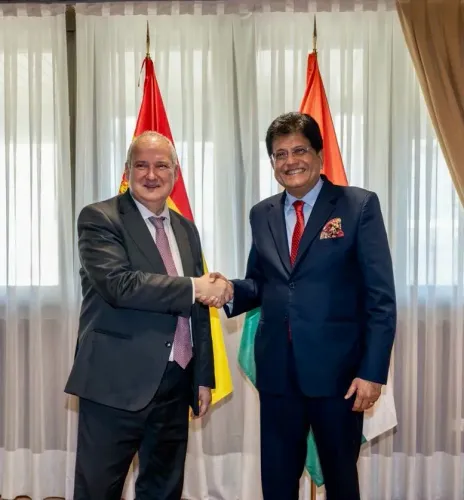
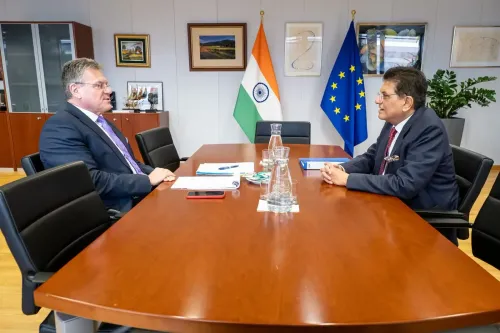
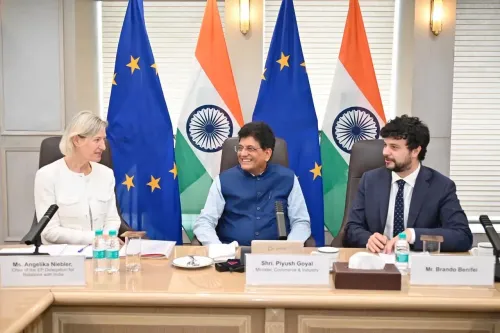
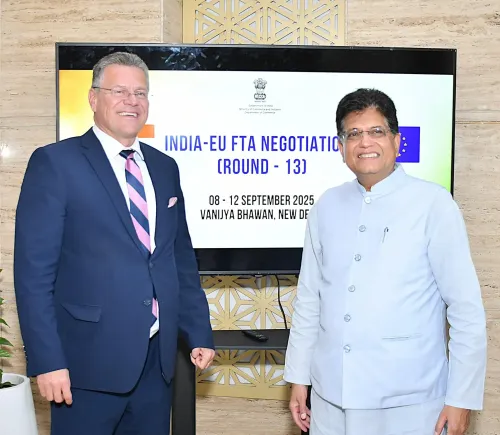
Goyal Flags Opportunities in India-EU FTA Operationalisation
Synopsis
Union Commerce and Industry Minister Piyush Goyal has declared that immense opportunities await India and the EU with the operationalisation of their Free Trade Agreement, marking a major milestone in a bilateral trade relationship worth over USD 100 billion annually.
Key Takeaways
Union Commerce Minister Piyush Goyal on 13 July 2026 flagged immense opportunities from the operationalisation of the India-EU Free Trade Agreement .
The EU is India's largest trading partner bloc with annual bilateral trade exceeding USD 100 billion .
Negotiations for the India-EU BTIA were first launched in 2007 , paused after 2013 , and formally resumed in June 2022 .
India has already signed FTAs with the UAE and Australia in 2022 as part of its trade diversification strategy.
Indian exporters in pharma , textiles , and engineering goods are among the primary beneficiaries expected from the deal.
Outstanding issues include data localisation , investment dispute settlement , and sustainability chapters before formal ratification.
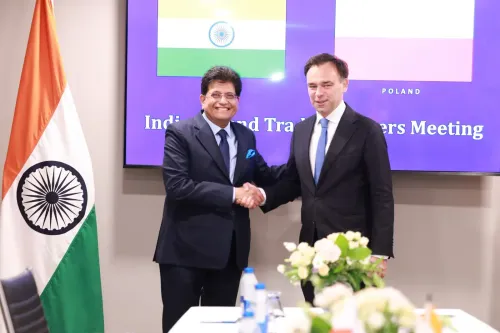
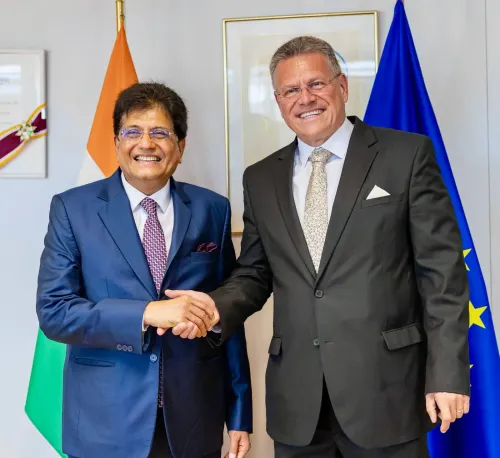
Union Commerce and Industry Minister Piyush Goyal on Monday, 13 July 2026 said that immense opportunities await both India and the European Union with the operationalisation of the India-EU Free Trade Agreement, signalling a significant step forward in one of the world's most consequential bilateral trade relationships.
Context
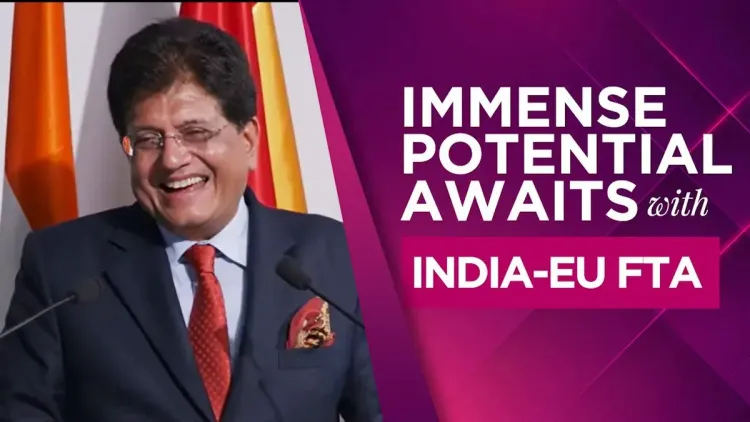
In his post on X, Minister Goyal stated: 'Immense opportunities await India and the EU with the operationalisation of the India-EU FTA.' The statement comes as New Delhi and Brussels have been working to conclude a comprehensive trade deal that would cover goods, services, and investment flows between the two economies. The EU is India's largest trading partner bloc, with annual bilateral trade exceeding USD 100 billion.
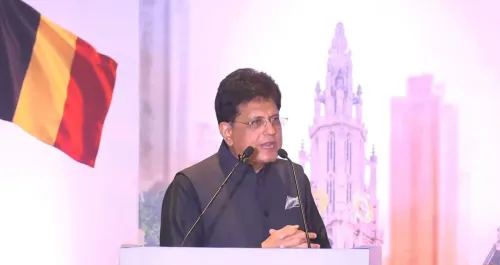
The minister's remarks reflect the government's confidence that the agreement is moving from negotiation to implementation, a transition that trade analysts and industry stakeholders have been closely tracking. The post, accompanied by a video, was shared widely and underscored the political priority New Delhi is placing on deepening economic ties with Europe.
Policy Backdrop
Negotiations for the India-EU Broad-based Trade and Investment Agreement (BTIA) were first launched in 2007 but stalled after 2013 over disagreements on tariffs, data localisation, investment dispute settlement, and the sustainability chapter. Talks were formally resumed in June 2022 with both sides committing to an expedited timeline.
The renewed push fits within a broader trade diversification strategy pursued under Prime Minister Narendra Modi, which has already yielded comprehensive FTAs with the UAE in 2022 and Australia in 2022. Completing a deal with the EU would mark India's first major trade agreement with a large Western economic bloc in over a decade, a milestone that carries both economic and geopolitical weight.
Piyush Goyal, as the minister overseeing India's FTA negotiations and Leader of the House in the Rajya Sabha, has been the principal interlocutor on the Indian side across multiple rounds of technical and ministerial-level discussions with EU counterparts.
Stakeholders and Impact
Indian exporters in pharmaceuticals, textiles, and engineering goods stand to gain significantly from preferential market access into the 27-nation EU bloc. MSMEs, which form the backbone of India's export ecosystem, are expected to benefit from reduced tariff barriers that currently make their products less competitive against rivals from countries that already have FTAs with the EU.
On the European side, the agreement is expected to open greater access in sectors such as automobiles and agriculture, areas where the EU has long sought a more level playing field in the Indian market. EU investors are also expected to gain greater certainty on investment protection frameworks, a key demand from Brussels throughout the negotiation process.
What's Next
While Minister Goyal's statement points to operationalisation, the formal process would require completion of outstanding chapters on data localisation, investment dispute settlement, and sustainability commitments, followed by a signing ceremony and ratification by both the Indian Parliament and the European Parliament. Any formal entry into force would represent a structural shift in how India engages with advanced Western economies. If the agreement delivers on its stated promise, it could serve as a template for India's broader ambition of deepening trade ties with the United Kingdom, the United States, and other major partners in the years ahead.
Point of View
Coming after nearly two decades of on-again-off-again negotiations. It suggests New Delhi believes the deal has crossed a threshold from aspiration to implementation, a framing that serves both domestic and diplomatic audiences. The announcement fits a clear pattern in which the Modi government has used FTA momentum — UAE, Australia, and now the EU — to project India as a confident, outward-looking trade power. The real test will be whether the remaining contentious chapters on data, investment, and sustainability can be resolved in a manner that satisfies both Brussels and New Delhi's core redlines.
NationPress
12 Oct 2026
Frequently Asked Questions
What is the India-EU Free Trade Agreement?
The India-EU Free Trade Agreement, formally called the Broad-based Trade and Investment Agreement (BTIA), is a comprehensive trade deal between India and the 27-nation European Union covering goods, services, and investment. Negotiations began in 2007, were paused in 2013, and resumed in June 2022.
What did Piyush Goyal say about the India-EU FTA?
Union Commerce and Industry Minister Piyush Goyal stated on 13 July 2026 that 'immense opportunities await India and the EU with the operationalisation of the India-EU FTA,' indicating the deal is moving toward implementation.
How much trade happens between India and the EU?
Annual bilateral trade between India and the European Union exceeds USD 100 billion, making the EU India's largest trading partner bloc.
Which Indian sectors will benefit most from the India-EU FTA?
Indian exporters in pharmaceuticals, textiles, and engineering goods are expected to benefit most from preferential market access into the EU, along with MSMEs that currently face higher tariff barriers than competitors from countries with existing EU trade deals.
What are the remaining hurdles for the India-EU FTA?
Key outstanding issues include chapters on data localisation, investment dispute settlement, and sustainability commitments. After negotiations conclude, the deal must be ratified by both the Indian Parliament and the European Parliament before it enters into force.