What Key Issues Did Goyal Discuss in Brussels Regarding the India-EU Free Trade Pact?
Synopsis
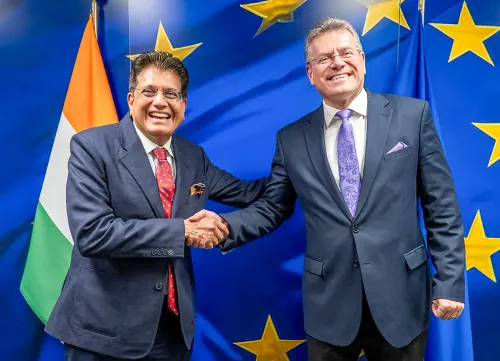
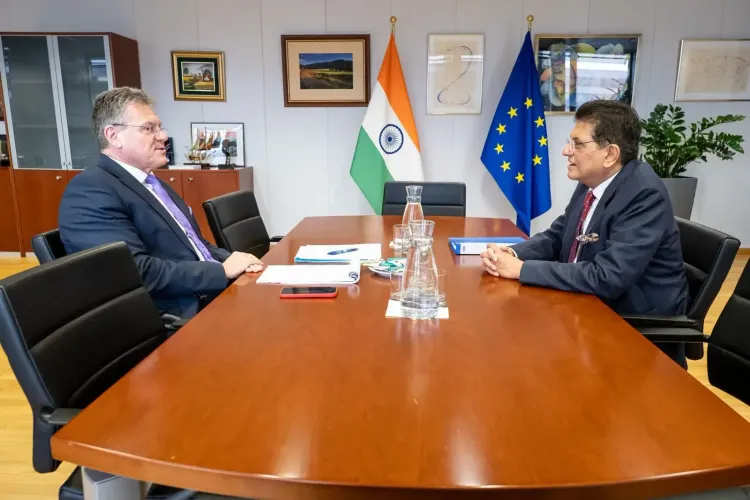
On January 9, Commerce Minister Piyush Goyal held pivotal discussions in Brussels with EU Trade Commissioner Maros Sefcovic, aimed at advancing the India-EU Free Trade Agreement. This meeting emphasizes India's push for zero-duty access for key sectors, reflecting the strengthening ties between India and the EU.
Key Takeaways
Piyush Goyal held talks with EU Trade Commissioner in Brussels .
Focus on India-EU Free Trade Agreement negotiations.
Push for zero-duty access for labor-intensive sectors.
Emphasis on a rules-based trading framework .
Significant increase in bilateral trade.
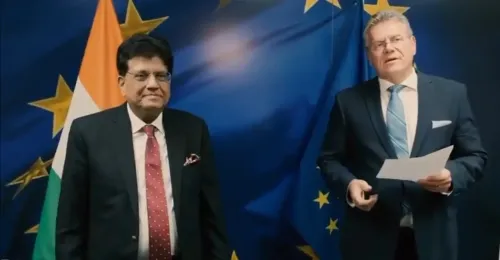
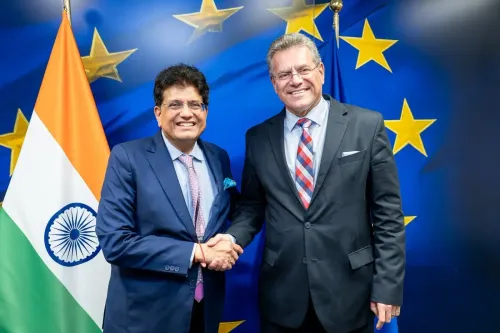
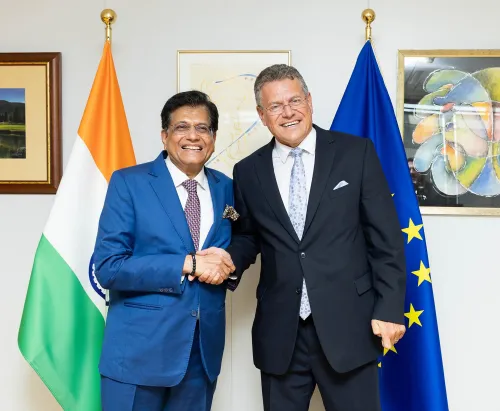
New Delhi, Jan 9 (NationPress) Commerce and Industry Minister Piyush Goyal engaged in significant discussions with EU Trade and Economic Security Commissioner Maros Sefcovic in Brussels on Friday, which are part of the efforts to establish a mutually advantageous India-EU Free Trade Agreement (FTA).
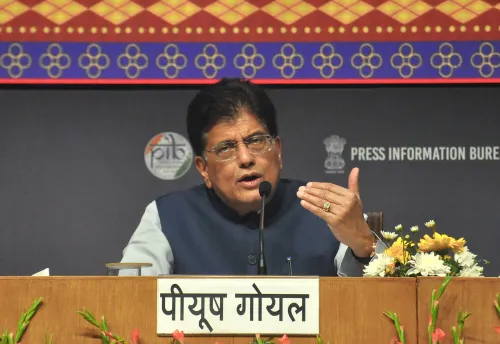
In this dialogue, we explored critical topics related to the proposed agreement. We reaffirmed our dedication to a rules-based trading framework and a contemporary economic partnership that protects the interests of farmers and MSMEs, while facilitating the integration of Indian industries into global supply chains,” Goyal shared in a post on X.
India is advocating for zero-duty access for its labor-intensive sectors, including textiles, leather, apparel, gems and jewellery, and handicrafts.
The Indian minister’s trip to Brussels highlights the escalating diplomatic and technical interactions between India and the EU.
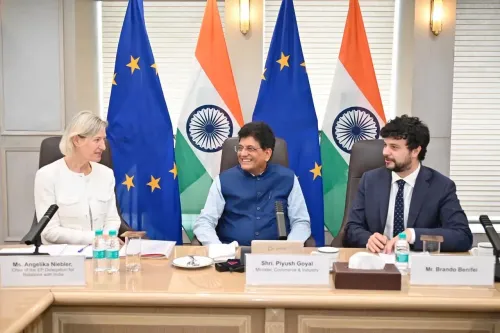
The main goal of these discussions is to offer strategic guidance to the negotiating teams, address unresolved matters, and accelerate the completion of a balanced and ambitious agreement.
This ministerial engagement follows a week of concentrated discussions in Brussels, building on the groundwork established during previous high-level talks this week between India's Commerce Secretary Rajesh Agrawal and the Director-General for Trade of the European Commission, Sabine Weyand.
The discussions occur at a pivotal moment for India-EU economic relations. The negotiations were robustly re-launched in June 2022 after a pause of more than nine years, demonstrating a renewed mutual commitment to enhance economic integration. Since the reopening, the two sides have completed 14 rounds of vigorous negotiations and numerous high-level dialogues at the ministerial level, with the most recent interaction occurring in December 2025, as stated in an official announcement.
Both India and the EU have shown a strong political will to achieve a comprehensive deal. The upcoming negotiations are anticipated to reaffirm both parties' commitment to a rules-based trading framework and a modern economic partnership that protects the interests of farmers and MSMEs, all while incorporating Indian industries into global supply chains, it noted.
The European Union currently stands as India’s largest trading partner and a vital investor, with bilateral trade in goods significantly enhanced in the 2024-25 financial year. This agreement is envisioned not merely as a trade deal, but as a comprehensive partnership that addresses the realities of the modern economy, the statement further indicated.
Point of View
The ongoing negotiations between India and the EU signify a critical evolution in international trade dynamics. As both parties strive for a balanced and ambitious agreement, it is essential to prioritize the needs of vulnerable sectors like farmers and MSMEs. Strengthening these ties will not only enhance economic growth but also ensure the integration of Indian industries into global supply chains, reflecting a progressive approach towards modern trade.
NationPress
24 Sept 2026
Frequently Asked Questions
What was discussed during the talks in Brussels?
The talks focused on key areas of the India-EU Free Trade Agreement, reaffirming commitments to a rules-based trading framework and addressing issues important to farmers and MSMEs.
Why is the India-EU Free Trade Agreement significant?
This agreement is significant as it aims to deepen economic integration between India and the EU, enhancing trade relations and addressing modern economic realities.
What sectors is India advocating for zero-duty access?
India is seeking zero-duty access for labor-intensive sectors such as textiles, leather, apparel, gems and jewellery, and handicrafts.
How many rounds of negotiations have taken place since June 2022?
Since the re-launch of negotiations in June 2022, there have been 14 rounds of intense discussions between India and the EU.
What is the status of India-EU relations currently?
The European Union is currently India’s largest trading partner and a key investor, with bilateral trade significantly increasing in the financial year 2024-25.