Rajnath Singh pitches India's DPI, clean energy to SCO partners
Synopsis
Union Defence Minister Rajnath Singh declared India ready to share its Digital Public Infrastructure, Women-Led Development, and Clean Energy experience with SCO partners, framing India's technology-driven growth as a replicable model for the Eurasian grouping.
Key Takeaways
Rajnath Singh on 20 October 2026 offered India's development experience to SCO member states across three pillars: DPI, Women-Led Development, and Clean Energy.
India's Digital Public Infrastructure — including Aadhaar and UPI — forms the backbone of the DPI offer to SCO partners.
India co-founded the International Solar Alliance in 2015 , underpinning its clean-energy credentials in multilateral forums.
India became a full SCO member in 2017 and hosted the SCO Summit in 2023 , progressively expanding its engagement beyond security.
The statement reflects India's consistent multilateral strategy of positioning itself as a scalable development partner rather than a passive member.
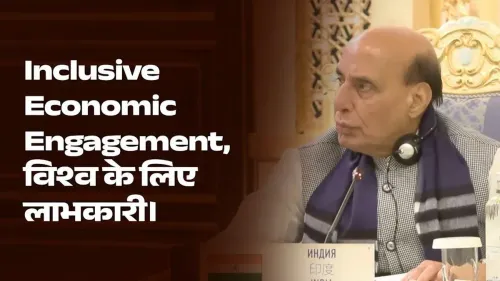
From Aadhaar to solar farms, Union Defence Minister Rajnath Singh on Tuesday, October 20, 2026 declared India ready to share its development blueprint with fellow Shanghai Cooperation Organisation (SCO) members — framing the country's technology and innovation journey as a replicable model for the Eurasian grouping.
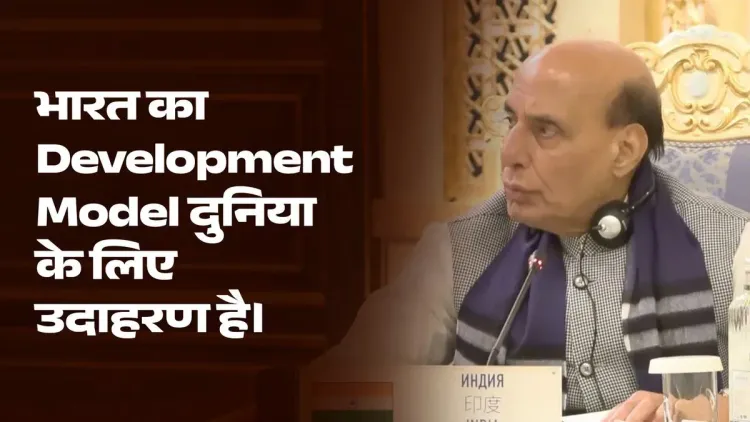
In a post on X in Hindi, Singh wrote: 'Bharat ka Development Experience, Technology aur Innovation ke madhyam se vyapak badlaav laane ka udaaharan hai' — 'India's development experience is an example of bringing sweeping change through technology and innovation.' He specifically named Digital Public Infrastructure (DPI), Women-Led Development, and Clean Energy as the three pillars India is prepared to share and build on with SCO partners.
What India is offering the SCO table
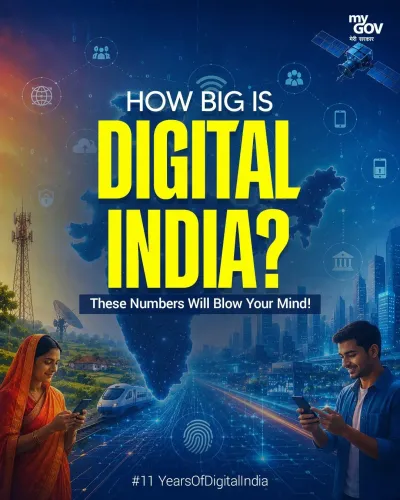
The three pillars Singh invoked are far from rhetorical. India's DPI stack — anchored by Aadhaar biometric identity and the UPI payments rail — has delivered financial and governance services at a scale most middle-income economies have not matched. The Digital India programme, launched in 2015, turned that infrastructure into a live policy laboratory whose results are now internationally cited.
On clean energy, India co-founded the International Solar Alliance in 2015, an initiative that has become a signature piece of its multilateral soft power. Women-Led Development, meanwhile, represents a domestic policy framework of targeted economic and social empowerment programmes — one India has increasingly presented on global platforms as evidence that growth can be gender-inclusive by design.
India's expanding footprint inside the SCO
India became a full SCO member in 2017, initially drawn in by the grouping's security architecture. Over the years, New Delhi has methodically broadened that engagement — using summits and ministerials to layer development cooperation on top of the harder security conversations the SCO was built for. India hosted the SCO Summit in 2023, deploying that moment to showcase its development model directly to heads of government from across Eurasia.
Singh's statement continues that arc. By pairing a senior cabinet minister's voice with explicit offers of DPI and renewable-energy collaboration, India signals that its SCO posture is not passive membership but active co-shaping of the agenda.
The soft-power play behind the statement
There is a clear strategic logic here. The SCO brings together states at very different stages of digital and energy transition — Central Asian republics, Pakistan, China, Russia and others — creating both an audience and potential co-investment partners for India's proven models. Positioning India as a development partner rather than simply a security interlocutor gives New Delhi distinct leverage that money or military posture alone cannot buy.
The move also fits a wider Indian multilateral pattern: show up with scalable, affordable, home-grown solutions and let the track record do the diplomacy. Whether that offer translates into concrete DPI-export agreements or clean-energy financing mechanisms at the next SCO ministerial will be the real test of intent.
Point of View
A forum dominated by Chinese and Russian influence, as a stage to project Indian soft power. By foregrounding DPI and clean energy, New Delhi subtly offers an alternative development narrative to Central Asian and Eurasian states that are weighing multiple external partnerships. The political signal is that India's SCO membership has matured from reactive engagement to proactive agenda-setting. The harder question — whether this openness yields binding cooperation frameworks or remains aspirational diplomacy — will define India's SCO legacy in this decade.
NationPress
20 Oct 2026
Frequently Asked Questions
What is the SCO and why is India a member?
The Shanghai Cooperation Organisation (SCO) is a Eurasian security and economic grouping. India became a full member in 2017 , joining to engage on regional security, trade, and increasingly, development cooperation with Central and South Asian neighbours.
What is India's Digital Public Infrastructure (DPI)?
India's Digital Public Infrastructure is a suite of open, interoperable platforms — most notably Aadhaar biometric identity and UPI payments — built under the Digital India programme (2015) to deliver governance and financial services at population scale.
What did Rajnath Singh say about India and the SCO in October 2026?
Rajnath Singh said India's development experience through technology and innovation is a model of transformative change, and that India is ready to share its expertise in DPI, Women-Led Development, and Clean Energy with SCO partner nations.
What is the International Solar Alliance and how does it relate to SCO?
The International Solar Alliance , co-founded by India in 2015 , is a multilateral body advancing solar energy deployment. It forms part of India's clean-energy diplomacy and the offering Singh referenced for SCO development cooperation.
Why is India pushing a development agenda inside the SCO?
India has progressively expanded its SCO role beyond security to showcase scalable, affordable domestic solutions in digital governance and renewables — positioning New Delhi as a development partner and soft-power voice within a forum traditionally led by China and Russia .