Jaishankar Meets US Congressional Delegation in Mumbai
Synopsis
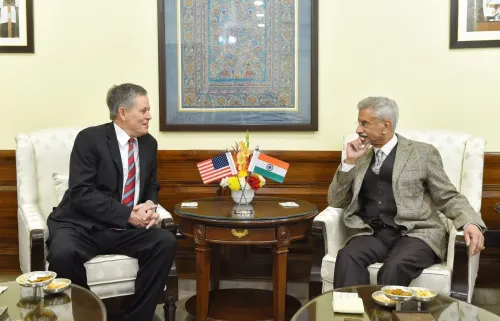
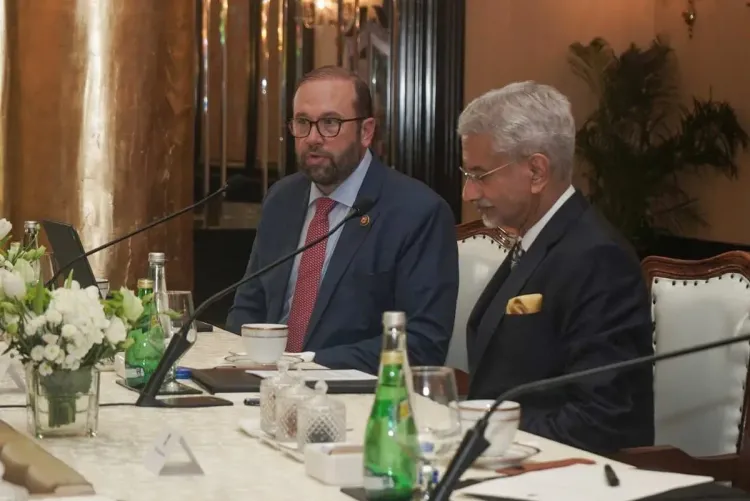
External Affairs Minister Dr. S. Jaishankar met a five-member US Congressional Delegation in Mumbai on October 20, 2026, discussing trade, energy, security, technology, ease of doing business, and Indo-Pacific cooperation — reinforcing the legislative pillar of the India-US strategic partnership.
Key Takeaways
Jaishankar met a five-member US Congressional Delegation in Mumbai on October 20, 2026 .
Delegation members included Representatives Jason Smith, David Schweikert, Elise Stefanik, Andy Ogles, and Brad Friedman .
Agenda covered trade, energy, security, and technology dimensions of the India-US relationship.
Ease of doing business in India and facilitating US investment flows were specifically discussed.
Indo-Pacific cooperation featured prominently, reflecting shared Quad-anchored strategic objectives.
The Mumbai venue reinforced the economic dimension, complementing the diplomatic and security threads of the bilateral partnership.
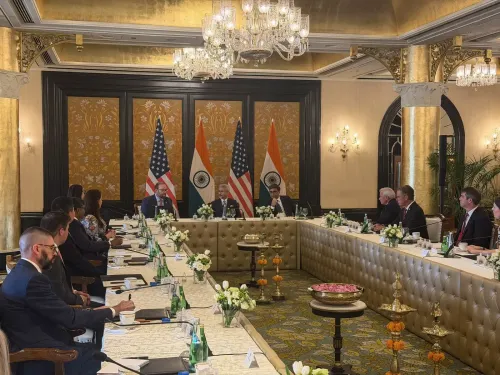
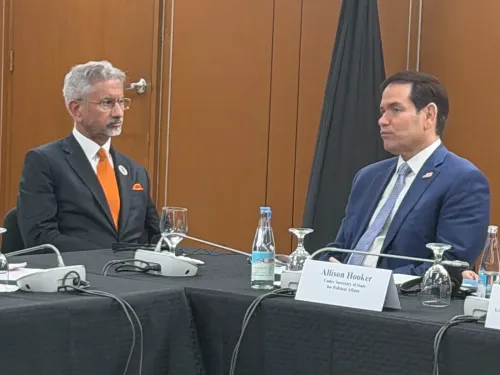
Trade, energy, security, and technology — Union External Affairs Minister Dr. S. Jaishankar laid out the full architecture of the India-US relationship in a single meeting in Mumbai on Tuesday, October 20, 2026, sitting down with a five-member US Congressional Delegation to move the partnership forward on every front that matters.
Five Lawmakers, One Agenda: Deepening the India-US Compact
The delegation included Representatives Jason Smith, David Schweikert, Elise Stefanik, Andy Ogles, and Brad Friedman — a bipartisan Congressional group whose visit to Mumbai signals that India-US engagement extends well beyond the executive branch. Jaishankar noted their 'positive sentiments and interest in taking forward India-US ties,' a formulation that carries diplomatic weight: Congressional support is what translates executive-level ambition into trade frameworks, defence authorisations, and technology-export approvals.
The choice of Mumbai — India's financial capital — as the venue was itself a message. Moving the conversation out of Delhi and into the country's commercial heartland underscores the economic dimension of the relationship. Ease of doing business in India featured prominently on the agenda, a direct signal to the American legislators about India's readiness to facilitate US investment flows.
Indo-Pacific Cooperation and the Strategic Subtext
The agenda went well beyond commerce. The two sides also discussed Indo-Pacific cooperation — the region that has become the centrepiece of India-US strategic convergence since the revival of the Quad in 2017. That platform, which brings together India, the United States, Australia, and Japan, has focused the bilateral relationship on maritime security, connectivity, and a rules-based regional order. Congressional buy-in on the Indo-Pacific framework is critical: it shapes defence budgets, technology-transfer approvals, and diplomatic posturing in multilateral forums.
The security and technology threads of Tuesday's conversation also carry long institutional roots. The 2008 India-US Civil Nuclear Agreement established the foundational architecture for strategic cooperation, and foundational defence pacts such as LEMOA (2016) built the interoperability layer on top of it. Each successive ministerial and Congressional exchange since has added more brick and mortar to that structure.
Why Congressional Visits to India Are a Bellwether
High-level ministerial meetings between India and the US have become routine. What makes Congressional delegations distinctive is their direct legislative authority — these are the individuals who write the laws governing trade preferences, sanctions regimes, defence co-production, and technology licensing. A five-member delegation engaging a serving External Affairs Minister on all four pillars of the relationship simultaneously is not a courtesy call. It is a working session with real downstream consequences for Indian businesses, US investors, and the bilateral security architecture alike.
With bilateral trade talks continuing and the next India-US 2+2 dialogue and Quad summit on the horizon, the Mumbai meeting adds momentum at exactly the right moment — keeping the legislative channel as warm as the diplomatic one.
Point of View
And Tuesday's Mumbai meeting underscores how the India-US partnership has institutionalised legislative engagement alongside ministerial channels. By hosting lawmakers on trade, energy, security, and technology simultaneously, Jaishankar is effectively pre-positioning the relationship against the legislative hurdles — tariff approvals, technology-export controls, defence authorisations — that could otherwise slow momentum. The Mumbai venue adds a deliberate signal that India's economic openness is as central to the partnership as its geopolitical alignment. With the 2+2 dialogue and the next Quad summit approaching, this meeting functions as a legislative force-multiplier for whatever emerges from those executive-level forums.
NationPress
20 Oct 2026
Frequently Asked Questions
Who were the members of the US Congressional Delegation that met Jaishankar in Mumbai?
The delegation comprised Representatives Jason Smith, David Schweikert, Elise Stefanik, Andy Ogles, and Brad Friedman, who met EAM Dr. S. Jaishankar in Mumbai on October 20, 2026.
What topics did Jaishankar discuss with the US Congressional Delegation?
The discussions covered trade, energy, security, and technology aspects of the India-US relationship, along with ease of doing business in India and deepening Indo-Pacific cooperation.
Why did Jaishankar meet the US Congressional Delegation in Mumbai and not Delhi?
While the post does not give an explicit reason, holding the meeting in Mumbai — India's financial capital — underscores the economic and investment dimension of the India-US relationship alongside its strategic aspects.
What is the significance of Indo-Pacific cooperation in India-US ties?
The Indo-Pacific is central to India-US strategic convergence, anchored by the revival of the Quad in 2017, which focuses on maritime security, connectivity, and a rules-based regional order involving India, the US, Australia, and Japan.
What are the foundational agreements underpinning India-US security and energy cooperation?
Key milestones include the 2008 India-US Civil Nuclear Agreement on energy and strategic issues, and the Logistics Exchange Memorandum of Agreement (LEMOA) signed in 2016 to advance defence interoperability.