Piyush Goyal Hails GI-Tagged Seabuckthorn as Ladakh's Golden Treasure

Synopsis
Union Commerce Minister Piyush Goyal highlighted the GI-tagged Seabuckthorn of Ladakh on October 20, 2026, calling it a natural treasure with exceptional nutritional value that can empower local farmers and tap the global wellness market.
Key Takeaways
Union Commerce Minister Piyush Goyal spotlighted Ladakh's GI-tagged Seabuckthorn on October 20, 2026 , calling it a 'remarkable gift of nature.' Seabuckthorn grows at altitudes above 3,000 metres in Ladakh and is rich in Vitamins C, E, and omega fatty acids.
The GI tag is protected under India's Geographical Indications of Goods (Registration and Protection) Act, 1999 , granting exclusive origin-linked branding.
Since Ladakh became a Union Territory in 2019 , the Commerce Ministry has accelerated GI filings for the region's unique products.
The tag opens pathways to premium export markets in Europe , Japan , and beyond, where Himalayan nutraceuticals command high consumer demand.
Future milestones to watch include new export schemes, value-addition clusters, and further GI applications from Ladakh.
A thorny mountain shrub that thrives where almost nothing else dares to grow is now getting its moment in the national spotlight. Union Commerce and Industry Minister Piyush Goyal on Tuesday, October 20, 2026, took to X to celebrate the Geographical Indication (GI) tag awarded to Ladakh's Seabuckthorn, calling it a 'remarkable gift of nature' prized for its 'exceptional vitamin content and rich nutritional profile.'
What makes Seabuckthorn Ladakh's most valuable wild crop
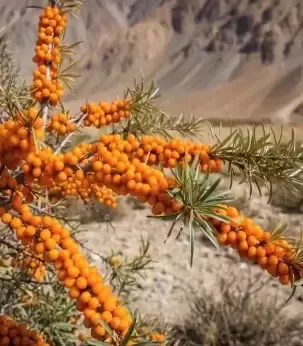
Seabuckthorn — locally called Tsesta in Ladakhi — is a high-altitude berry that carpets the cold deserts and river valleys of Ladakh at elevations above 3,000 metres. Its dense orange clusters are unusually rich in Vitamins C, E, and a suite of omega fatty acids, positioning it firmly in the global nutraceuticals and wellness market. The plant also fixes nitrogen in barren soil, making it an ecological workhorse long before it became a commercial one.
The GI tag, protected under India's Geographical Indications of Goods (Registration and Protection) Act, 1999, gives Ladakh's seabuckthorn exclusive origin-linked branding — meaning only produce sourced from the region can be marketed under that protected name. For local farmers and cooperatives, that translates directly into premium pricing and protection against counterfeit or copycat products flooding a booming herbal-products market.
Ladakh's GI push since becoming a Union Territory
Since Ladakh was carved out as a Union Territory in 2019, the Commerce Ministry has accelerated origin-protection filings for the region's unique flora and crafts. Successive administrations have treated GI registrations as a dual lever — preserving traditional knowledge while plugging niche Himalayan produce into export value chains. Seabuckthorn sits squarely at the intersection of both objectives: it is a centuries-old community resource and a high-demand ingredient for cosmetics, juices, and supplements in Europe, Japan, and China.
Minister Goyal, who oversees GI registrations from the Commerce Ministry's Office of the Controller General of Patents, Designs and Trade Marks, framed the tag in terms of twin benefits — 'empowering local livelihoods and advancing global wellness.' The framing is deliberate: it signals that the tag is not merely ceremonial, but part of a wider export-promotion and rural-income strategy.
From high-altitude berry to global wellness shelf
The nutraceuticals sector is one of the fastest-growing segments in global food trade, and Himalayan origin-stories carry powerful consumer appeal in premium markets. A GI tag arms Ladakhi producers — many of them small farmers and self-help groups — with the legal and marketing infrastructure to compete on that shelf. Value-addition clusters processing seabuckthorn into oils, jams, and health drinks have been piloted in the region, and the tag now gives those ventures a credible, protected brand story to tell international buyers.
The next test is whether the tag translates into organised export linkages and processing infrastructure. The ministry's moves in the coming months — any new schemes, buyer-seller meets, or inclusion in agricultural export clusters — will determine how quickly Ladakh's golden berry moves from hillside to global health-food aisle.
Point of View
Accelerating GI tags serves a dual political purpose — signalling development in a strategically sensitive Union Territory while creating export narratives around its unique natural resources. The seabuckthorn push also fits neatly into India's broader ambition to carve out a premium, origin-branded niche in the fast-growing global nutraceuticals trade. The real test, however, lies in whether ministerial attention converts into processing infrastructure and organised export linkages for the region's small farmers.
NationPress
20 Oct 2026
Frequently Asked Questions
What is the GI tag for Ladakh Seabuckthorn?
The GI (Geographical Indication) tag for Ladakh's Seabuckthorn is a legal protection granted under India's Geographical Indications of Goods (Registration and Protection) Act, 1999, ensuring that only seabuckthorn sourced from Ladakh can be sold under that origin-linked name, allowing producers to command premium prices in domestic and export markets.
What are the health benefits of Seabuckthorn from Ladakh?
Ladakh's Seabuckthorn is exceptionally rich in Vitamins C and E, omega fatty acids, and antioxidants, making it a prized ingredient in nutraceuticals, health drinks, cosmetics, and dietary supplements sought after in markets across Europe, Japan, and beyond.
Why did Piyush Goyal post about Seabuckthorn?
As Union Commerce and Industry Minister overseeing GI registrations in India, Piyush Goyal highlighted the GI tag for Ladakh's Seabuckthorn to promote its global wellness potential and underscore the government's effort to empower local Ladakhi farmers through origin-linked branding and export promotion.
How does a GI tag help Ladakh farmers?
A GI tag gives Ladakh's farmers exclusive rights to market their products under a protected origin name, shielding them from counterfeit competition and enabling them to access premium domestic and international markets, directly supporting local livelihoods and rural incomes.
Which other Ladakh products have a GI tag?
Ladakh has been receiving increasing focus for GI registrations since becoming a Union Territory in 2019, with several local products across flora and crafts being filed for protection, though exact details of all current registrations should be verified with the Commerce Ministry's official GI registry.