Jaishankar at UNGA 2026: India will defend itself against terrorism
Synopsis
Jaishankar's UNGA address was not a routine diplomatic speech — it was a dual-track ultimatum. In one breath, India offered itself as the Global South's development partner and peacemaker; in the next, it issued a pointed warning to an unnamed 'serial practitioner of terrorism' that India's right to self-defence will be exercised. The unnamed target and the unspecified action make this as much a geopolitical signal as a UN statement.
Key Takeaways
Jaishankar addressed the UN General Assembly on 27 September 2026 , warning that India's right to defend itself against terrorism 'will be exercised.' He accused an unnamed 'serial practitioner of terrorism' of misrepresenting facts before the assembly and attempting to normalise terrorism.
Jaishankar called for de-escalation in the Gulf and backed peace efforts in Ukraine , reiterating India's support for a two-state solution in the Middle East.
He described a '4F crisis' — food, fuel, fertiliser, finance — hitting developing nations hardest, and criticised the 'weaponisation' of finance, supply chains and technology.
India cited 600 development projects in 78 countries and pledged to make AI partnerships a pillar of its Global South engagement.
He called for reform of the post-1945 international order , demanding broader consultation and more inclusive global decision-making.
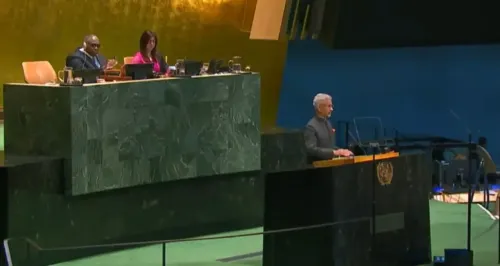
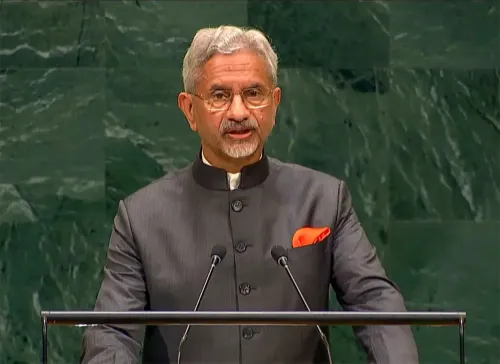
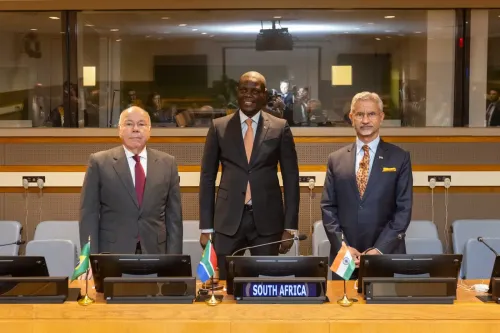
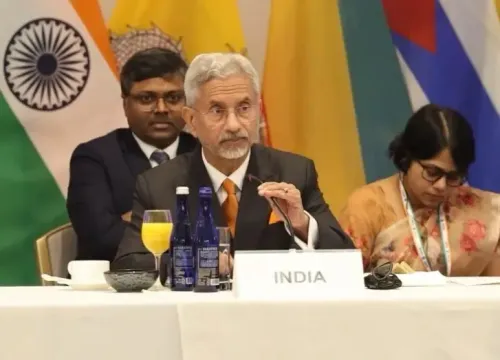
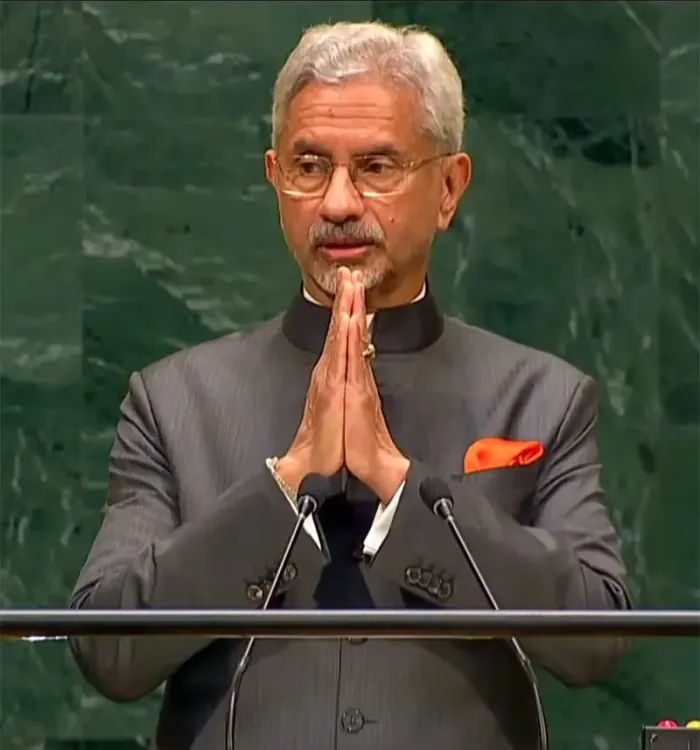
External Affairs Minister S. Jaishankar delivered India's address at the UN General Assembly (UNGA) on 27 September 2026, making a sweeping case for global peace while issuing an unambiguous warning: India would exercise its right to defend itself against terrorism, and the Global South must not continue absorbing the costs of conflicts it has no hand in shaping.
The Terrorism Warning
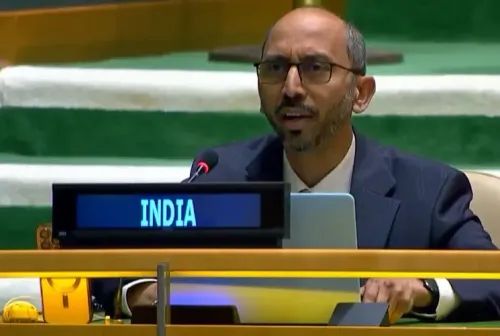
Jaishankar's sharpest remarks targeted what he described as a 'serial practitioner of terrorism' — a country he left unnamed but whose delegation, he alleged, had misrepresented facts before the assembly the previous day. He accused the unnamed nation of making arguments designed to normalise terrorism and shield its practitioners from accountability.
'Our right to defend ourselves against terrorism, will be exercised,' Jaishankar stated, in language that left little ambiguity about India's posture. He did not specify the country or detail what action India might take, but made clear that cross-border terrorism was incompatible with normal bilateral relations.
Conflicts, Shipping and the Global South
Beyond the terrorism warning, Jaishankar turned to the human and economic costs of ongoing conflicts. He called for restraint and de-escalation in the Gulf, stating that attacks on ships and seafarers in international waterways — spanning the Gulf, Red Sea and Black Sea — were unacceptable. He noted that Indian seafarers were among those killed in such attacks, lending personal weight to India's demand for safe passage and the protection of civilians.
He backed continuing peace efforts in Ukraine and offered India's assistance in addressing food and energy pressures stemming from that conflict. On the Middle East, he reiterated India's support for a two-state solution and confirmed that India was providing humanitarian assistance to Palestinians.
The '4F Crisis' and Global South Solidarity
For developing nations, Jaishankar described an overlapping '4F crisis' — covering food, fuel, fertiliser and finance. Climate shocks, fertiliser shortages and disruptions to grain trade compounded the strain, he said, while restricted market access and non-market practices made it harder for the Global South to industrialise. He criticised what he called 'a weaponisation of everything' — finance, supply chains, technology, resources and connectivity — arguing that the cumulative effect was a dangerous erosion of trust among nations.
India as Partner: Development, AI and Institutions
Positioning India as both a model and a partner, Jaishankar cited the country's digital public infrastructure and its 600 major development projects across 78 countries, spanning infrastructure, agriculture, information technology and training. Africa and small island developing states were highlighted as priority partners, along with climate initiatives, emergency medical shipments and post-disaster assistance.
On artificial intelligence, he argued that each nation should be free to develop AI models aligned with its own priorities, and signalled India's intent to make AI a pillar of its Global South partnerships — while remaining alert to the technology's potential to entrench bias.
A Call to Reform the Post-1945 Order
Jaishankar closed by connecting India's security concerns to a broader argument about global governance. 'The post-1945 order is giving way to new realities,' he said, calling for broader consultation, more transparent decision-making and a meaningful seat at the table for nations that have historically been excluded. The UNGA General Debate, he argued, must translate into structural reform of international institutions — not merely an annual platform for grievance. The speech signals that India will press these demands with growing assertiveness as its global profile rises.
Point of View
However real, are also a soft-power argument — and the Global South's trust is harder to build than infrastructure. Most importantly, the terrorism warning without a named target or specified response risks reading as rhetorical unless it is followed by concrete action; Jaishankar has set a high bar that New Delhi will now be watched against.
NationPress
27 Sept 2026
Frequently Asked Questions
What did Jaishankar say about terrorism at UNGA 2026?
Jaishankar warned at the UN General Assembly on 27 September 2026 that India's right to defend itself against terrorism 'will be exercised.' He accused an unnamed country — which he called a 'serial practitioner of terrorism' — of misrepresenting facts before the assembly and seeking to normalise terrorism and shield its practitioners from consequences.
Which country did Jaishankar refer to as a 'serial practitioner of terrorism'?
Jaishankar did not name the country explicitly in his address. He said the unnamed nation had made arguments before the assembly the previous day that misrepresented facts and sought to normalise terrorism, but he did not specify what action India might take in response.
What is the '4F crisis' Jaishankar described at the UN?
The '4F crisis' refers to the overlapping pressures of food, fuel, fertiliser and finance that Jaishankar said were battering developing nations. He argued that climate shocks, fertiliser shortages and disruptions to grain trade — compounded by restricted market access — were making it harder for the Global South to industrialise and grow.
What is India's position on Ukraine and the Middle East conflict?
Jaishankar backed ongoing peace efforts in Ukraine and offered India's assistance in easing food and energy pressures arising from the conflict. On the Middle East, he reiterated India's longstanding support for a two-state solution and confirmed that India is providing humanitarian assistance to Palestinians.
What did Jaishankar say about reforming global institutions?
Jaishankar argued that the post-1945 international order is giving way to new realities and called for broader consultation and more transparent decision-making. He said large parts of humanity could no longer be excluded from shaping global rules, and connected this to India's case for a greater voice for the Global South in international institutions.