India Issues Warning on Global Arms Race and Calls for Strategic Stability
Synopsis
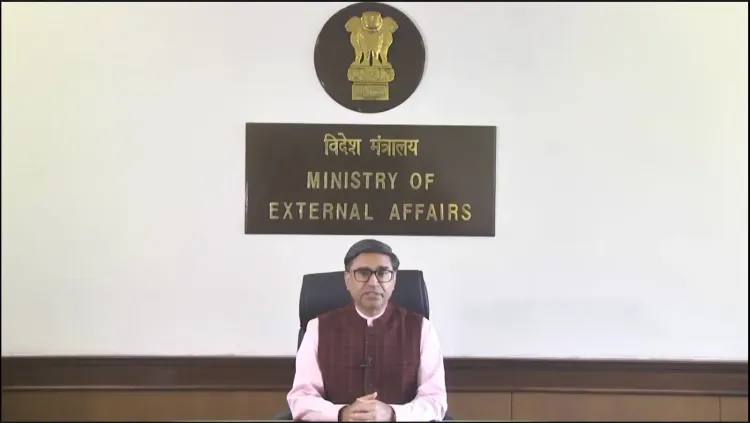
As geopolitical tensions rise, India stresses the need to protect strategic stability and prevent a new arms race. Foreign Secretary Vikram Misri addresses the erosion of critical arms control frameworks during a significant conference in Geneva.
Key Takeaways
India emphasizes urgent need for strategic stability.
Calls for renewed arms control amidst geopolitical tensions.
Advocates for universal nuclear disarmament.
Stresses responsible use of AI in military contexts.
Supports collaborative efforts in outer space security.
Geneva, Feb 25 (NationPress) India has highlighted the critical importance of ensuring strategic stability and preventing a new global arms race, warning that escalating geopolitical tensions are coinciding with the degradation of essential arms control agreements.
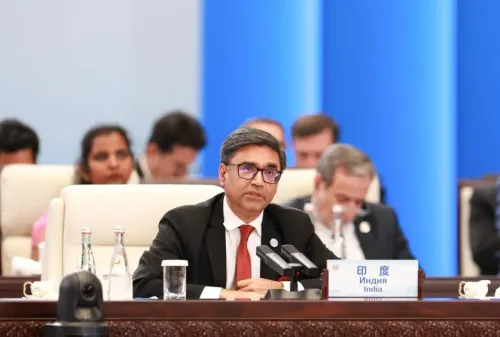
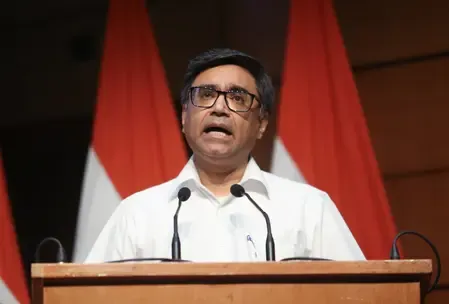
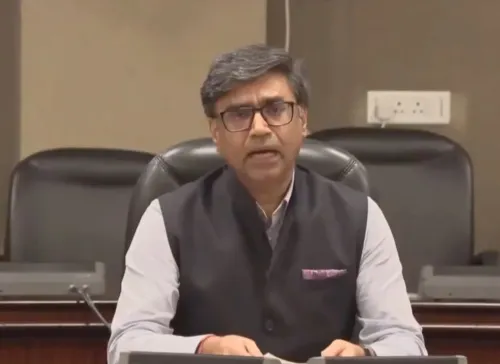
Speaking at the 2026 High-Level Segment of the Conference on Disarmament in Geneva on Tuesday (local time), Foreign Secretary Vikram Misri remarked, “The recent lapse of the New Strategic Arms Reduction Treaty (New START) represents a considerable blow to global arms control efforts. India holds that maintaining strategic stability and averting an arms race is more crucial than ever for international security.”
He pointed out that the High-Level Segment is taking place within a “deeply uncertain geopolitical and security context,” characterized by rising military expenditures, strain on established arms control frameworks, and swift technological advancements with direct military consequences.
“As a responsible nuclear-armed state, India is committed, according to its nuclear doctrine, to upholding a credible minimum deterrent, and adheres to a ‘no-first use’ policy while refraining from using nuclear weapons against non-nuclear states,” he stated.
Misri reiterated India's enduring stance advocating for universal, non-discriminatory, and verifiable nuclear disarmament through a phased and multilateral strategy.
Simultaneously, he expressed support for discussions on a Fissile Material Cut-off Treaty grounded in the existing mandate within the Conference on Disarmament.
Referring to emerging and disruptive technologies, the Foreign Secretary noted that scientific and technological progress is reshaping military capabilities while simultaneously introducing new vulnerabilities and competitive dynamics.
He stated that India has urged for a comprehensive evaluation by the UN system regarding the security implications of such technological advancements.
On the topic of artificial intelligence, he reaffirmed India's commitment to its responsible application in military contexts.
“Human judgment and oversight in the deployment of AI in military settings are vital to mitigate risks and ensure adherence to international humanitarian law,” he remarked, adding that India has established a domestic framework to evaluate trustworthy AI in defense, based on principles such as reliability, safety, and transparency.
He further clarified that decisions concerning nuclear weapons will remain firmly under human oversight.
The Foreign Secretary also referenced the recently concluded AI Impact Summit 2026 hosted in India, which adopted the New Delhi Declaration on AI Impact and included participation from over 100 nations.
The Summit emphasized the importance of democratizing access to artificial intelligence and leveraging it for inclusive development, especially across the Global South.
Addressing issues concerning outer space security, Misri stated, “Outer space should be a domain for collaboration, not conflict,” and reiterated India's support for negotiating a binding legal instrument aimed at preventing an arms race in outer space.
He also highlighted India's role in hosting a conference in December 2025 to commemorate the 50th anniversary of the Biological Weapons Convention, along with capacity-building initiatives in partnership with the UN Office for Disarmament Affairs.
The Foreign Secretary reaffirmed India’s endorsement of the Conference on Disarmament as “the world’s sole multilateral disarmament negotiation forum,” urging member states to exhibit political determination and prioritize collective security over parochial interests.
“India continues to stress the necessity for constructive dialogue and engagement... We urge all states to exhibit the requisite political will by considering the collective security interests of all nations,” Misri concluded.
Point of View
Emphasizing the importance of arms control and strategic stability amidst growing global uncertainties. The foreign policy approach aims to reinforce India's role as a responsible nuclear power committed to disarmament and regional security.
NationPress
22 Sept 2026
Frequently Asked Questions
What does India advocate for regarding nuclear disarmament?
India advocates for universal, non-discriminatory, and verifiable nuclear disarmament through a phased and multilateral approach.
What is the significance of the New START treaty?
The New Strategic Arms Reduction Treaty (New START) is vital for global arms control, and its expiration is seen as a setback for maintaining strategic stability.
How does India view emerging technologies in military contexts?
India acknowledges that emerging and disruptive technologies are transforming military capabilities but also creating new vulnerabilities and competition, necessitating careful evaluation.
What is India's position on artificial intelligence in the military?
India is committed to the responsible use of artificial intelligence in military applications, emphasizing the necessity of human oversight.
What are the goals of the AI Impact Summit 2026?
The AI Impact Summit aimed to democratize access to AI and leverage it for inclusive development, especially in the Global South.