India backs UNCLOS for South China Sea disputes on 10th ruling anniversary
Synopsis
A decade after the landmark UNCLOS arbitral ruling rejected China's sweeping South China Sea claims, India has restated its position backing peaceful resolution under international law — independently, without joining the 12-nation joint statement led by the US. The nuance matters: India is aligned but not co-signed, a posture that reflects its carefully managed relationship with Beijing.
Key Takeaways
MEA spokesperson Randhir Jaiswal reaffirmed India's position on 14 July that South China Sea disputes must be resolved peacefully under UNCLOS .
India called the 2016 arbitral tribunal ruling a 'significant milestone' and the basis for peaceful resolution between the parties.
12 nations — led by the US — issued a joint statement on the ruling's 10th anniversary , calling it 'final, legally binding, and definitive' between China and the Philippines .
India did not co-sign the joint statement but articulated an independently aligned position at the MEA briefing.
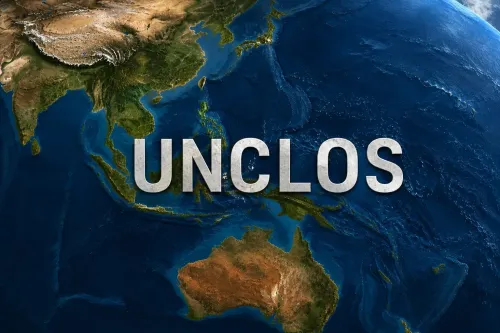
The South China Sea is claimed in whole or in part by China , the Philippines , Vietnam , Malaysia , Brunei , and Taiwan , making it a key Indo-Pacific flashpoint.
India on Tuesday, 14 July reiterated its position that disputes in the South China Sea must be resolved peacefully and in strict conformity with the UN Convention on the Law of the Sea (UNCLOS), calling the decade-old arbitral tribunal ruling a 'significant milestone' that forms the basis for settling competing maritime claims in the region.
What India Said
Ministry of External Affairs (MEA) spokesperson Randhir Jaiswal, addressing the weekly media briefing in New Delhi, stated: 'Our position on the South China Sea issue is well known. We emphasise the importance of freedom of navigation and overflight and other lawful uses of the sea and unimpeded commerce consistent with international law as reflected in UNCLOS. We reaffirm that maritime disputes must be resolved peacefully and in accordance with UNCLOS and reiterate that the award rendered 10 years ago by the arbitral tribunal is a significant milestone and the basis for peacefully resolving disputes between the parties.'
The 12-Nation Joint Statement
India's remarks came in response to a joint statement issued by 12 countries — led by the United States and including Australia, Canada, Estonia, Japan, Latvia, Lithuania, New Zealand, the Philippines, Romania, Slovenia, and the United Kingdom — marking the 10th anniversary of the 12 July 2016 arbitral tribunal ruling under Annex VII of UNCLOS.
The joint statement described the ruling as a 'landmark and unanimous decision' and underscored that the award is 'final, legally binding, and definitive between China and the Philippines' with respect to the maritime entitlements and claims addressed by the tribunal. The signatories also reaffirmed their 'unwavering commitment to maintaining a free and open Indo-Pacific that is peaceful, stable, and rules-based, anchored in international law.'
What the Tribunal Found
The 2016 ruling — delivered under UNCLOS — found that there is 'no legal basis for China's expansive maritime claims in the South China Sea, including those based on historic rights.' The 12 governments reiterated this finding, emphasising the importance of upholding freedom of navigation and overflight as well as other internationally lawful uses of the sea.
Notably, India did not co-sign the joint statement but separately articulated a position aligned with its core principles — reinforcing UNCLOS while stopping short of explicitly naming China or endorsing the multilateral communiqué.
Why the South China Sea Matters
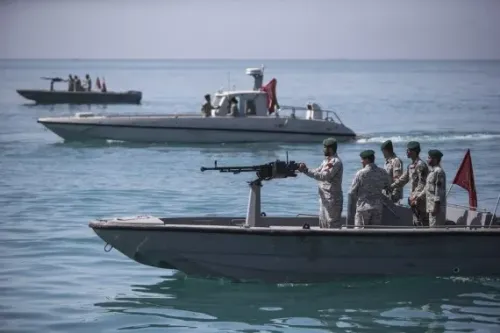
The South China Sea is one of the world's most heavily transited maritime trade corridors, with competing claims from China, the Philippines, Vietnam, Malaysia, Brunei, and Taiwan. Repeated confrontations between coast guard and naval vessels have made it a major strategic flashpoint in the Indo-Pacific. For India, which has significant trade and strategic interests in the region, the waterway's stability is directly linked to its own maritime security calculus.
What Comes Next
China has consistently rejected the 2016 ruling and is not expected to alter its posture in response to the anniversary statements. The international community will be watching whether the 12-nation coalition's reaffirmation translates into coordinated freedom-of-navigation operations or remains primarily a diplomatic signal. India's independent but aligned stance reflects its broader strategy of engaging multiple partners without formally joining blocs.
Point of View
But refuses to be seen as part of a China-containment coalition. This balancing act has held for years, but as confrontations in the South China Sea intensify and US-China rivalry deepens, the cost of studied ambiguity may rise. The 10th anniversary of the ruling is a reminder that legal clarity has not produced behavioural change from Beijing — and that diplomatic reaffirmations, however coordinated, have limits without enforcement mechanisms.
NationPress
13 Oct 2026
Frequently Asked Questions
What is India's position on the South China Sea dispute?
India supports peaceful resolution of South China Sea disputes strictly in accordance with UNCLOS, emphasising freedom of navigation, overflight, and lawful maritime commerce. New Delhi considers the 2016 arbitral tribunal ruling a significant milestone and the foundation for settling competing claims.
What did the 2016 South China Sea arbitral tribunal rule?
The tribunal, constituted under Annex VII of UNCLOS, issued a unanimous ruling on 12 July 2016 finding no legal basis for China's expansive maritime claims in the South China Sea, including those based on historic rights. The ruling is considered legally binding between China and the Philippines.
Which countries signed the joint statement on the 10th anniversary of the ruling?
Twelve countries signed the joint statement: the United States, Australia, Canada, Estonia, Japan, Latvia, Lithuania, New Zealand, the Philippines, Romania, Slovenia, and the United Kingdom. India was not among the signatories but separately reaffirmed an aligned position.
Why is the South China Sea strategically important?
The South China Sea is one of the world's busiest maritime trade corridors and is claimed in whole or in part by China, the Philippines, Vietnam, Malaysia, Brunei, and Taiwan. Repeated confrontations between coast guard and naval vessels have made it a major flashpoint in the Indo-Pacific, with significant implications for global trade and regional security.
Has China accepted the 2016 UNCLOS arbitral tribunal ruling?
No. China has consistently rejected the 2016 ruling and refuses to recognise its jurisdiction or findings. Beijing continues to assert its expansive maritime claims in the South China Sea despite the tribunal's determination that those claims lack legal basis under international law.