Modi, Takaichi voice serious concern over East and South China Sea
Synopsis
India and Japan have issued one of their sharpest joint warnings yet on the South and East China Sea, condemning militarisation and coercion without naming China. Paired with aligned positions on North Korea, Myanmar, Ukraine, and the Strait of Hormuz, the Modi-Takaichi summit in New Delhi signals a deepening strategic convergence across every major global flashpoint.
Key Takeaways
PM Modi and Japanese PM Sanae Takaichi met in New Delhi on 2 July and released a comprehensive Joint Statement.
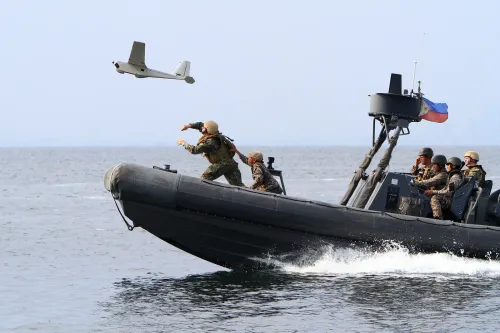
Both leaders expressed serious concern over the growing militarisation of disputed features in the East and South China Sea and opposed any unilateral attempts to change the status quo by force.
They reaffirmed commitment to UNCLOS and peaceful resolution of maritime disputes.
Both nations called for the complete denuclearisation of North Korea and urged all UN members to enforce UNSC sanctions, including arms transfer prohibitions.
The statement also addressed the crises in Myanmar , Gaza , Iran , and Ukraine , calling for diplomacy and adherence to international law.
India and Japan reaffirmed support for a two-State solution for Gaza and free navigation through the Strait of Hormuz .
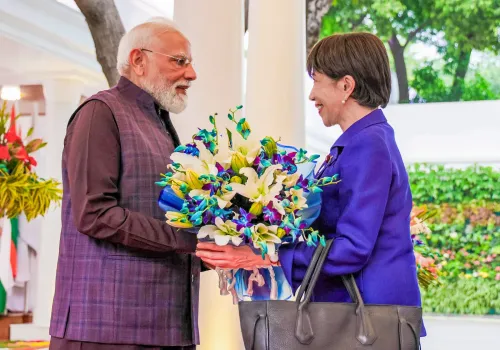
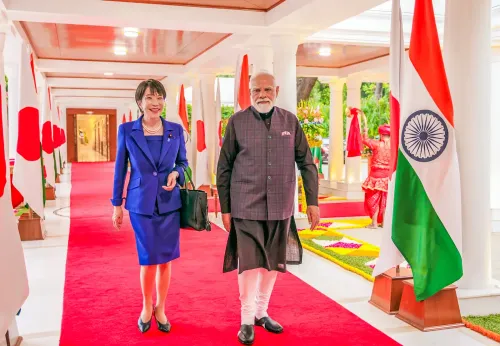
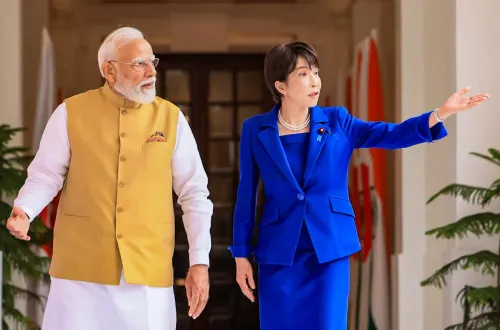
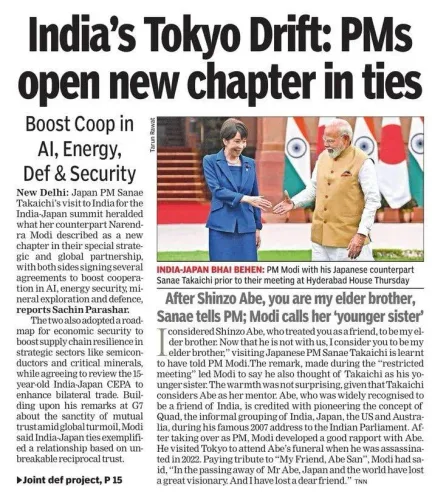
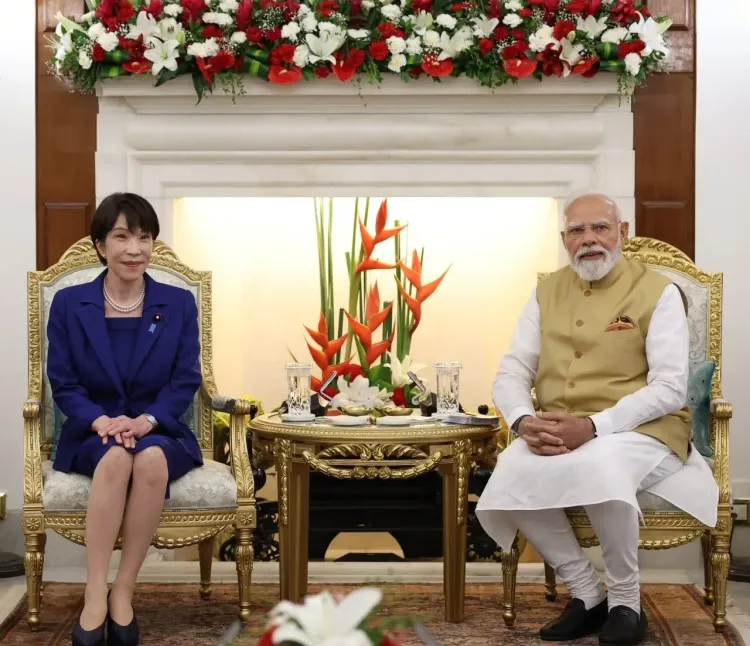
Prime Minister Narendra Modi and his Japanese counterpart Prime Minister Sanae Takaichi on Thursday, 2 July jointly expressed serious concerns over the deteriorating situation in the East China Sea and the South China Sea, following a bilateral summit in New Delhi. A comprehensive Joint Statement released after the meeting outlined the two leaders' shared positions on a range of pressing regional and global security issues.
South and East China Sea: A Shared Stand
Both leaders reiterated their strong opposition to any unilateral actions that endanger the safety and freedom of navigation and overflight, as well as attempts to alter the status quo by force or coercion. The Joint Statement noted that the two Prime Ministers 'shared their serious concerns over the growing militarisation of disputed features.'
They reaffirmed that maritime disputes must be resolved peacefully and in accordance with international law, specifically as reflected in the United Nations Convention on the Law of the Sea (UNCLOS). The statement marks one of the clearest joint articulations by India and Japan on contested maritime territories in recent years — a signal directed squarely at China, though Beijing was not named explicitly.
North Korea: Denuclearisation and Sanctions
Both leaders shared serious concern over North Korea's nuclear and missile programmes and reaffirmed their commitment to the complete denuclearisation of North Korea in accordance with relevant United Nations Security Council (UNSC) resolutions. They stressed the importance of addressing the continued proliferation of nuclear and missile technologies to and from North Korea.
Modi and Takaichi also urged all UN Member States to abide by their international obligations under UNSC resolutions, including the prohibition on the transfer to North Korea or procurement from North Korea of all arms and related material. They additionally reconfirmed the necessity of an immediate resolution of the abductions issue — a longstanding Japanese diplomatic priority involving citizens abducted by North Korea in the 1970s and 1980s.
Myanmar, Middle East, and the Strait of Hormuz
The two Prime Ministers expressed concern over the ongoing situation in Myanmar and its regional impact, calling for an immediate cessation of hostilities and the creation of conditions for inclusive dialogue among all stakeholders, aimed at a Myanmar-led, Myanmar-owned peaceful and durable solution.
On the Middle East, both leaders reiterated their commitment to sustainable peace and stability. Regarding Iran, they stressed the importance of securing free and safe navigation through the Strait of Hormuz, maintaining stable supply chains for energy and essential goods, and upholding international law including UNCLOS. They also stressed the imperative of advancing a comprehensive plan to rebuild Gaza and reaffirmed their commitment to a two-State solution, calling for continued diplomatic efforts to restore stability.
Ukraine and the Path to Lasting Peace
Modi and Takaichi expressed support for a just and lasting peace in Ukraine in accordance with international law, including the UN Charter. They welcomed ongoing diplomatic efforts by various countries toward that end — a position that aligns both nations with the broader international consensus without endorsing any specific peace framework.
The breadth of the Joint Statement signals a deepening strategic convergence between India and Japan across the Indo-Pacific and beyond, as both nations navigate an increasingly complex global security environment.
Point of View
Yet Beijing goes unnamed — a diplomatic calibration that reflects India's continued balancing act between Quad solidarity and its own complex border calculus with China. Japan, with more direct territorial disputes in the East China Sea, has stronger incentive to push harder language; India's co-signing of this formulation is therefore significant. The inclusion of the North Korea abductions issue — a domestic political priority for Tokyo — suggests India offered a concession on language in exchange for Japanese alignment on other fronts. Taken together, the statement is less a communiqué and more a strategic ledger of mutual obligations.
NationPress
1 Oct 2026
Frequently Asked Questions
What did PM Modi and PM Takaichi say about the South China Sea?
Both leaders expressed serious concern over the growing militarisation of disputed features in the East and South China Sea and strongly opposed any unilateral actions that threaten freedom of navigation or attempt to change the status quo by force or coercion. They reaffirmed that maritime disputes must be resolved peacefully under international law, including UNCLOS.
What was agreed on North Korea at the India-Japan summit?
Modi and Takaichi reaffirmed their commitment to the complete denuclearisation of North Korea in line with UNSC resolutions and urged all UN Member States to enforce sanctions, including prohibitions on arms transfers to and from North Korea. They also called for an immediate resolution of the abductions issue.
What did the Joint Statement say about Myanmar?
Both Prime Ministers expressed concern over the situation in Myanmar and its regional impact, calling for an immediate cessation of hostilities and the creation of conditions for inclusive, Myanmar-led dialogue among all stakeholders toward a peaceful and durable solution.
How did India and Japan address the Middle East and Ukraine?
On the Middle East, both leaders stressed free navigation through the Strait of Hormuz, a two-State solution for Gaza, and sustained diplomatic efforts for regional stability. On Ukraine, they expressed support for a just and lasting peace in accordance with international law and the UN Charter.
Why is the India-Japan Joint Statement on the South China Sea significant?
It represents one of the clearest joint positions by India and Japan on contested maritime territories, with explicit language against militarisation and coercion — widely interpreted as directed at China. India's co-signing of such language signals a deepening Quad-aligned stance on Indo-Pacific security.