India-Japan summit sends 'unmistakable' warning on Indo-Pacific coercion
Synopsis
The 16th India-Japan Summit was more than a diplomatic courtesy call — it was a coordinated geopolitical statement. With Modi and Takaichi jointly flagging China's maritime assertiveness, signing MoUs on semiconductors and critical minerals, and aligning their Indo-Pacific visions, the two democracies have signalled that coercion in the Asia-Pacific will meet structured, multilateral resistance.
Key Takeaways
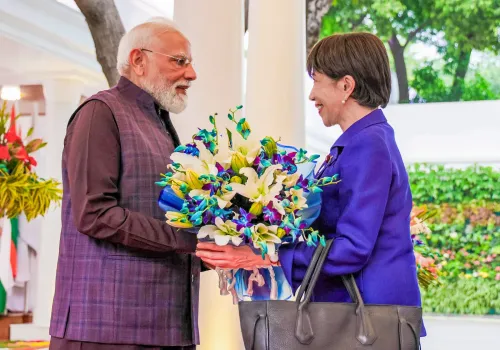
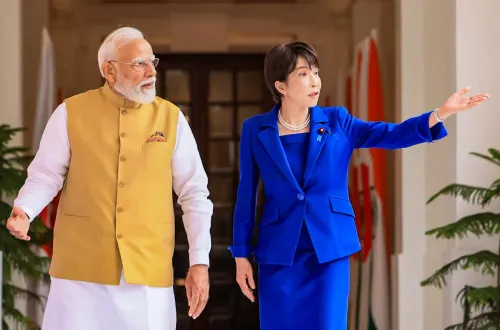
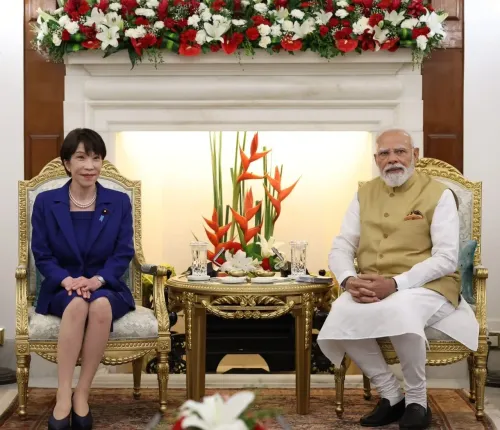
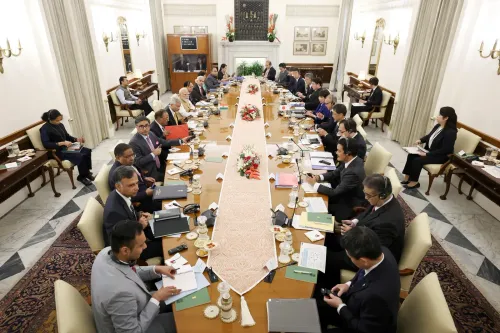
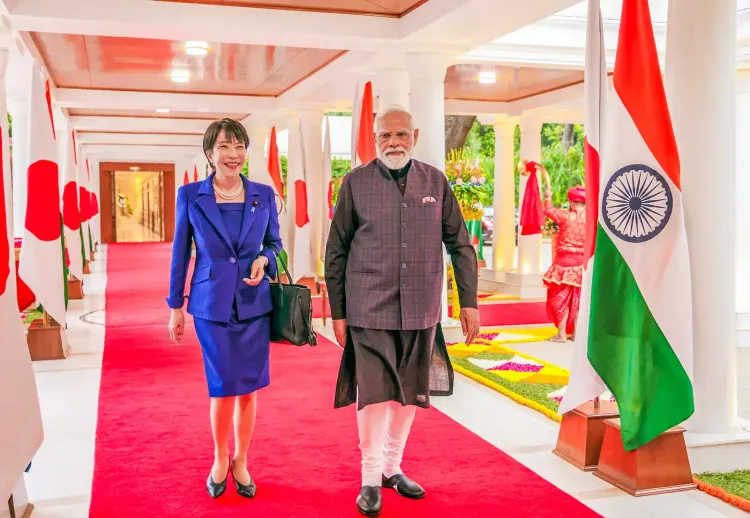
Prime Minister Narendra Modi and Japanese PM Sanae Takaichi held the 16th Annual India-Japan Summit on 2 July at Hyderabad House, New Delhi .
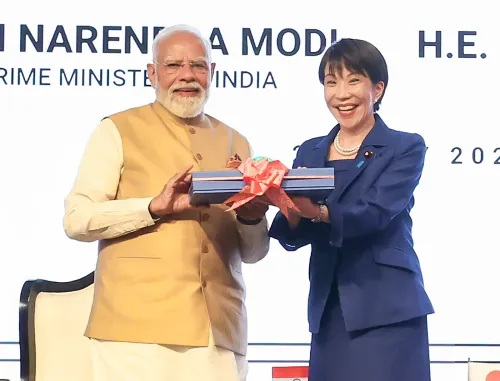
Both leaders signed MoUs covering economic security, clean energy, critical technologies, and R&D.
The summit expressed 'grave concerns' over economic coercion, supply-chain disruptions, and export restrictions on critical minerals .
Cooperation agreed on semiconductors , AI , energy resilience , maritime security, and defence technology.
Analyst Pema Gyalpo in Japan Forward described the summit as sending 'an unmistakable warning against coercive behavior in Asia-Pacific geopolitics.' The summit reinforced alignment between Japan's Free and Open Indo-Pacific vision and India's MAHASAGAR initiative, with enhanced Quad cooperation.
India and Japan have elevated their bilateral relationship into a comprehensive strategic partnership, with the 16th Annual India-Japan Summit on 2 July at Hyderabad House, New Delhi delivering a pointed geopolitical signal against coercive behaviour in the Asia-Pacific. According to an analysis published in Japan Forward, the summit marks a turning point that goes well beyond traditional economic cooperation.
What the Leaders Agreed On
Prime Minister Narendra Modi and his Japanese counterpart Sanae Takaichi held wide-ranging talks covering trade and investment, economic security, clean energy, emerging technologies, defence, and people-to-people exchanges. Following the bilateral discussions, both leaders witnessed the signing of key Memoranda of Understanding (MoUs) spanning economic security, clean energy, critical technologies, and research and development.
The two leaders also reaffirmed their opposition to any actions threatening freedom of navigation and overflight, and agreed that all maritime disputes must be resolved peacefully in accordance with international law — particularly the United Nations Convention on the Law of the Sea (UNCLOS). They further committed to strengthening cooperation on maritime security, intelligence sharing, and defence technology.
The Strategic Signal on China
Analyst Pema Gyalpo, writing in Japan Forward, described the summit as sending 'a clear signal to China that unilateral attempts to alter the regional status quo will face coordinated resistance.' Takaichi's remarks on the deteriorating security situation in the East and South China Seas were noted as among the summit's most consequential strategic outcomes.
'Alongside Prime Minister Narendra Modi, she expressed serious concern about China's increasingly assertive actions, including the growing militarisation of disputed maritime features and unilateral attempts to alter the status quo by force or coercion,' Gyalpo wrote. Neither government explicitly named China in the joint statement, but the framing left little ambiguity, according to the analysis.
Economic Security and Supply Chain Resilience
Beyond defence, the summit introduced a sharper focus on economic security. Both nations expressed 'grave concerns' about economic coercion, supply-chain disruptions, and export restrictions on critical minerals. India and Japan agreed to deepen cooperation in critical minerals, semiconductors, Artificial Intelligence (AI), energy resilience, and trusted supply chains — a deliberate strategy, according to the Japan Forward report, to reduce regional dependence on single-source suppliers and build resilient value chains.
Broader Strategic Architecture
The summit also reinforced alignment between Japan's Free and Open Indo-Pacific vision and India's MAHASAGAR (Mutual and Holistic Advancement for Security and Growth Across Regions) initiative. Enhanced cooperation through the Quad framework and stronger defence engagements were cited as indicators of an emerging, more balanced strategic architecture in the Indo-Pacific.
'The summit therefore represents not merely an expansion of bilateral ties but an important geopolitical development that reinforces regional stability, strengthens democratic partnerships, and sends an unmistakable warning against coercive behavior in Asia-Pacific geopolitics,' Gyalpo concluded. With both nations now aligned across security, technology, and supply-chain domains, the partnership's trajectory will be closely watched across the region.
Point of View
Co-signing that language without naming China directly is a practised balancing act: signalling alignment with democratic partners while preserving strategic autonomy. The deeper question is whether the semiconductor and critical-minerals cooperation will translate into actual supply-chain diversification or remain aspirational text. Past Quad-adjacent announcements have often outpaced implementation. The test for this partnership is execution speed — particularly on critical minerals, where China's processing dominance remains structurally intact.
NationPress
22 Oct 2026
Frequently Asked Questions
What was decided at the 16th India-Japan Annual Summit?
At the summit held on 2 July at Hyderabad House in New Delhi, Prime Minister Narendra Modi and Japanese PM Sanae Takaichi signed MoUs on economic security, clean energy, critical technologies, and R&D. They also agreed to strengthen maritime security, intelligence sharing, defence technology cooperation, and supply-chain resilience in semiconductors, AI, and critical minerals.
Why is the India-Japan summit seen as a warning to China?
According to an analysis in Japan Forward by Pema Gyalpo, the summit sent 'a clear signal to China that unilateral attempts to alter the regional status quo will face coordinated resistance.' Both leaders expressed concern over the militarisation of disputed maritime features in the East and South China Seas and reaffirmed freedom of navigation under UNCLOS, without explicitly naming China.
What is the MAHASAGAR initiative mentioned at the summit?
MAHASAGAR stands for Mutual and Holistic Advancement for Security and Growth Across Regions — India's Indo-Pacific engagement framework. At the summit, it was aligned with Japan's Free and Open Indo-Pacific vision, signalling a convergence of both nations' regional strategic doctrines.
How does the summit affect economic security in the Indo-Pacific?
India and Japan expressed 'grave concerns' over economic coercion, supply-chain disruptions, and export restrictions on critical minerals. Their agreement to cooperate on semiconductors, AI, energy resilience, and trusted supply chains is aimed at reducing regional dependence on single-source suppliers and building alternative value chains.
What role does the Quad play in the India-Japan strategic partnership?
The Quad — comprising India, Japan, the United States, and Australia — was cited at the summit as a key pillar of enhanced defence engagement. The Japan Forward analysis described stronger Quad cooperation as part of an 'emerging, more balanced strategic architecture in the Indo-Pacific.'