India indispensable to Japan's Indo-Pacific vision amid Trump uncertainty
Synopsis
Japan's PM Takaichi didn't just visit New Delhi for diplomacy — she came to lock in India as the anchor of a post-Trump Indo-Pacific strategy. With 120+ MoUs signed and a joint economic security declaration covering semiconductors, critical minerals, and green energy, the Japan-India axis is quietly positioning itself as the credible alternative to China's Belt and Road in the Indian Ocean region.
Key Takeaways
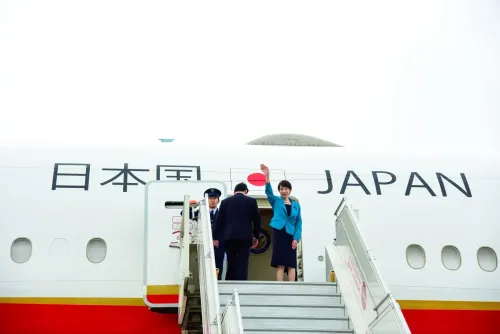
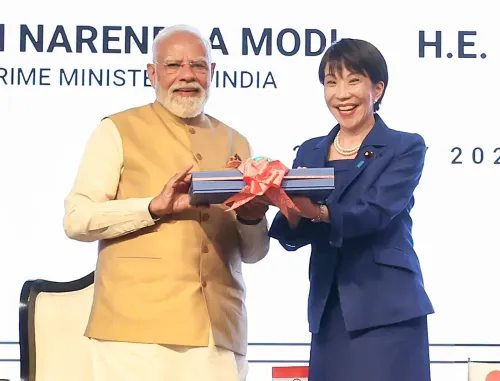
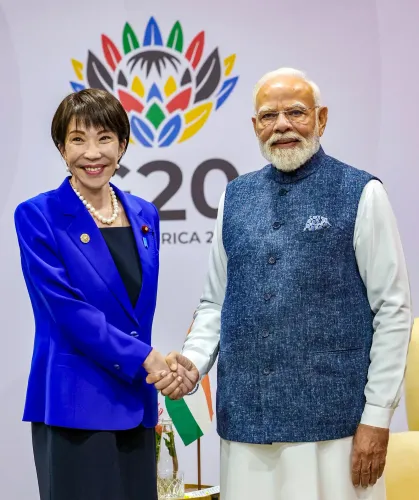
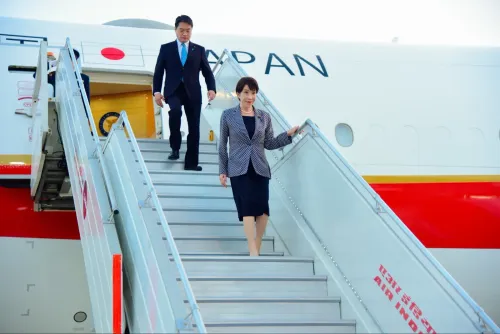
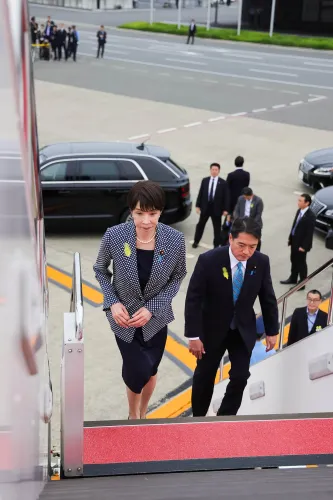
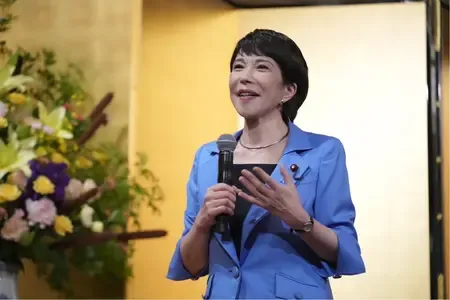
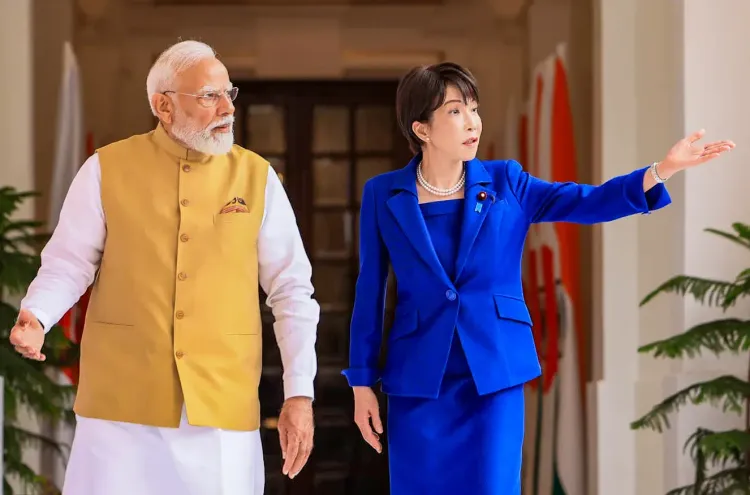
Japanese PM Sanae Takaichi 's visit to New Delhi aimed to cement India's role as the cornerstone of Japan's Free and Open Indo-Pacific (FOIP) strategy.
Nearly 120 private-sector MoUs were signed, spanning semiconductors , critical minerals , and green fuels including large-scale green ammonia production.
A joint economic security declaration and energy resilience statement were issued, framed against the 2025 Japan-India Joint Vision for the Next Decade .
Japan's revised FOIP now integrates maritime security, connectivity, and industrial value chains linking the Bay of Bengal with India's Northeast .
The partnership is seen as a hedge against both China-centred supply chains and US President Donald Trump 's uncertain commitment to the Quad and FOIP.
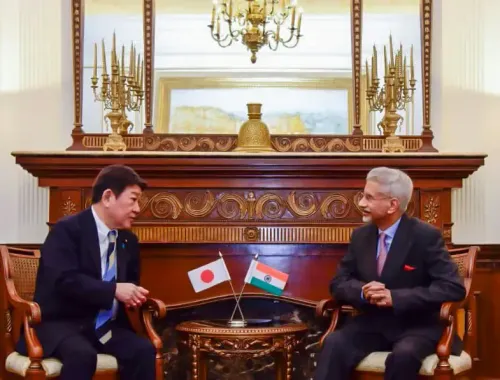
Japan views India as an indispensable partner in its Free and Open Indo-Pacific (FOIP) strategy, with the recent visit of Japanese Prime Minister Sanae Takaichi to New Delhi signalling a decisive shift toward deeper bilateral engagement — one that analysts say also marks a quiet distancing from US President Donald Trump's increasingly ambivalent stance on both the FOIP and the Quad, according to a report by Canada-based Geopolitical Monitor.
Takaichi's Visit: From Diplomatic Optics to Strategic Substance
The Geopolitical Monitor report characterised Takaichi's New Delhi visit as 'a shift from diplomatic optics to tangible security building.' According to the analysis, Takaichi arrived with a focused agenda: to anchor India as a key partner in Japan's economic security strategy at a moment when global supply chains are fragmenting and Washington's strategic reliability is in question.
The visit produced a declaration of economic security and a joint statement on energy resilience, covering critical minerals, semiconductors, upstream oil and gas, and green fuels — including large-scale green ammonia production in India. Framed against the backdrop of the 2025 Japan-India Joint Vision for the Next Decade, the agreements are also seen as a hedge against China-centred supply chains.
Semiconductors, Critical Minerals, and the Manufacturing Pivot
One of the most consequential outcomes of the visit, the report noted, was the sharpening focus on industry. Semiconductors and critical minerals have emerged as twin pillars of the bilateral partnership. As Japan moves to reduce its dependence on China, Prime Minister Narendra Modi is positioning India as a democratic, large-scale manufacturing alternative for Japan, the United States, and other global markets.
The signing of nearly 120 private-sector MoUs during the visit underscores the economic urgency driving the partnership. Takaichi's revised FOIP framework places greater weight on economics while integrating maritime security, connectivity, and industrial value chains linking the Bay of Bengal with India's Northeast — a configuration that analysts say is capable of competing with China's Belt and Road Initiative (BRI) in the Indian Ocean.
Energy Resilience: Japan's POWERR Asia and India's Role
Energy cooperation featured prominently in the bilateral agenda. The report highlighted Japan's POWERR Asia (Partnership on Wide Energy and Resources Resilience Asia) initiative and India's growing interest in biogas as evidence that Tokyo views New Delhi not merely as a consumer market, but as a base for energy diversification.
This comes amid heightened sensitivity around maritime chokepoints — particularly the Strait of Hormuz — which has pushed energy resilience to the top of the agenda for Japan and its ASEAN partners alike. The partnership, according to the report, enables India to access Japanese technology in renewable energy while reducing its dependence on Western-supplied energy.
The Broader Geopolitical Signal
The report argued that the real test of the emerging Japan-India framework lies in whether it can offer something more credible than Chinese state-led capital infrastructure financing, which currently dominates much of Southeast Asia and parts of the Indo-Pacific. With Trump signalling scepticism toward both the FOIP and the Quad, the Japan-India axis is increasingly being read as a stabilising alternative — one built on decarbonisation, supply-chain diversification, and democratic governance norms.
How effectively this framework translates into on-the-ground delivery will determine whether the partnership can serve as a genuine counterweight to Chinese influence in the region.
Point of View
They are quietly building the institutional scaffolding to operate independently if needed. The 120-MoU haul looks impressive, but the harder question is delivery: Japan's FOIP has a history of ambitious frameworks that stall on implementation. If the semiconductor and critical-mineral pipelines don't translate into actual supply-chain shifts within two to three years, this risks becoming another well-worded joint vision gathering dust alongside its predecessors.
NationPress
10 Oct 2026
Frequently Asked Questions
Why does Japan consider India indispensable to its Indo-Pacific strategy?
Japan views India as a democratic, large-scale manufacturing alternative that can anchor supply chains in semiconductors, critical minerals, and energy — reducing dependence on China. With US President Donald Trump signalling ambivalence toward the FOIP and the Quad, India's strategic weight in Japan's calculations has grown significantly.
What agreements were signed during PM Takaichi's visit to India?
The visit produced a declaration of economic security, a joint statement on energy resilience covering critical minerals, semiconductors, upstream oil and gas, and green fuels such as green ammonia. Nearly 120 private-sector MoUs were also signed, reflecting the depth of economic engagement.
How does the Japan-India partnership challenge China's Belt and Road Initiative?
Japan's revised FOIP integrates maritime security, connectivity, and industrial value chains linking the Bay of Bengal with India's Northeast, positioning the partnership as a democratic alternative to Chinese state-led infrastructure financing. Analysts say the framework is designed to compete with the BRI across the Indian Ocean and Southeast Asia.
What is Japan's POWERR Asia initiative and how does India fit in?
POWERR Asia — Partnership on Wide Energy and Resources Resilience Asia — is Japan's initiative to diversify energy sources and reduce vulnerability to supply disruptions. India fits in as both a manufacturing base and a partner in renewable energy, with Japan providing technology access while India offers scale and a growing biogas sector.
How does the 2025 Japan-India Joint Vision for the Next Decade relate to these agreements?
The 2025 Joint Vision provides the overarching framework within which the economic security declaration and energy resilience agreements are situated. It signals a long-term, structured partnership designed to hedge against China-centred supply chains and an unpredictable US policy environment under the Trump administration.