Strengthening UNCLOS for Modern Maritime Challenges
Synopsis
A recent report emphasizes the urgent need to strengthen the UNCLOS framework to address contemporary maritime challenges. As geographical factors increasingly influence legal rights, enhancing compliance mechanisms is crucial to ensure navigational freedoms are preserved.
Key Takeaways
UNCLOS is essential for maritime order.
Geographical factors can challenge legal rights.
Strengthening compliance mechanisms is critical.
International cooperation is necessary.
A proactive approach is required to safeguard navigational freedoms.
New Delhi, March 26 (NationPress) Rethinking the United Nations Convention on the Law of the Sea (UNCLOS) is less about creating a new maritime constitution and more about revitalizing the current framework, which has become strategically inadequate, according to a report released on Thursday.
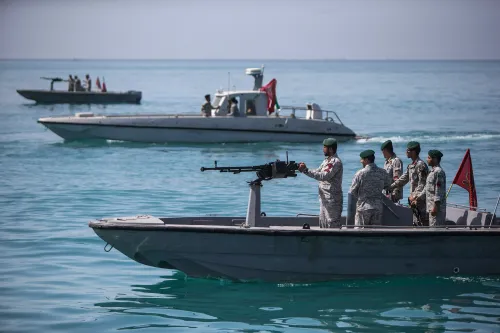
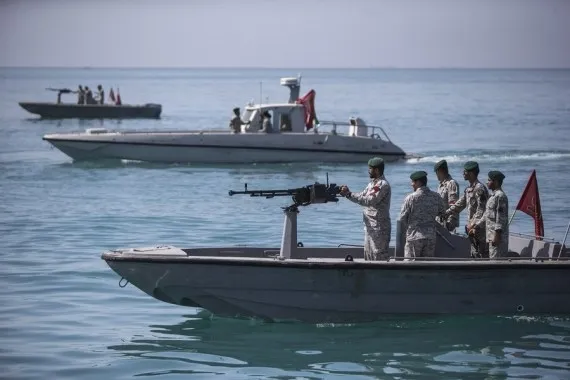
In an article for ‘India Narrative', former Indian diplomat Sanjay Kumar Verma emphasized that the Strait of Hormuz exemplifies how geographical factors can render established legal rights susceptible to coercive actions. He pointed out that recent events in the Taiwan Strait illustrate how navigational freedoms can be jeopardized when legal matters become intertwined with sovereignty disputes and strategic posturing.
Furthermore, Verma noted that the South China Sea serves as a prime example of how a legally binding ruling can fail to restore order without consistent enforcement.
The former diplomat underlined that UNCLOS represents one of the most significant successes of post-war international diplomacy.
"It established a legal framework for the oceans where previously there were overlapping claims, inconsistent practices, and the continual temptation to resolve disputes through sheer power. It struck a balance between the rights of coastal nations and the needs of maritime powers, providing a structure through which navigation, resource utilization, marine research, and dispute resolution could be conducted with a degree of predictability. To this day, despite the visible strains in the world's most contested waters, there is no viable alternative to it," Verma elaborated, underlining the importance of UNCLOS.
Verma cautioned that the issues facing UNCLOS today can be traced back to the Strait of Hormuz. Although transit passage is protected by law, geographical realities still afford opportunities for coercive leverage. Threats of disruption have immediate repercussions on energy markets and shipping decisions, and legal rights alone do not diminish the strategic significance of such chokepoints. The dilemma facing UNCLOS is not the absence of law, but rather that law alone is inadequate where coercive capabilities and strategic locations intersect," he remarked.
According to Verma, UNCLOS was conceived in a time when codified rules were believed to shape state conduct over time. While that belief continues, its force has diminished. The way forward, he argued, is not to discard UNCLOS but to fortify it with stringent compliance mechanisms, stricter interpretative guidelines, and enhanced bilateral, minilateral, and plurilateral collaborations.
“If the twenty-first century is to avoid a maritime order dominated by intimidation, ambiguity, and incremental changes, the law of the sea must evolve into a new phase. Its foundational principles remain valid. However, the assumption that these principles will enforce themselves is no longer sufficient. The current task is to align the legal framework at sea with a political and operational structure that is prepared to defend it," the seasoned diplomat concluded.
Point of View
It is clear that UNCLOS is a pivotal element in maintaining maritime order. The insights shared underscore the necessity of adapting this framework to contemporary geopolitical realities while ensuring that legal rights are safeguarded against coercive actions.
NationPress
3 Oct 2026
Frequently Asked Questions
Why is there a need to strengthen UNCLOS?
Strengthening UNCLOS is essential to address modern maritime challenges where geographical factors and strategic coercion threaten established legal rights and navigational freedoms.
What are the key challenges facing UNCLOS today?
Key challenges include the entanglement of legal rights with sovereignty disputes, inconsistent enforcement of legal rulings, and the influence of geographical realities on navigation.
How can compliance mechanisms be improved?
Improving compliance mechanisms may involve stricter interpretative guidelines and fostering bilateral, minilateral, and plurilateral cooperation among nations.
What role does geopolitics play in maritime law?
Geopolitics plays a significant role in maritime law as strategic locations can provide leverage over legal rights, thereby impacting navigation and resource access.