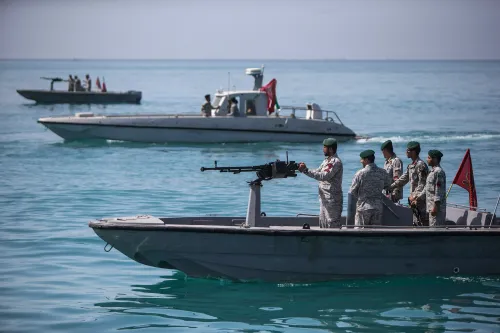
Hormuz Strait crisis puts global maritime law to the test
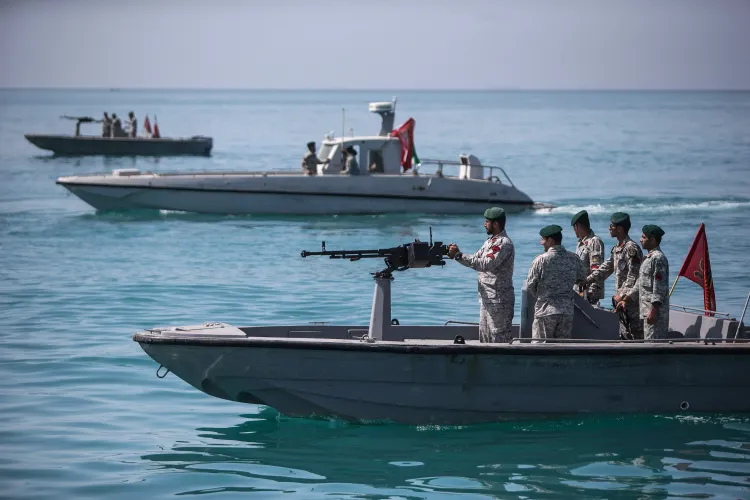
Synopsis
The US-Iran conflict at the Strait of Hormuz is doing more than threatening oil flows — it is stress-testing the legal architecture that governs global maritime passage. With neither the US nor Iran fully bound by UNCLOS, and a belligerent state controlling a critical chokepoint, the precedents set here could redraw the rules for every strategic strait on the planet.
Key Takeaways
The Strait of Hormuz crisis, triggered by the US-Iran conflict , is being described as a defining test for international maritime law.
UNCLOS 1982 enshrines the right of transit passage through international straits and prohibits its suspension — even in conflict.
The United States has neither signed nor ratified UNCLOS ; Iran has signed but not ratified it.
When a bordering state is itself belligerent, enforcing transit passage becomes legally and practically difficult, according to the PRF report.
The precedents set at Hormuz could shape behaviour at other strategic chokepoints including the Strait of Malacca and Bab-el-Mandeb .
The Strait of Hormuz crisis, triggered by the recent US-Iran conflict, is not merely a regional flashpoint but a defining stress test for international maritime law — one that could reshape how nations behave at strategic chokepoints worldwide during times of armed conflict, according to a report released on Wednesday, 29 April.
The report, published by the Politeia Research Foundation (PRF), warns that the unfolding situation highlights a deepening tension between two competing legal frameworks: the United Nations Convention on the Law of the Sea (UNCLOS), which emphasises the peaceful use of the oceans, and the Laws of Armed Conflict at Sea, which govern how nations conduct warfare in the maritime domain.
What UNCLOS Says About Strait Passage
Under UNCLOS 1982, the right of transit passage through international straits is explicitly enshrined. The convention states that all ships and aircraft — including warships — may pass through straits used for international navigation continuously and expeditiously without being hampered, and does not permit suspension of such passage. This regime also applies to passages through straits running through the territorial seas of adjoining coastal nations, where transit passage supersedes the narrower right of innocent passage.
The PRF report stressed that UNCLOS provisions clearly prohibit any interference with or suspension of transit or innocent passage through straits used for international navigation. However, the report noted that the legal architecture designed for peacetime use comes under severe strain when armed conflict erupts.
Where the US and Iran Stand Legally
A critical complication, according to the report, is that neither the United States nor Iran is fully bound by UNCLOS in the conventional sense. Washington has neither signed nor ratified the convention, while Tehran has signed but not ratified it.
The report noted, however, that successive US administrations have treated the core navigation and overflight provisions of UNCLOS as reflective of customary international law and have committed to operating in accordance with those provisions. Iran, as a signatory, is technically bound by the transit passage regime from a legal standpoint, the report added.
The Challenge When a Bordering State Is Belligerent
The report highlighted the particular difficulty that arises when the state bordering a strait is itself a party to the conflict. According to the PRF, the prevailing legal view holds that transit passage should supersede the actions of belligerent nations. Yet in practice, a belligerent bordering state may seek to interdict enemy vessels, lay minefields, or enforce a blockade — measures that amount to a de facto closure of the strait, regardless of the legal justification offered.
As the report stated:
Point of View
Not for scenarios where a belligerent state controls the very strait in question. The fact that neither the US nor Iran is fully bound by the convention is not a technicality — it is a structural gap that adversarial actors will exploit. If the international community fails to enforce transit passage norms here, it sets a permissive precedent for every chokepoint from Malacca to Bab-el-Mandeb. The PRF report is a timely reminder that legal architecture without enforcement is just paper.
NationPress
16 Sept 2026
Frequently Asked Questions
What is the Strait of Hormuz crisis and why does it matter for maritime law?
The Strait of Hormuz crisis, stemming from the recent US-Iran conflict, is being described as a defining test for international maritime law. It exposes tensions between UNCLOS transit passage rules and the Laws of Armed Conflict at Sea, with potential precedent-setting consequences for other strategic chokepoints worldwide.
What does UNCLOS say about passage through international straits?
UNCLOS 1982 enshrines the right of transit passage, allowing all ships and aircraft — including warships — to pass through international straits continuously and expeditiously without interference. The convention explicitly prohibits suspension of this right, even through straits running through a coastal nation's territorial seas.
Are the US and Iran bound by UNCLOS?
Neither country is fully bound by UNCLOS in the conventional sense. The United States has neither signed nor ratified the convention, while Iran has signed but not ratified it. However, successive US administrations have treated UNCLOS navigation provisions as customary international law and committed to operating accordingly.
What happens to transit passage rules when a bordering state is at war?
According to the Politeia Research Foundation report, the prevailing legal view is that transit passage should supersede belligerent actions. However, when the strait's bordering state is itself a belligerent, enforcement becomes extremely difficult, as that state may interdict vessels, lay mines, or enforce a blockade — amounting to a de facto closure.
Which other chokepoints could be affected by precedents set at Hormuz?
The PRF report suggests the Strait of Malacca, the Bab-el-Mandeb, and the Taiwan Strait could all be affected. How the international community responds legally and diplomatically to actions at Hormuz may define norms governing these straits in future crises.