HP CM Office Launches 500 kW Solar Projects in Gram Panchayats
Synopsis
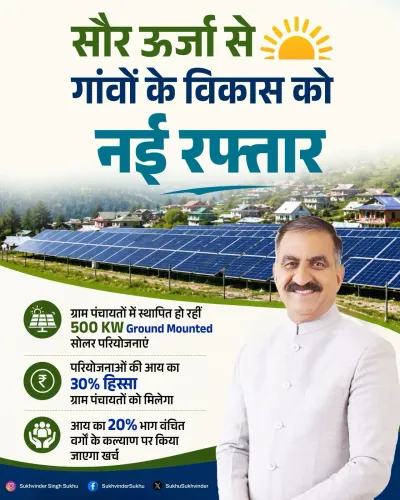
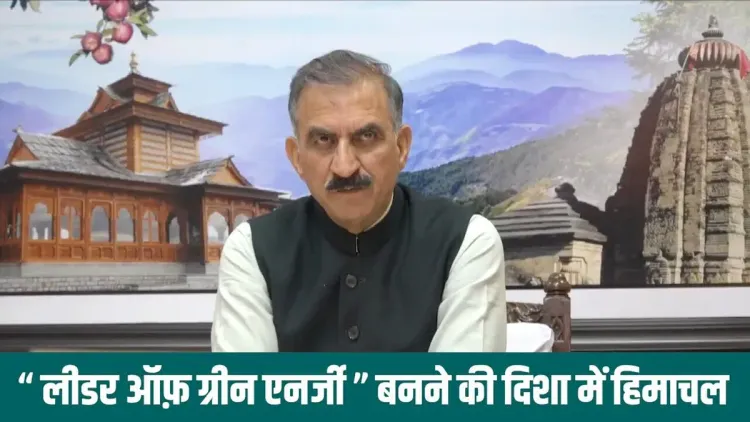
The Chief Minister's Office of Himachal Pradesh has announced the installation of 500 kW solar power projects in gram panchayats statewide, framing it as a flagship step to strengthen the rural economy through decentralised green energy — aligning with India's 500 GW renewable target for 2030.
Key Takeaways
The Chief Minister's Office of Himachal Pradesh announced on 14 July 2026 that 500 kW solar power projects are being installed in gram panchayats across the state.
The initiative is presented as part of the government's effort to strengthen the rural economy through green energy from its first day in office.
Himachal Pradesh, traditionally hydro-dependent, is diversifying into solar to address seasonal energy gaps and create village-level revenue streams.
The programme aligns with India's national target of 500 GW of non-fossil fuel energy by 2030 and central schemes such as PM-KUSUM .
Gram panchayats serve as the institutional hosts for these decentralised installations, potentially enabling surplus power sales as a revenue source.
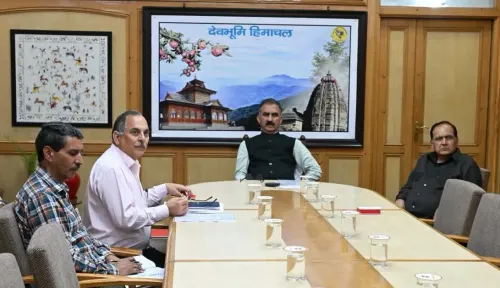
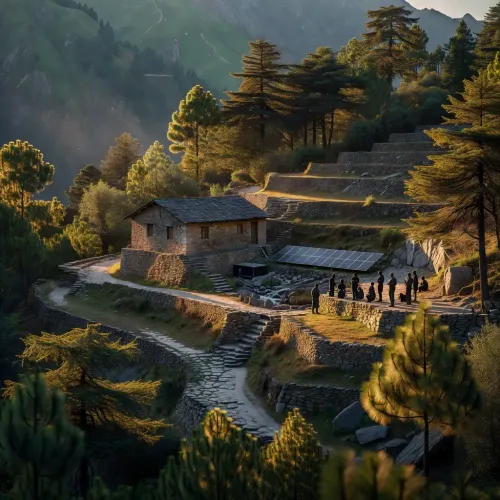
The Chief Minister's Office of Himachal Pradesh announced on Tuesday, 14 July 2026 that the state government is installing 500-kilowatt solar power projects in village panchayats across the state as part of a broader push to strengthen the rural economy through green energy.
Posting in Hindi, the office stated: 'हमारी सरकार पहले दिन से ही ग्रामीण अर्थव्यवस्था को मजबूत करने का कार्य कर रही है' ('Our government has been working to strengthen the rural economy from day one'). The post further noted that new initiatives in the green energy sector are being undertaken to empower villages, with 500 kW capacity solar power projects being set up in gram panchayats across the state.
Context
Himachal Pradesh has historically relied on hydropower as its primary source of electricity. Under Chief Minister Sukhvinder Singh Sukhu, who took office in December 2022, the state administration has signalled a pivot toward diversifying its renewable energy mix by tapping solar potential at the grassroots level. The 500 kW installations in gram panchayats represent a decentralised approach — placing power generation assets directly within village-level governance structures rather than centralised utility grids. Decentralised solar projects of this scale can serve dual purposes: supplying clean electricity to local households and community facilities, and potentially generating surplus power that panchayats can feed into the grid, creating a revenue stream for village bodies.Policy Backdrop
The initiative aligns with India's national renewable energy ambitions. The Jawaharlal Nehru National Solar Mission, launched in 2010, laid the foundation for large-scale solar adoption across the country. The Pradhan Mantri Kisan Urja Suraksha evam Utthaan Mahabhiyan (PM-KUSUM) scheme, introduced in 2019, extended solar support specifically to rural and agricultural contexts, including decentralised generation. At the national level, India is targeting 500 GW of non-fossil fuel energy capacity by 2030. States have been encouraged to develop distributed solar assets to reduce transmission losses and meet renewable purchase obligations. Himachal Pradesh's gram panchayat solar drive fits squarely within this framework, potentially qualifying for central scheme support or incentives.Stakeholders and Impact
Gram panchayats are the primary institutional beneficiaries of this programme. As elected local bodies responsible for village-level governance and development planning, they would host and potentially manage these solar installations. Rural communities stand to gain through improved electricity access, reduced dependence on the conventional grid, and the prospect of income from surplus power generation. The move also carries significance for Himachal Pradesh's climate profile. The state, despite being a net energy exporter through hydropower, faces energy security challenges during dry seasons when hydro generation dips. Village-level solar assets could buffer against such seasonal gaps while contributing to the state's overall clean energy targets.What's Next
Key markers to watch include the pace of project commissioning across gram panchayats, the actual capacity that comes online, and whether these installations are integrated with existing central schemes such as PM-KUSUM. The government's ability to operationalise and maintain these projects at scale — across Himachal Pradesh's difficult hill terrain — will determine the real-world impact on rural livelihoods and energy security. A clear timeline and funding breakdown from the state government would provide further clarity on the programme's scope.Point of View
The state also decentralises both ownership and accountability, which can galvanise local buy-in but also raises questions about maintenance capacity in hilly, remote terrain. The initiative tracks a broader pattern among Indian state governments of using decentralised renewables as a rural outreach instrument, particularly ahead of electoral cycles. Whether the programme delivers tangible livelihood benefits will depend on implementation rigour and integration with central funding mechanisms.
NationPress
14 Jul 2026
Frequently Asked Questions
What is the Himachal Pradesh government's solar project in gram panchayats?
The Himachal Pradesh government is installing 500 kW solar power projects in gram panchayats across the state to generate clean energy at the village level and strengthen the rural economy.
How big are the solar projects being set up in Himachal Pradesh villages?
Each solar power project being set up in Himachal Pradesh's gram panchayats has a capacity of 500 kilowatts (kW).
Who is the Chief Minister behind Himachal Pradesh's green energy push?
Chief Minister Sukhvinder Singh Sukhu, who has led the Himachal Pradesh government since December 2022, is the driving force behind the state's green energy and rural economy initiatives.
How does this solar initiative relate to central government schemes?
The initiative aligns with national programmes such as PM-KUSUM and India's broader target of 500 GW of non-fossil fuel energy by 2030, and the panchayat-level projects may be eligible for central scheme support.
What benefit will gram panchayats get from the 500 kW solar projects?
Gram panchayats could use the solar power for local electricity needs and potentially sell surplus power to the grid, creating a new revenue stream for village bodies.