Dr. Jitendra Singh Reviews Ri-Bhoi's Progress Under Aspirational Districts
Synopsis
Union Minister Dr. Jitendra Singh reviewed Ri-Bhoi district in Meghalaya on 14 July 2026, praising significant health indicator gains under NITI Aayog's Aspirational Districts Programme. The Deputy Commissioner presented a data-driven status report, reflecting the competitive federalism model credited to PM Modi's governance vision.
Key Takeaways
Jitendra Singh reviewed Ri-Bhoi district's progress under the Aspirational Districts Programme on 14 July 2026 .
The Deputy Commissioner of Ri-Bhoi presented a formal status report using the programme's prescribed performa.
Health indicators showed 'significant progress', according to the minister's assessment.
The Aspirational Districts Programme , launched by NITI Aayog in January 2018 , covers 115 backward districts and tracks 49 key performance indicators .
The programme is built on 'competitive federalism', using real-time, evidence-based data to rank and motivate district administrations.
PM Narendra Modi was credited by Dr.
Singh with conceptualising the programme's 'out-of-box' approach.
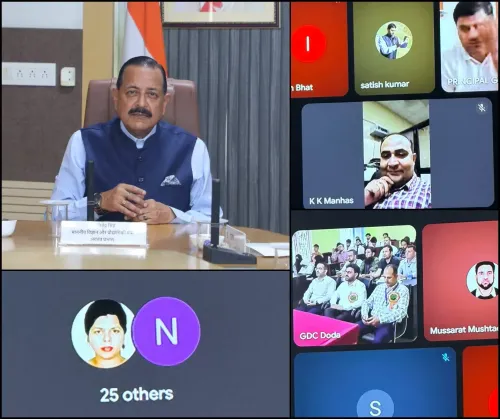
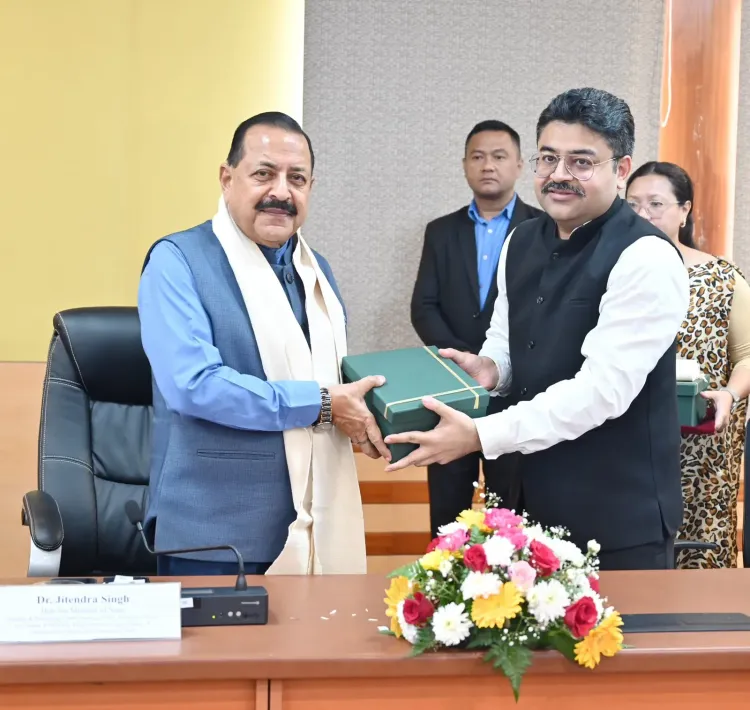
Union Minister of State (Independent Charge) for Science and Technology and Earth Sciences Dr. Jitendra Singh on Tuesday, 14 July 2026, highlighted the significant development strides made by Ri-Bhoi district in Meghalaya under the Aspirational Districts Programme, noting particular gains in health indicators following a detailed presentation by the district's Deputy Commissioner.
Context
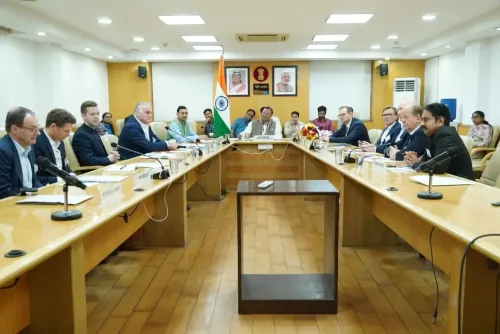
During the review, the Deputy Commissioner of Ri-Bhoi delivered a comprehensive status report in the prescribed format, covering objective, evidence-based, and statistically supported parameters. Dr. Singh described the progress as 'significant', especially across health-related indicators that form a core component of the programme's monitoring framework. The minister shared photographs from the interaction on his official X account, underlining the government's focus on ground-level accountability.
Policy Backdrop
The Aspirational Districts Programme was launched by NITI Aayog in January 2018, covering 115 backward districts across India with real-time monitoring of 49 key performance indicators spanning health, education, agriculture, and infrastructure. The programme operates on the principle of 'competitive federalism', where districts are ranked against one another on objective data, incentivising administrations to improve outcomes continuously. Ri-Bhoi is among the districts in Meghalaya identified under this framework for focused, data-driven development intervention.
Dr. Singh credited Prime Minister Narendra Modi with originating the concept, stating in his post that it 'could not have taken shape without the out-of-box approach' of the Prime Minister. The programme replaced the earlier Planning Commission model of top-down planning with a decentralised, metrics-driven approach that empowers district administrations to compete and improve in real time.
Stakeholders and Impact
The primary beneficiaries of the programme's progress in Ri-Bhoi are residents of one of Meghalaya's more geographically remote and historically underserved districts. Health sector workers and district administration officials are the key implementers, with their performance now visible through publicly accessible dashboards maintained by NITI Aayog. The emphasis on health indicators aligns with national priorities to close outcome gaps in lagging regions, particularly in maternal and child health, nutrition, and basic medical access.
The review format — a formal presentation by the Deputy Commissioner using a prescribed performa — reflects the standardised accountability mechanism built into the programme, ensuring that progress is comparable across all 115 aspirational districts and not self-reported in an ad hoc manner.
What's Next
NITI Aayog periodically releases updated district rankings, and Meghalaya's performance across its aspirational districts will be closely watched in the next quarterly release. State-level reviews of the kind conducted by Dr. Singh are expected to continue as the Union government maintains its emphasis on ministerial oversight of the programme. Sustained improvement in health indicators in Ri-Bhoi could position the district as a model for other aspirational districts in the northeastern region, reinforcing the competitive federalism logic at the heart of the initiative.
Point of View
Such ministerial reviews also function as soft pressure on district administrations to sustain momentum in measurable indicators.
NationPress
14 Jul 2026
Frequently Asked Questions
What is the Aspirational Districts Programme in India?
The Aspirational Districts Programme is a NITI Aayog initiative launched in January 2018 to accelerate development in 115 backward districts by monitoring 49 key performance indicators across health, education, agriculture, and infrastructure in real time.
Which districts in Meghalaya are Aspirational Districts?
Ri-Bhoi is among the districts in Meghalaya identified under NITI Aayog's Aspirational Districts Programme for focused, data-driven development. The programme covers 115 districts nationwide.
What is competitive federalism in the context of Aspirational Districts?
Competitive federalism in this context means districts are ranked against each other on objective, evidence-based data, encouraging local administrations to compete for better outcomes rather than waiting for top-down directives.
What progress has Ri-Bhoi district made under the Aspirational Districts Programme?
Union Minister Dr. Jitendra Singh noted significant progress in Ri-Bhoi, particularly in health indicators, following a formal presentation by the district's Deputy Commissioner on 14 July 2026. Specific statistics were not disclosed in the minister's post.
Who launched the Aspirational Districts Programme?
NITI Aayog launched the Aspirational Districts Programme in January 2018. Prime Minister Narendra Modi has been credited with conceptualising the programme's competitive, data-driven approach to developing backward districts.