CM Rio backs NITI Aayog's Aspirational Districts and Blocks Push

Synopsis
Nagaland Chief Minister Neiphiu Rio has commended NITI Aayog for its Aspirational Districts and Aspirational Blocks Programmes, saying the initiatives have significantly reshaped development in remote and underserved parts of India. The remarks underline state-level support for the centre's data-driven governance framework targeting India's most backward regions.
Key Takeaways
Nagaland CM Neiphiu Rio publicly praised NITI Aayog on June 12, 2026 for its Aspirational Districts and Aspirational Blocks Programmes.
The Aspirational Districts Programme was launched in January 2018 , covering 112 of India's most backward districts across 49 key performance indicators.
The Aspirational Blocks Programme extended the same model to sub-district units for more granular last-mile delivery.
Both programmes replaced the older Planning Commission model with real-time, outcome-oriented monitoring under NITI Aayog , established in 2015 .
Northeastern states including Nagaland are among the primary target geographies given their remote terrain and tribal populations.
Upcoming NITI Aayog delta rankings will be a key measure of whether ground-level outcomes in Nagaland match the political momentum signalled by the CM's statement.
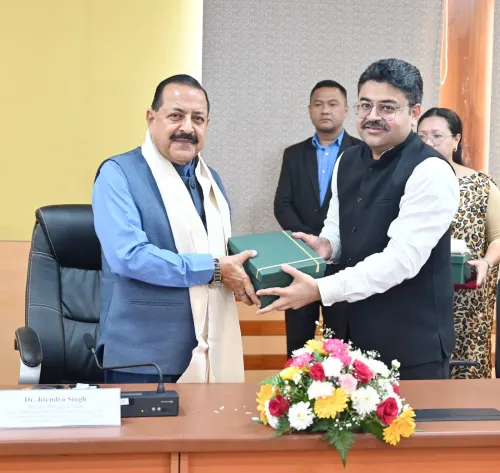
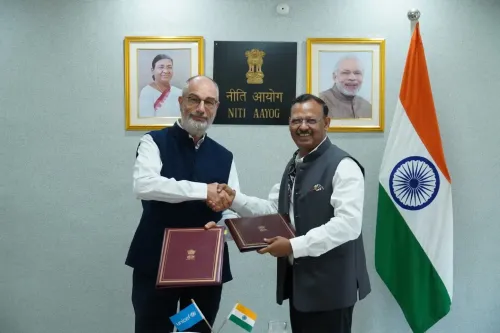
Nagaland Chief Minister Neiphiu Rio on Friday, June 12, 2026, publicly praised NITI Aayog for conceptualising and implementing the Aspirational Districts Programme and the Aspirational Blocks Programme, calling the initiatives transformative for some of the most remote and underserved regions of the country.
Context
In his post on X, CM Rio stated that the two programmes have 'significantly reshaped the development discourse' in areas that have historically lagged on socio-economic indicators. The appreciation is notable coming from a chief minister whose state, Nagaland, is among the northeastern geographies that these schemes specifically target. The post is a reply, indicating it forms part of a broader public conversation around the impact of NITI Aayog-led governance interventions.
The Aspirational Districts Programme was launched in January 2018 by NITI Aayog with the goal of rapidly transforming 112 of India's most backward districts. It tracks progress across 49 key performance indicators spanning health, education, agriculture, and infrastructure, using a competitive and cooperative federalism model to incentivise improvement.
Policy Backdrop
The Aspirational Blocks Programme was subsequently rolled out as a more granular extension of the same approach, targeting sub-district administrative units — blocks — to ensure development delivery reaches the last mile. Both programmes represent a significant departure from the earlier Planning Commission model, replacing it with real-time, data-driven outcome monitoring under NITI Aayog, which was established in 2015.
The Northeast, with its predominantly tribal population, difficult terrain, and historically limited connectivity, has been among the primary beneficiaries of this framework. States like Nagaland participate in regular delta rankings — periodic assessments of incremental improvement — which link visibility and administrative attention to measurable progress on ground-level indicators.
Stakeholders and Impact
The most direct beneficiaries of both programmes are populations in remote districts and blocks who have seen targeted investment in health infrastructure, school enrolment, agricultural productivity, and basic connectivity. Block-level administrators and district collectors operate as the frontline implementers, with their performance publicly ranked to drive competitive improvement.
For Nagaland, participation in these programmes has meant structured central attention to areas that might otherwise fall outside the mainstream policy spotlight. CM Rio's endorsement signals state-level ownership of the programmes' objectives and may reinforce coordination between Kohima and New Delhi on upcoming review cycles.
What's Next
NITI Aayog periodically releases updated delta rankings for aspirational districts and blocks, which serve as a public scorecard for state and district administrations. Nagaland's performance in these rankings will be a key indicator of whether the on-ground outcomes match the political endorsement expressed by CM Rio. Any state-level review meetings on block performance in Nagaland are likely to draw on the momentum of this public appreciation to push for stronger implementation in the months ahead.
Point of View
And public validation from a sitting chief minister adds political weight to the programme's continuity. It also subtly positions Nagaland as a cooperative federalism partner, which could translate into administrative prioritisation during the next round of delta rankings. The statement fits a broader pattern of state leaders using social media to signal policy alignment with New Delhi, reinforcing their state's standing in competitive grant and ranking cycles.
NationPress
26 Oct 2026
Frequently Asked Questions
What is the Aspirational Districts Programme?
The Aspirational Districts Programme is a flagship NITI Aayog initiative launched in January 2018 that targets 112 of India's most backward districts, tracking improvement across 49 key performance indicators in health, education, agriculture, and infrastructure through a competitive ranking system.
What is the Aspirational Blocks Programme?
The Aspirational Blocks Programme is an extension of the Aspirational Districts model, targeting sub-district administrative units called blocks to ensure development reaches remote and underserved communities at a more granular level.
Why did Nagaland CM Neiphiu Rio praise NITI Aayog?
CM Neiphiu Rio stated that the Aspirational Districts and Aspirational Blocks Programmes have 'significantly reshaped the development discourse' in some of the most remote and underserved regions of the country, offering public appreciation for NITI Aayog's role in conceptualising and implementing the schemes.
Is Nagaland part of the Aspirational Districts Programme?
Nagaland is among the northeastern states whose districts participate in central schemes like the Aspirational Districts Programme, given the region's remote terrain, predominantly tribal population, and historically limited socio-economic indicators.
What comes after the Aspirational Districts Programme rankings?
NITI Aayog periodically releases delta rankings that measure incremental improvements in aspirational districts and blocks; these rankings serve as a public scorecard and are expected to guide future administrative and funding decisions for states including Nagaland .