Kishan Reddy meets CSIRO chief in Sydney, pushes critical minerals tie-up

Synopsis
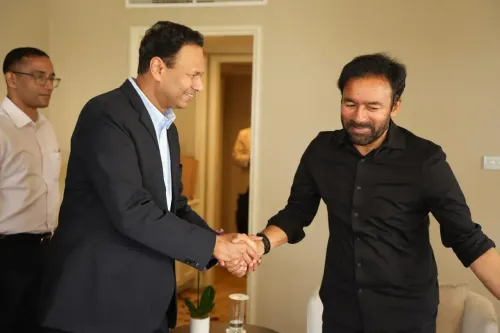
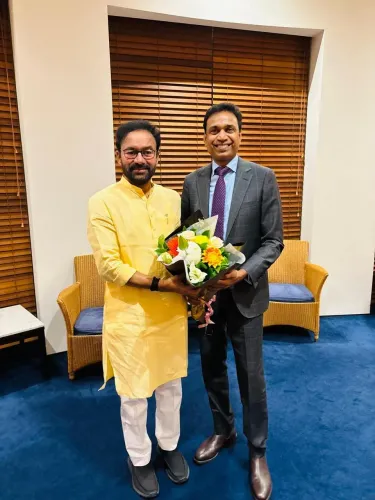
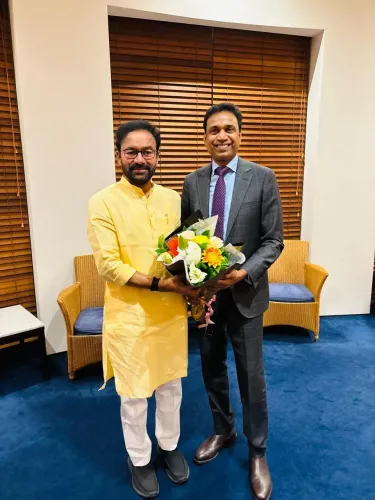
Union Coal and Mines Minister G. Kishan Reddy met CSIRO Mineral Resources Research Director Dr. Gareth Kennedy in Sydney on 26 October 2026, inviting the Australian science agency to expand collaboration with India's mining PSUs under the National Critical Mineral Mission.
Key Takeaways
Kishan Reddy met Dr.
Gareth Kennedy , Research Director of CSIRO Mineral Resources, in Sydney on 26 October 2026 .
Reddy formally invited CSIRO to deepen collaboration with India's mining public-sector undertakings and research institutions.
The engagement is anchored in the National Critical Mineral Mission , India's programme to accelerate exploration, mining, and processing of critical minerals.
India and Australia formalised bilateral mining and resources cooperation through a 2022 Memorandum of Understanding .
The outreach is part of India's broader strategy to diversify critical mineral partnerships across Quad partners — Australia, the United States, and Japan — reducing dependence on single-source imports.
Ministries tagged in the post — MEA, Mines, Coal, CGI Sydney, HCI Canberra — signal the meeting carries formal diplomatic standing.
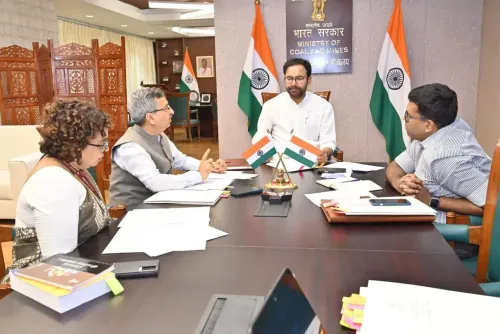
India's push to secure the minerals that will power its clean-energy future reached the laboratories of Australia's premier science agency on Monday, as Union Coal and Mines Minister G. Kishan Reddy met Dr. Gareth Kennedy, Research Director of CSIRO Mineral Resources, in Sydney on 26 October 2026.
What was on the table in Sydney
Reddy used the meeting to formally invite CSIRO — the Commonwealth Scientific and Industrial Research Organisation and Australia's national science agency — to deepen its collaboration with India's mining public-sector undertakings and research institutions. The conversation centred on CSIRO's longstanding partnership record with Indian entities and the scope for scaling that up under the National Critical Mineral Mission, the Modi government's flagship programme to accelerate exploration, mining, and processing of critical minerals for strategic and clean-energy applications.
The minister posted directly from Sydney, tagging @MinesMinIndia, @CoalMinistry, @MEAIndia, @cgisydney, and @HCICanberra — a signal that the outreach carries official diplomatic weight, not just bilateral pleasantry.
India-Australia critical minerals: the 2022 foundation and what comes next
The meeting builds on a 2022 Memorandum of Understanding on mining and resources that formalised bilateral cooperation between the two countries. Australia's vast deposits of lithium, cobalt, and rare earths make it a natural strategic partner for India, which is racing to reduce import dependence on these materials as electric vehicle manufacturing and renewable energy capacity scale up domestically.
CSIRO's research capabilities — particularly in mineral processing, geoscience data, and extraction technology — are precisely what India's mining PSUs need to bridge the gap between raw resource discovery and commercial output. Bringing CSIRO closer to the National Critical Mineral Mission's implementation framework could accelerate that translation from exploration to production.
The Quad dimension and India's diversification playbook
Australia is one of India's four Quad partners, and the push to lock in research and supply-chain ties with Canberra mirrors similar engagements India has pursued with the United States and Japan. The strategy is deliberate: no single partner, no single supply source. Critical minerals — lithium for batteries, rare earths for motors and wind turbines — have become as geopolitically sensitive as oil, and India intends to be on the right side of that equation before demand peaks.
Reddy's Sydney trip, with its ministerial-level meeting and multi-ministry tagging, is a clear marker that this is no routine technical exchange. The next test will be whether the invitation to CSIRO translates into signed research agreements and on-ground project activity under the Mission's rollout calendar.
Point of View
New Delhi signals it wants technology transfer and processing know-how, not just raw-material access. The Quad framing gives these bilateral ties a structural durability beyond any single government's tenure. The real indicator of momentum will be whether formal research agreements follow, or whether the invitation remains aspirational.
NationPress
26 Oct 2026
Frequently Asked Questions
What is the National Critical Mineral Mission of India?
The National Critical Mineral Mission is an Indian government programme designed to accelerate the exploration, mining, and processing of critical minerals — such as lithium, cobalt, and rare earths — that are essential for electric vehicles, renewable energy infrastructure, and strategic industries.
What is CSIRO and why is it relevant to India?
CSIRO, the Commonwealth Scientific and Industrial Research Organisation, is Australia's national science agency with specialised capabilities in mineral resources research. It has an established partnership history with Indian mining institutions and PSUs, making it a key potential collaborator for India's critical minerals ambitions.
What did G. Kishan Reddy do in Sydney in October 2026?
Union Coal and Mines Minister G. Kishan Reddy met Dr. Gareth Kennedy, Research Director of CSIRO Mineral Resources, in Sydney on 26 October 2026. He discussed CSIRO's existing partnerships with India and invited the agency to deepen collaboration under the National Critical Mineral Mission.
What is the India-Australia agreement on critical minerals?
India and Australia signed a Memorandum of Understanding on mining and resources in 2022, formalising bilateral cooperation in the sector and laying the groundwork for research, investment, and supply-chain partnerships in critical minerals.
Why does India need foreign partnerships for critical minerals?
India currently depends heavily on imports for critical minerals like lithium and rare earths needed for electric vehicles and clean energy. By building diversified research and supply partnerships with countries like Australia — a major holder of these resources — India aims to reduce strategic import dependence as domestic demand accelerates.