CM Sukhu Launches Solar Projects in HP Gram Panchayats
Synopsis
Chief Minister Sukhvinder Singh Sukhu has announced 500 kW solar power installations across Himachal Pradesh gram panchayats, with revenues channelled to village development, orphan and widow welfare, HimUrja, and operations — embedding social welfare into a clean energy infrastructure push.
Key Takeaways
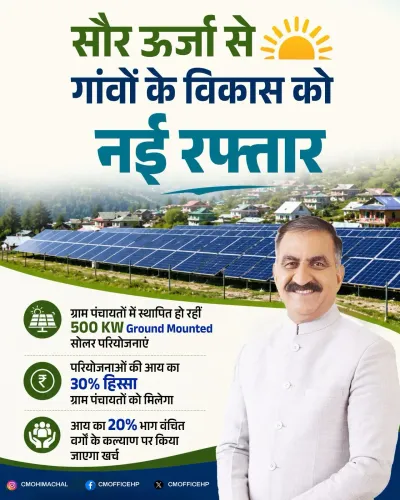
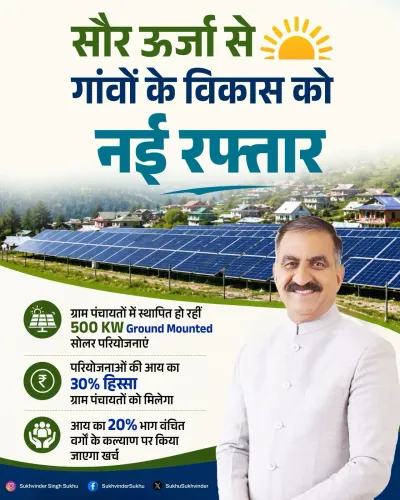
500-kilowatt solar power projects are being installed in gram panchayats across Himachal Pradesh under CM Sukhu's government.
Revenue is split: 25% for panchayat development, 25% for orphaned children and widows, 20% to the state government, 20% to HimUrja , and 10% for operations and maintenance.
HimUrja , the state's nodal renewable energy agency, is a key operational and financial partner in the scheme.
The initiative aligns with national schemes including PM-KUSUM and India's target of 500 GW non-fossil capacity by 2030 .
Orphaned children and widows are designated direct welfare beneficiaries, distinguishing the model from standard infrastructure rollouts.
Commissioning timelines and the total number of panchayats covered in the first phase have not yet been announced.
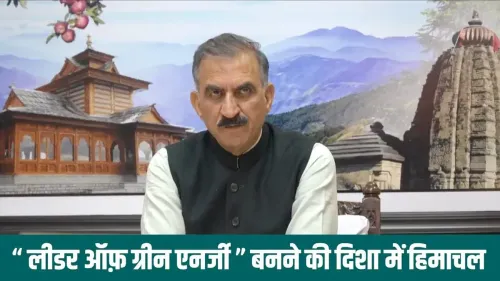
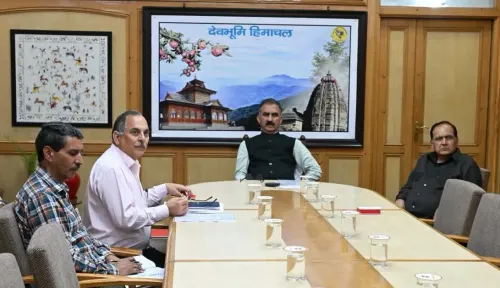
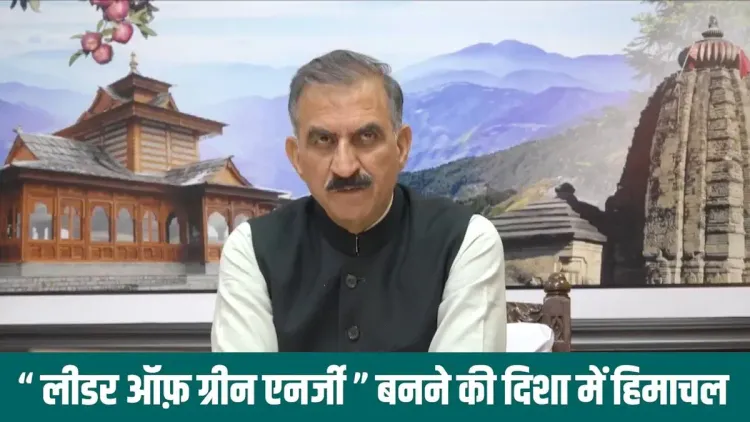
Himachal Pradesh Chief Minister Sukhvinder Singh Sukhu on Tuesday, 14 July 2026, announced that his government is installing 500-kilowatt solar power projects across village panchayats in the state, with revenues from the installations to be distributed among local development, welfare of orphans and widows, and state agencies.
Context
Posting in Hindi on X, CM Sukhu said: 'हमारी सरकार पहले दिन से ही ग्रामीण अर्थव्यवस्था को मजबूत करने का कार्य कर रही है' ('Our government has been working to strengthen the rural economy from day one'). He framed the solar initiative as a green energy push aimed at both clean power generation and economic empowerment of villages.
The announcement outlines a structured revenue-sharing model for income generated by the solar installations: 25 per cent for gram panchayat development works, 25 per cent for the welfare of orphaned children and widows, 20 per cent to the state government, 20 per cent to HimUrja — the state's nodal renewable energy agency — and 10 per cent for operations and maintenance.
Policy Backdrop
HimUrja is the Himachal Pradesh government's designated agency for promoting and implementing renewable energy projects, and is positioned as a key operational partner in rolling out these panchayat-level installations. The initiative draws on a broader national policy lineage: the Jawaharlal Nehru National Solar Mission, launched in 2010, and the Pradhan Mantri Kisan Urja Suraksha evam Utthaan Mahabhiyan (PM-KUSUM) scheme, introduced in 2019, both aimed at decentralising solar deployment, particularly in rural India.
India is pursuing a target of 500 GW of non-fossil energy capacity by 2030, and several states have experimented with revenue-sharing models that route solar earnings into local bodies and social welfare funds. Himachal Pradesh's model integrates both administrative and social spending priorities directly into the project's financial structure.
Stakeholders and Impact
Gram Panchayats — village-level elected bodies responsible for grassroots development — stand to receive a combined 25 per cent of project revenues for local works, giving them a direct financial stake in the performance of the solar assets. A further 25 per cent is earmarked specifically for orphaned children and widows, embedding a social welfare layer into what is primarily an infrastructure scheme.
For rural communities in Himachal Pradesh, the dual promise of cleaner electricity and a new income stream at the panchayat level represents a meaningful shift from subsidy-dependent rural development models toward asset-based local finance. The inclusion of vulnerable groups — orphans and widows — as direct beneficiaries distinguishes this model from purely infrastructure-focused solar rollouts elsewhere.
What's Next
The government has not announced a specific commissioning timeline or the total number of gram panchayats to be covered in the first phase. Observers will watch for details on project tendering, land allocation, and the first revenue disbursements to panchayat development funds and welfare accounts — likely to surface during the next state budget cycle. The scheme's effectiveness will ultimately be measured by whether revenue flows to panchayats and beneficiaries materialise on the ground, and whether the 500 kW per-panchayat capacity proves financially sustainable at scale.
Point of View
CM Sukhu is attempting to make clean energy a vehicle for fiscal decentralisation — giving gram panchayats a recurring income stream rather than one-time grants. The explicit welfare earmark for orphans and widows adds a social equity dimension that broadens the scheme's political appeal beyond rural electrification. This approach reflects a wider pattern among state governments seeking to differentiate their renewable energy programmes through local-body empowerment, though the model's credibility will hinge on whether revenue flows actually reach panchayat accounts and beneficiaries. The announcement ahead of the next budget cycle also positions the Congress-led government to claim tangible green economy credentials in a hill state where energy access and rural livelihoods are perennial electoral concerns.
NationPress
14 Jul 2026
Frequently Asked Questions
What is the Himachal Pradesh gram panchayat solar project announced by CM Sukhu?
Chief Minister Sukhvinder Singh Sukhu announced that 500-kilowatt solar power projects are being installed in gram panchayats across Himachal Pradesh to generate clean energy and create a revenue stream for village development and welfare programmes.
How will revenue from Himachal Pradesh panchayat solar projects be distributed?
Revenue will be split as follows: 25 per cent for gram panchayat development works, 25 per cent for orphaned children and widows, 20 per cent to the state government, 20 per cent to HimUrja, and 10 per cent for operations and maintenance.
What is HimUrja and what is its role in the solar scheme?
HimUrja is the Himachal Pradesh government's nodal agency for renewable energy promotion and implementation. Under this scheme, it receives 20 per cent of project revenues and is responsible for overseeing the solar installations at the panchayat level.
How does this scheme benefit orphans and widows in Himachal Pradesh?
Twenty-five per cent of the income generated by each panchayat-level solar project is earmarked specifically for the welfare of orphaned children and widows, making them direct financial beneficiaries of the clean energy initiative.
How does Himachal Pradesh's panchayat solar plan relate to central government schemes?
The initiative builds on the policy foundations of the Jawaharlal Nehru National Solar Mission (2010) and the PM-KUSUM scheme (2019), both of which promote decentralised solar installations in rural India, while adding a state-specific revenue-sharing model.