CM Hemant Soren Directs Deoghar DC to Enrol Woman, Children in Welfare Schemes
Synopsis
Jharkhand Chief Minister Hemant Soren on 14 July 2026 publicly directed the Deoghar Deputy Commissioner to investigate a case involving a woman and her children and ensure their prompt enrolment in all applicable government welfare schemes.
Key Takeaways
Chief Minister Hemant Soren tagged @DCDeoghar on 14 July 2026 , issuing a public directive on X.
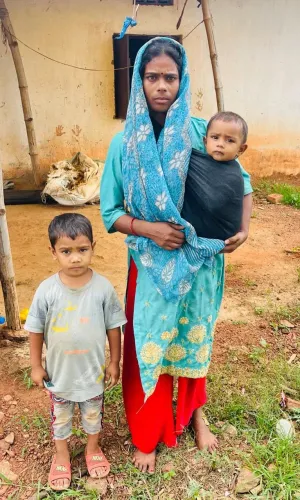
The CM instructed the Deoghar DC to investigate 'the said matter' and connect 'Pato Bahan' and her children to all necessary government schemes.
The directive reflects Jharkhand's policy since 2019 of ensuring last-mile welfare coverage for women and children.
Deoghar district has a significant rural and tribal population and is administered by a Deputy Commissioner who is the nodal authority for scheme enrolment.
The Jharkhand Mukti Morcha has a long-standing emphasis on social security entitlements for Scheduled Tribe and Scheduled Caste families.
The Deoghar DC office is expected to report back after completing the enrolment process.
Jharkhand Chief Minister Hemant Soren on Tuesday, 14 July 2026, publicly directed the Deputy Commissioner of Deoghar via X to investigate a specific case and ensure a woman and her children are promptly enrolled in all applicable government welfare schemes.
Context
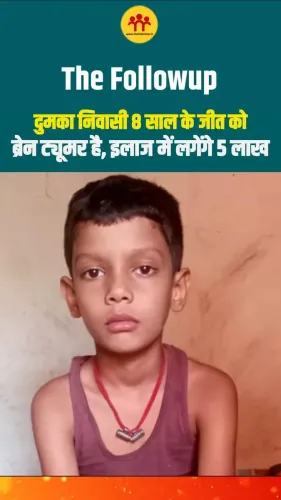
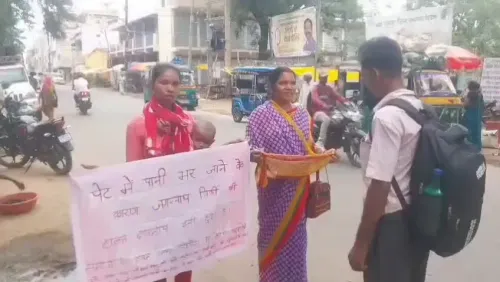
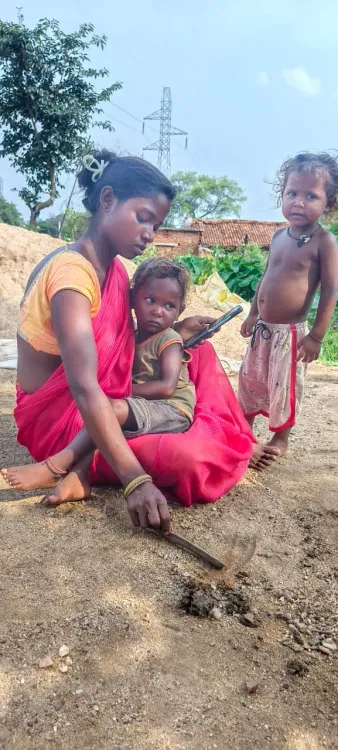
Tagging the official handle of the Deoghar district administration (@DCDeoghar), the Chief Minister wrote: 'उक्त मामले की जांच कर पातो बहन और उनके बच्चों को जरूरी सभी सरकारी योजनाओं से शीघ्र जोड़ते हुए सूचित करें' — translating to: 'Investigate the said matter and, after connecting Pato sister and her children to all necessary government schemes at the earliest, inform accordingly.' The directive was accompanied by an image, the contents of which are not independently verifiable.
The post identifies the beneficiary informally as 'Pato Bahan' (Pato sister), a mode of address common in Jharkhand's rural and tribal communities. The precise nature of the underlying grievance was not elaborated upon in the post.
Policy Backdrop
Since 2019, successive Jharkhand governments have issued administrative orders directing district officials to ensure last-mile coverage of central and state welfare entitlements for women and children. Key schemes available to eligible families in the state include food security provisions under the National Food Security Act, the Jharkhand Mukhyamantri Maiya Samman Yojana, widow and single-woman pension programmes, and child nutrition support under ICDS.
Deoghar, a district in eastern Jharkhand, carries a significant rural and tribal population alongside its identity as a major religious pilgrimage centre. District administration there, headed by a Deputy Commissioner, is the nodal authority for scheme enrolment at the ground level.
Stakeholders and Impact
The immediate stakeholders are the unnamed woman and her children, whose access to food, financial assistance, and child welfare entitlements may depend on swift administrative action by the Deoghar DC office. More broadly, the public directive signals the Soren government's stated commitment to ensuring that marginalised women — particularly those from Scheduled Tribe and Scheduled Caste households — are not excluded from the welfare net due to bureaucratic gaps.
Indian chief ministers increasingly use public social-media directives to district collectors as a tool for grievance redressal, reflecting both the fragmented delivery of entitlements and the political value placed on visible responsiveness. For the Jharkhand Mukti Morcha, whose electoral base is rooted in tribal and rural communities, such interventions carry symbolic as well as administrative weight.
What's Next
The Deoghar Deputy Commissioner's office is now expected to investigate the referenced case, identify applicable central and state schemes, complete the enrolment process, and report back to the Chief Minister's office. Whether a formal public update follows will indicate the administration's responsiveness on this specific case.
The episode underscores a recurring challenge in Jharkhand's welfare architecture: eligible families, especially women-headed households in remote areas, often remain outside the coverage of schemes they legally qualify for. Soren's public intervention, however routine in form, keeps institutional accountability visible and on record.
Point of View
Whose core voter base is tribal and rural, welfare delivery is not merely policy but political identity, and such interventions reinforce that brand. The broader pattern points to a structural problem: if eligible women and children routinely fall outside scheme coverage, individual CM interventions are a symptom of systemic last-mile failure rather than a solution to it. Sustained follow-through by the Deoghar administration will determine whether this directive translates into durable enrolment or remains a one-off public gesture.
NationPress
14 Jul 2026
Frequently Asked Questions
What did Jharkhand CM Hemant Soren post about Deoghar?
CM Hemant Soren directed the Deoghar Deputy Commissioner on 14 July 2026 to investigate a specific case and enrol a woman referred to as 'Pato Bahan' and her children in all applicable government welfare schemes.
Which welfare schemes could the Deoghar family be enrolled in?
Eligible families in Jharkhand may be covered under schemes such as the National Food Security Act, Mukhyamantri Maiya Samman Yojana, widow and single-woman pension programmes, and ICDS child nutrition support, depending on their eligibility.
Who is the Deputy Commissioner of Deoghar?
The Deoghar DC is the district's senior administrative officer responsible for implementing central and state welfare schemes at the ground level; the specific incumbent at the time of this directive has not been named in the post.
Why do Indian CMs issue welfare directives on social media?
Indian chief ministers use public social-media directives to district officials as a tool for visible grievance redressal, reflecting both the fragmented delivery of welfare entitlements and the political value of demonstrating responsiveness to constituents.
What is the JMM's stance on tribal welfare in Jharkhand?
The Jharkhand Mukti Morcha has a long-standing emphasis on ensuring social security entitlements for Scheduled Tribe and Scheduled Caste families, and welfare delivery is central to the party's political identity and electoral base.