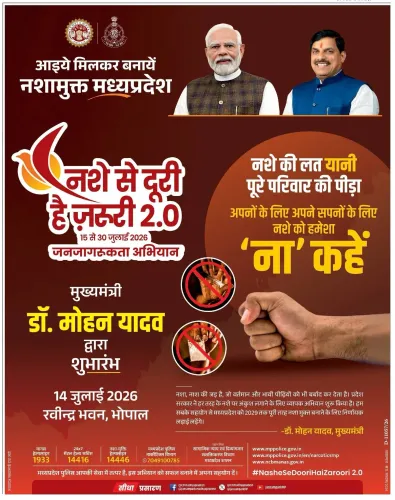
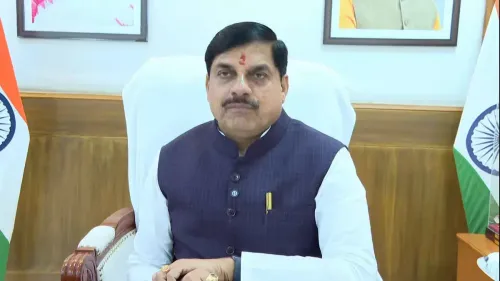
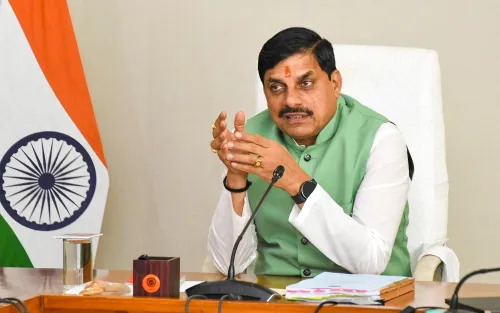
CM Mohan Yadav Launches 'Nashe Se Doori Hai Zaroori 2.0' in MP
Synopsis
Chief Minister Dr. Mohan Yadav launched 'Nashe Se Doori Hai Zaroori 2.0' on 14 July 2026, calling on Madhya Pradesh citizens to stay drug-free, protect their families from addiction, and actively contribute to a nasha mukt state. The campaign is a second-phase extension of an earlier anti-substance abuse drive run by the state's Social Welfare Department.
Key Takeaways
Mohan Yadav formally launched 'Nashe Se Doori Hai Zaroori 2.0' on 14 July 2026 .
Citizens were urged to abstain personally, keep families addiction-free, and contribute actively to a drug-free Madhya Pradesh .
The campaign is a joint initiative of the Social Welfare Department and drug-control agencies in the state.
It builds on the national Nasha Mukt Bharat Abhiyan launched by the central government in 2020 .
Primary stakeholders are youth and families , with community mobilisation as the core delivery mechanism.
District-level rollout metrics and possible announcements on rehabilitation infrastructure are expected to follow.
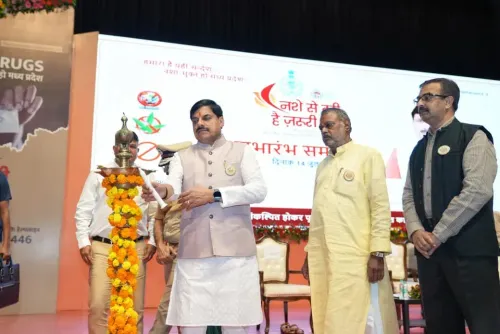
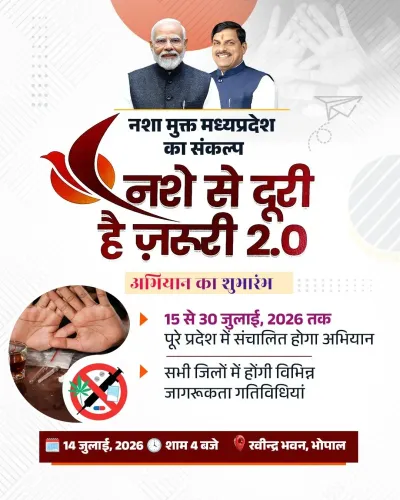
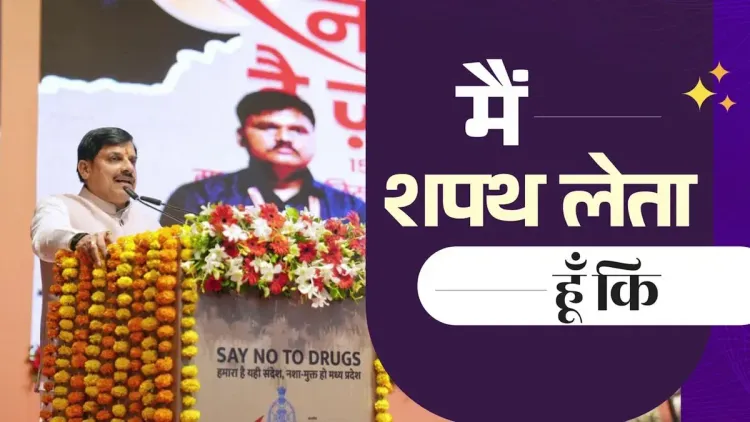
The Chief Minister's Office of Madhya Pradesh announced on Tuesday, 14 July 2026 that Chief Minister Dr. Mohan Yadav launched the second phase of the state's anti-substance abuse campaign, 'Nashe Se Doori Hai Zaroori 2.0' (Nashe se doori hai zaroori — 'Staying away from addiction is essential'), calling on citizens to keep themselves and their families free from narcotics and to actively contribute to building a drug-free Madhya Pradesh.
Context
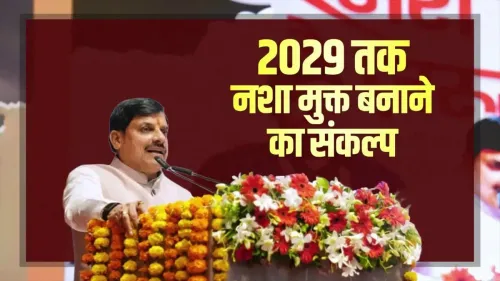
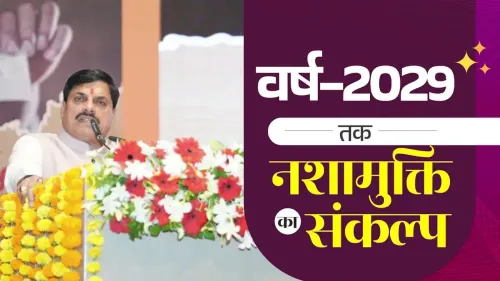
At the formal launch event, Dr. Mohan Yadav urged every citizen to personally abstain from substance abuse, to ensure their families remain addiction-free, and to play an active role in the broader mission of a nasha mukt Madhya Pradesh (drug-free Madhya Pradesh). The campaign is being run jointly by the Social Welfare Department, Madhya Pradesh and the state's drug-control machinery, with community mobilisation at its core.
The post tagged both @mohdept (the Social Welfare Department) and @socialwelfaremp, signalling that the campaign is an inter-departmental effort anchored in welfare outreach rather than enforcement alone.
Policy Backdrop
The campaign is a state-level extension of the Nasha Mukt Bharat Abhiyan, the national anti-drug drive launched by the Ministry of Social Justice and Empowerment in 2020. That national initiative set the template for combining public awareness, community participation, and rehabilitation services to address rising substance abuse — particularly among young people.
Madhya Pradesh's decision to run a second phase under the same brand signals institutional continuity and an intent to deepen outreach beyond the first edition of the campaign. State governments across India have increasingly layered local campaigns on top of the national framework, tailoring messaging to regional languages and social contexts.
Stakeholders and Impact
The primary targets of the campaign are youth and families across Madhya Pradesh's districts. Anti-addiction campaigns of this type typically combine street-level awareness drives, school and college outreach, and linkages to rehabilitation centres run by the state's social welfare apparatus.
By framing the ask around family responsibility — not just individual choice — the campaign attempts to engage community networks, including women's self-help groups and local elected bodies, as force-multipliers for the message.
What's Next
Attention will now turn to how district administrations roll out the campaign on the ground, and whether the state announces measurable targets — such as the number of awareness sessions, rehabilitation enrolments, or community pledges — to track the second phase's progress. Any follow-up announcements on new de-addiction centres or enforcement actions against drug supply networks will indicate the operational depth behind the public messaging.
The launch positions Dr. Mohan Yadav's government to use social welfare outreach as a visible governance signal ahead of future electoral cycles in the state.
Point of View
The campaign attempts to build social pressure networks that go beyond conventional public-service advertising. For Dr. Mohan Yadav, who took charge in December 2023, sustained social-welfare messaging serves a dual purpose: reinforcing a development-oriented image and pre-empting criticism on law-and-order issues linked to drug supply. Whether the campaign translates into measurable outcomes will depend on the operational follow-through from district administrations and the Social Welfare Department.
NationPress
13 Oct 2026
Frequently Asked Questions
What is 'Nashe Se Doori Hai Zaroori 2.0'?
'Nashe Se Doori Hai Zaroori 2.0' is the second phase of Madhya Pradesh's state-run anti-substance abuse awareness campaign, aimed at encouraging citizens and families to stay free from drug and alcohol addiction. It is run by the Social Welfare Department of Madhya Pradesh.
Who launched the Nashe Se Doori Hai Zaroori 2.0 campaign?
Chief Minister Dr. Mohan Yadav of Madhya Pradesh launched the campaign at a formal inauguration event on 14 July 2026.
What did CM Mohan Yadav say at the launch?
Dr. Mohan Yadav called on citizens to personally stay away from narcotics, keep their families addiction-free, and actively contribute to building a drug-free Madhya Pradesh.
Is this campaign linked to the national Nasha Mukt Bharat Abhiyan?
Yes. The state campaign builds on the Nasha Mukt Bharat Abhiyan, launched by the Ministry of Social Justice and Empowerment in 2020, which set the national framework for combining awareness, community participation, and rehabilitation to combat substance abuse.
Who are the main target groups of this anti-drug campaign in Madhya Pradesh?
The campaign primarily targets youth and families across Madhya Pradesh, using community mobilisation, school and college outreach, and links to state-run rehabilitation services.