CM Sukhu Launches 500 kW Solar Projects in HP Panchayats
Synopsis
Himachal Pradesh CM Sukhvinder Singh Sukhu has announced 500 kW solar power plants in gram panchayats, with revenue split across village development, welfare of orphans and widows, the state government, HimUrja, and maintenance — linking clean energy to rural economic empowerment.
Key Takeaways
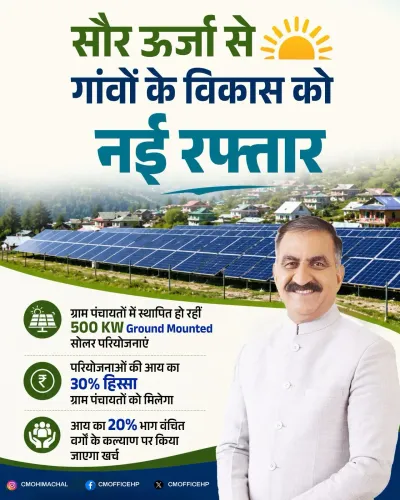
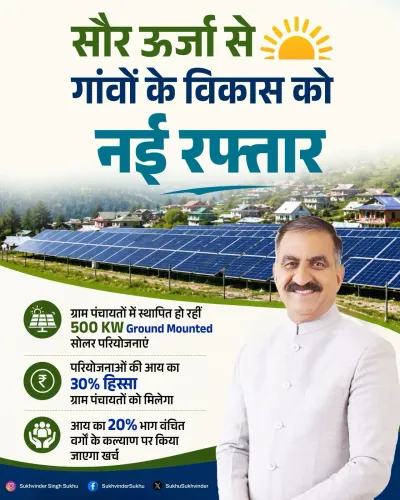
500 kW solar power projects are being installed in gram panchayats across Himachal Pradesh .
25% of project revenue goes to gram panchayat development works.
25% is earmarked for the welfare of orphan children and widowed women .
20% each goes to the state government and HimUrja , the state renewable energy agency.
10% is reserved for operations and maintenance of the solar installations.
The initiative is framed as a dual-purpose policy combining clean energy generation with rural fiscal empowerment .
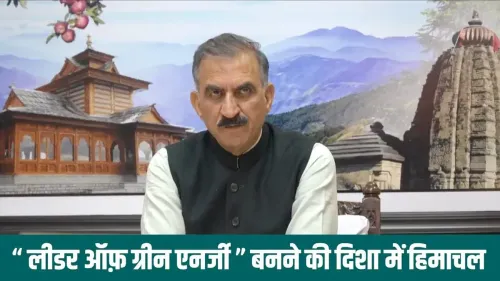
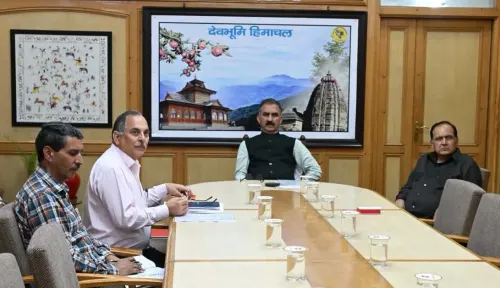
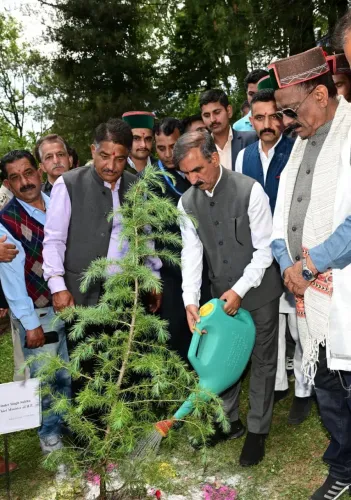
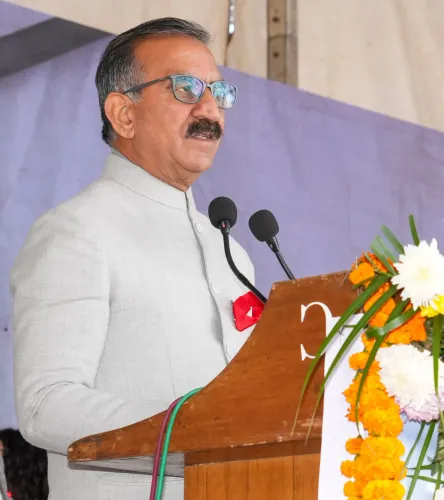
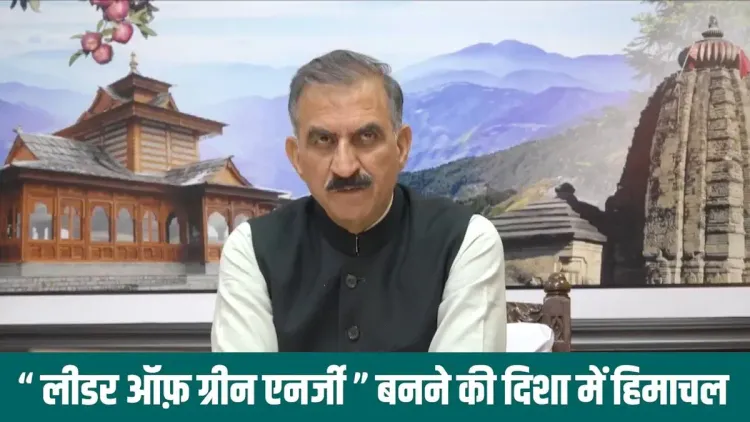
Himachal Pradesh Chief Minister Sukhvinder Singh Sukhu announced on Tuesday, 14 July 2026, that his government is installing 500-kilowatt solar power projects across gram panchayats in the state, with revenue from the installations earmarked for village development, social welfare, and clean energy goals.
Posting on X, CM Sukhu said — 'हमारी सरकार पहले दिन से ही ग्रामीण अर्थव्यवस्था को मजबूत करने का कार्य कर रही है' ['Our government has been working to strengthen the rural economy from day one'] — and outlined a structured revenue-sharing formula tied to the solar installations.
Context
Under the initiative, each gram panchayat in Himachal Pradesh is to host a 500 kW solar power plant, with the electricity generated feeding into the grid and generating income for multiple stakeholders. The announcement frames the programme as a twin-purpose intervention: advancing the state's green energy ambitions while simultaneously building a financial base for villages.
The revenue-sharing model, as stated by CM Sukhu, allocates 25 per cent to gram panchayat development works, 25 per cent to the welfare of orphan children and widowed women, 20 per cent to the state government, 20 per cent to HimUrja — the state's renewable energy agency — and 10 per cent to operations and maintenance.
Policy Backdrop
India's push for decentralised solar power dates to the Jawaharlal Nehru National Solar Mission, launched in 2010, which sought to scale up both grid-connected and off-grid solar capacity across the country. Several states have since linked panchayat-level solar installations to local revenue streams, blending clean-energy targets with rural finance reform.
Himachal Pradesh's model adds a distinctive social-welfare layer by explicitly ringfencing a quarter of all revenue for vulnerable groups — orphan children and widows — making it one of the more targeted allocation frameworks among state-level solar schemes. HimUrja, the nodal agency for renewable energy in the state, is positioned as both an implementer and a revenue beneficiary under the plan.
Stakeholders and Impact
Gram panchayats stand to gain a direct, recurring income source that can be channelled into local infrastructure without depending entirely on central or state grants. For orphan children and widowed women — groups that often fall outside the reach of mainstream employment-linked welfare — the dedicated 25 per cent share represents a structurally guaranteed support stream.
Rural households benefit indirectly through cleaner energy supply and the development works funded by the panchayat's share. HimUrja's revenue stake is designed to ensure the agency has sustainable funding to scale and maintain similar projects across the state's mountainous and often remote terrain.
What's Next
The government is expected to release progress reports on the rollout of 500 kW installations across panchayats, along with annual revenue-sharing statements from the state energy department. The pace of commissioning — given Himachal Pradesh's challenging topography — will be a key indicator of the programme's real-world reach.
If the model demonstrates measurable income generation at the village level, it could serve as a template for other hill states seeking to align renewable energy deployment with grassroots fiscal empowerment.
Point of View
Making the programme harder to roll back without visibly hurting villages and vulnerable groups. The explicit allocation for orphans and widows is unusual in state-level energy policy and signals an effort to broaden the Congress government's welfare narrative beyond traditional cash-transfer schemes. By giving HimUrja a direct revenue stake, the state also attempts to solve the perennial problem of agency funding for remote-area maintenance — a common failure point for hill-state solar projects. Whether the revenue projections are realistic will determine if this becomes a replicable model or a well-intentioned announcement that stalls at implementation.
NationPress
14 Jul 2026
Frequently Asked Questions
What is the Himachal Pradesh gram panchayat solar project announced by CM Sukhu?
CM Sukhvinder Singh Sukhu announced that 500 kW solar power plants are being installed in gram panchayats across Himachal Pradesh, with the revenue shared among village development, social welfare, the state government, HimUrja, and maintenance.
How will the revenue from HP panchayat solar projects be distributed?
Revenue is split as follows: 25% for gram panchayat development, 25% for welfare of orphan children and widowed women, 20% for the state government, 20% for HimUrja, and 10% for operations and maintenance.
What is HimUrja and what role does it play in this solar scheme?
HimUrja is the Himachal Pradesh government agency responsible for promoting and implementing renewable energy projects. Under this scheme it acts as an implementing partner and receives 20% of the revenue generated.
Who benefits from the Himachal Pradesh panchayat solar revenue scheme?
Primary beneficiaries include gram panchayats, orphan children, widowed women, and rural households who gain from cleaner energy and locally funded development works.
How does Himachal Pradesh's solar panchayat model compare to other Indian states?
Several Indian states have linked decentralised solar installations to panchayat finances, but Himachal Pradesh's model is distinctive for explicitly earmarking 25% of revenue for orphans and widows alongside the standard village-development allocation.