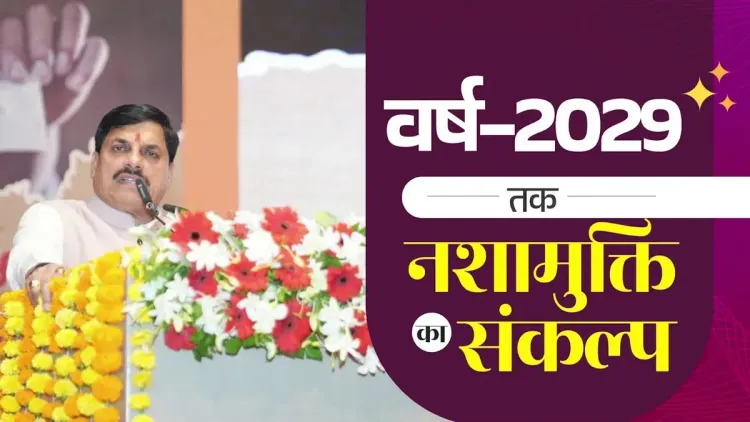
CM Mohan Yadav Vows MP's Role in Drug-Free India by 2029
Synopsis
Chief Minister Dr. Mohan Yadav has reaffirmed Madhya Pradesh's commitment to the national goal of a drug-free India by 2029, citing active enforcement operations and public awareness campaigns running in tandem across the state under PM Modi and Home Minister Amit Shah's leadership.
Key Takeaways
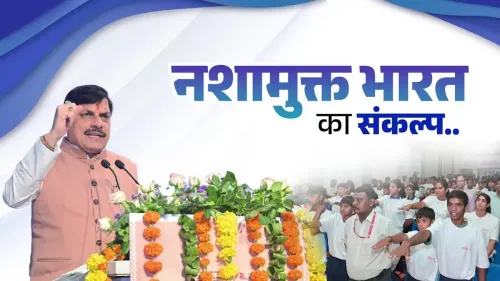
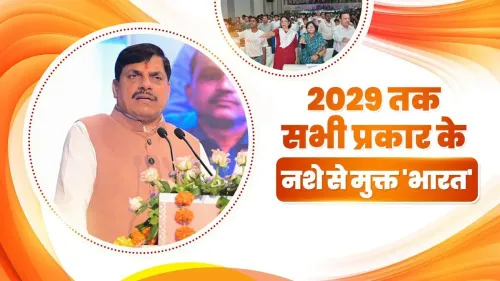
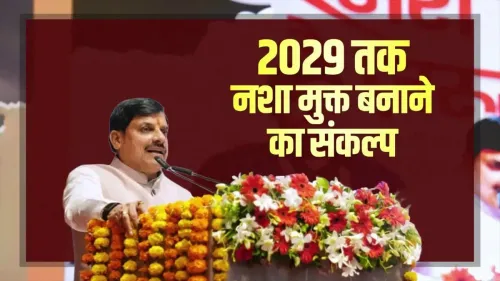
Mohan Yadav publicly committed Madhya Pradesh to the national resolve of making India drug-free by 2029 .
The pledge is framed as a national mission led by PM Narendra Modi and Union Home Minister Amit Shah .
The state is pursuing a twin-track strategy: strict enforcement under the NDPS Act, 1985 and wide-ranging public awareness campaigns.
The Nasha Mukt Bharat Abhiyan , launched in August 2020 , provides the central policy framework underpinning state-level action.
Madhya Pradesh's Social Welfare and Home departments are jointly coordinating the campaign.
Key groups targeted for outreach and rehabilitation include youth and drug-affected families .
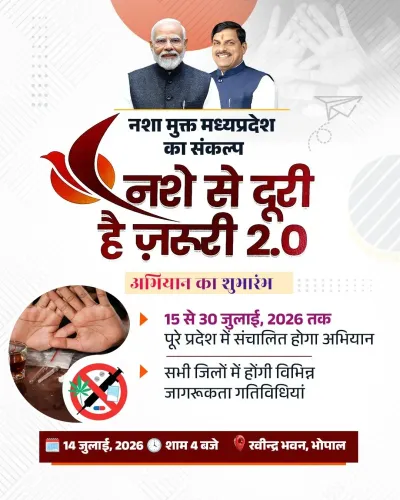
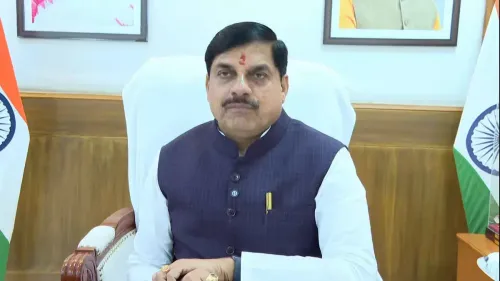
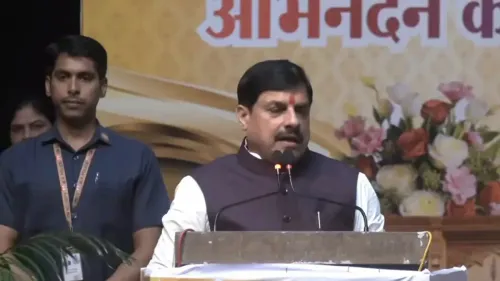
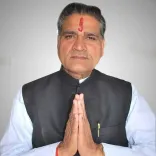
The Chief Minister's Office of Madhya Pradesh, speaking on behalf of Chief Minister Dr. Mohan Yadav, on Tuesday, 14 July 2026, reaffirmed the state government's commitment to a national resolve of making India drug-free by 2029 — a target set under the leadership of Prime Minister Narendra Modi and Union Home Minister Amit Shah.
Context
The post, shared in Hindi, states: 'Nasha vyakti hi nahin, poore parivaar ko vinaash ki or le jaata hai' ('Addiction destroys not just the individual, but the entire family'). CM Dr. Mohan Yadav underlined that a national pledge has been taken under Prime Minister Modi and Home Minister Amit Shah to rid India of all forms of substance abuse by 2029. The statement signals that Madhya Pradesh is actively aligning its state machinery with this central mandate.
Policy Backdrop
The national framework for this push traces back to the Nasha Mukt Bharat Abhiyan, launched in August 2020 by the Ministry of Social Justice and Empowerment. The campaign was designed to build nationwide awareness against substance abuse and expand de-addiction infrastructure. Alongside it, the Narcotic Drugs and Psychotropic Substances (NDPS) Act, 1985 continues to serve as the primary legal instrument for penalising narcotics-related offences, giving state police and central agencies the powers needed for enforcement action.
Madhya Pradesh's current drive combines two parallel tracks: stringent enforcement operations against drug networks under the NDPS Act, and broad-based public awareness campaigns reaching communities, schools, and families across the state.
Stakeholders and Impact
The most direct beneficiaries of a sustained anti-drug campaign are drug-affected families and youth — demographics that policymakers across states have identified as the most vulnerable to substance abuse. The Madhya Pradesh Government, through its Social Welfare and Home departments (tagged as @mohdept and @socialwelfaremp in the post), is coordinating enforcement with rehabilitation outreach. This dual approach — crackdown and care — reflects the broader pattern adopted by several states operating under central guidance since 2020.
Families in districts with historically high substance-abuse rates stand to gain most immediately from expanded de-addiction centres and community outreach, while law enforcement agencies are expected to intensify raids and seizures as part of the enforcement component.
What's Next
Observers will watch for periodic progress disclosures under the Nasha Mukt Bharat Abhiyan framework, including data on seizures, rehabilitation enrolments, and awareness-camp reach in Madhya Pradesh. Budget allocations for new or expanded rehabilitation centres in the state's upcoming fiscal planning will be a concrete indicator of how seriously the 2029 target is being resourced. As the central government moves closer to the self-imposed deadline, states like Madhya Pradesh that have publicly committed to the goal will face growing scrutiny on measurable outcomes — making transparent reporting and community-level implementation the real test of this resolve.
Point of View
The Madhya Pradesh government signals that it intends to be measured against a concrete, time-bound target rather than an open-ended aspiration. This mirrors a broader pattern in BJP-governed states of synchronising state welfare messaging with central flagship schemes to project unified governance. The real political test, however, will come from verifiable on-ground metrics — seizure data, rehabilitation numbers, and recidivism rates — rather than from the resolve itself.
NationPress
13 Oct 2026
Frequently Asked Questions
What is the drug-free India 2029 target?
The 2029 target is a national resolve, as stated by the Madhya Pradesh Chief Minister's Office, to eliminate substance abuse across India by the year 2029 under the leadership of PM Narendra Modi and Home Minister Amit Shah.
What is Nasha Mukt Bharat Abhiyan?
Nasha Mukt Bharat Abhiyan is a national awareness and de-addiction programme launched in August 2020 by the Ministry of Social Justice and Empowerment to combat substance abuse and promote rehabilitation across India.
What is Madhya Pradesh doing to fight drug abuse?
Madhya Pradesh is running enforcement operations against drug networks under the NDPS Act alongside public awareness and community outreach campaigns, coordinated by its Home and Social Welfare departments.
Who is leading the anti-drug campaign in Madhya Pradesh?
Chief Minister Dr. Mohan Yadav is directing the state's anti-drug efforts, with the campaign aligned to the national framework set by PM Modi and Home Minister Amit Shah.
What is the NDPS Act and how does it apply here?
The Narcotic Drugs and Psychotropic Substances Act, enacted in 1985, is India's primary law penalising narcotics-related offences; Madhya Pradesh police use it as the legal basis for enforcement raids and prosecutions in the state's anti-drug drive.