Jaishankar meets Rubio, Penny Wong in Manila; trade, defence top agenda
Synopsis
In a single day in Manila, Jaishankar held talks with three foreign ministers — Rubio, Wong, and Lazaro — covering trade tariffs, a civilian nuclear deal follow-up, and Indo-Pacific maritime security. The back-to-back sprint signals India's intent to simultaneously manage its most consequential partnerships at a moment of rising China-Philippines tensions in the South China Sea.
Key Takeaways
Jaishankar held three diplomatic meetings in Manila on 22 July .
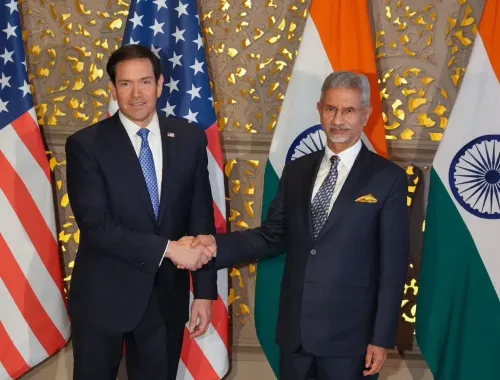
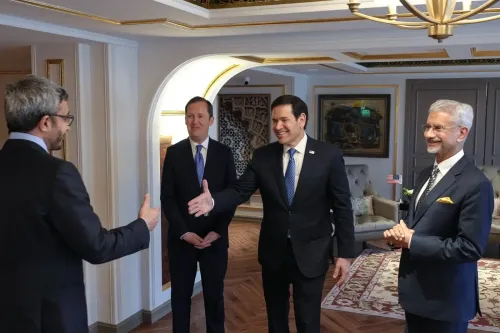
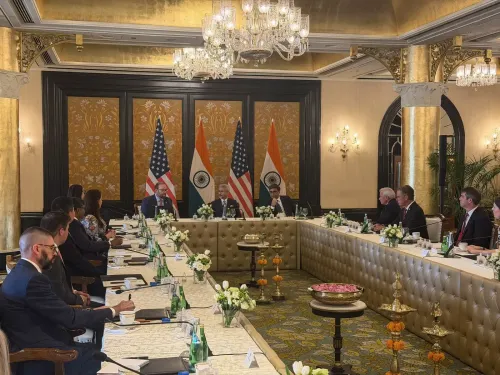
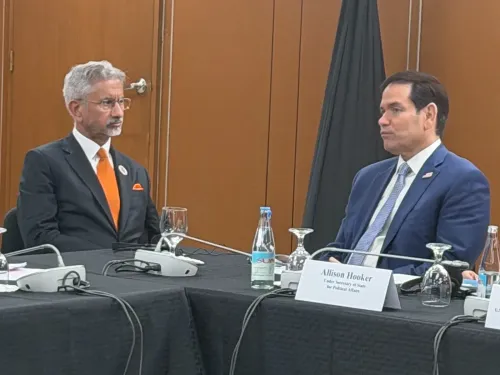
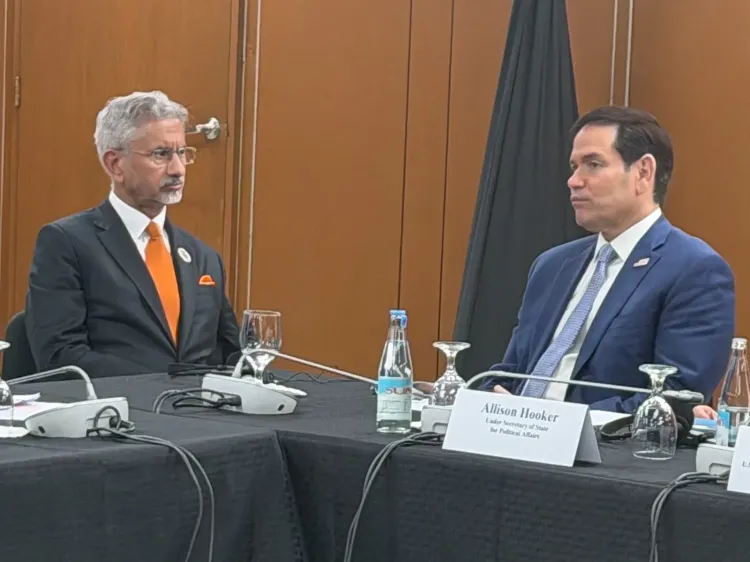
Talks with US Secretary of State Marco Rubio covered trade and tariffs, energy, defence, critical minerals, and artificial intelligence under the India-US Comprehensive Global Strategic Partnership .
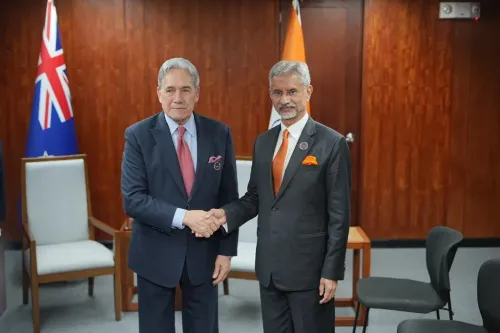
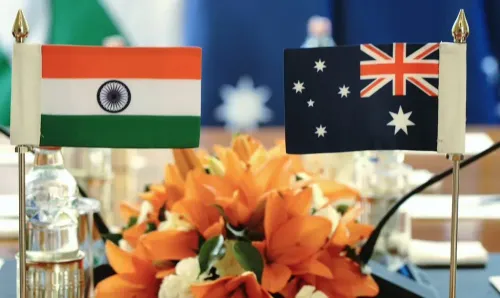
Meeting with Australian FM Penny Wong reviewed outcomes of PM Modi's visit to Australia (8–10 July) , during which 18 agreements — including a defence pact and civilian nuclear deal — were signed.
Jaishankar and Philippines FM Ma.
Lazaro discussed trade, maritime security, defence, and Indo-Pacific developments.
The Philippines meeting came amid recent China-Philippines confrontations in the Indo-Pacific , adding strategic weight to the maritime agenda.
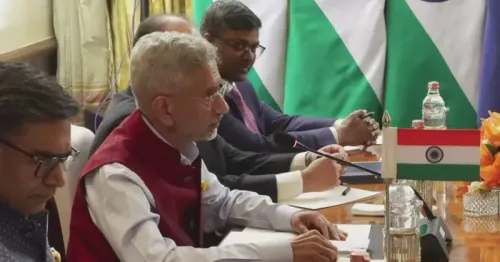
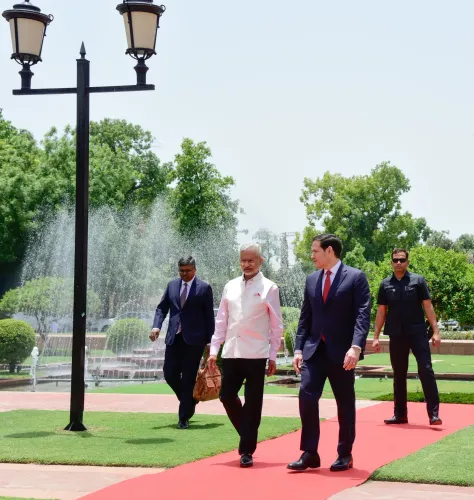
External Affairs Minister S. Jaishankar on Wednesday, 22 July held back-to-back diplomatic meetings in Manila, engaging US Secretary of State Marco Rubio and Australian Foreign Minister Penny Wong, alongside his Philippines counterpart Ma. Theresa P. Lazaro. The flurry of talks covered trade, defence, critical minerals, artificial intelligence, and Indo-Pacific security — underscoring India's deepening engagement with key partners across multiple strategic theatres.
India-US Talks: Trade, Energy and AI in Focus
Jaishankar's meeting with Marco Rubio centred on priority areas under the India-US Comprehensive Global Strategic Partnership. In a post on X, Jaishankar said the discussion covered 'trade and tariffs, energy, defence and security, critical minerals and artificial intelligence,' in addition to a broader exchange on 'regional, global and multilateral issues of mutual interest.' The meeting signals continued momentum in the bilateral relationship at a time when trade negotiations between the two countries remain active.
India-Australia Outcomes Reviewed with Penny Wong
Jaishankar also met Australian Foreign Minister Senator Penny Wong in Manila, using the occasion to follow up on the outcomes of Prime Minister Narendra Modi's visit to Australia from 8 to 10 July. Modi had travelled to Melbourne for the Australia-India Annual Leaders' Summit, during which he and Australian Prime Minister Anthony Albanese signed 18 key agreements — including a defence pact and a civilian nuclear deal for uranium supply. The Manila meeting with Wong served as an early checkpoint on implementation of those commitments.
Philippines Meeting: Indo-Pacific and Maritime Security
Earlier on Wednesday, Jaishankar met Philippine Foreign Minister Ma. Theresa P. Lazaro, with both sides focusing on ways to advance the India-Philippines Strategic Partnership. Discussions spanned trade and investment, higher education, defence, maritime security, pharmaceuticals, financial technology, capacity building, and development cooperation.
In her own post on X, Lazaro described the exchange as a 'productive discussion,' reaffirming both countries' commitment to 'continued strengthening of various areas of cooperation, including financial technology, trade and investment, higher education, pharmaceuticals, defence, maritime security, and critical infrastructure.' Notably, the meeting came against the backdrop of recent confrontations between the Philippines and China in the Indo-Pacific — a context that lent added weight to the maritime security agenda.
Manila as a Diplomatic Hub
Jaishankar's three-in-one diplomatic sprint in Manila reflects India's broader strategic calculus: building interlocking partnerships across the Indo-Pacific at a moment of heightened geopolitical flux. The choice of Manila — itself a frontline state in South China Sea tensions — as the venue for these engagements is unlikely to be incidental. India has consistently sought to deepen its presence in Southeast Asia under its Act East Policy, and the Philippines has emerged as a significant node in that framework.
All three meetings are expected to feed into broader multilateral deliberations in the coming weeks as India navigates its relationships with Washington, Canberra, and Manila simultaneously.
Point of View
At a moment when US tariff negotiations, the Australia nuclear deal's implementation, and South China Sea instability are all live variables. What stands out is the Philippines meeting: India's willingness to discuss maritime security with Manila — a state in active territorial dispute with China — signals a quiet but deliberate tilt in India's Indo-Pacific posture. Whether that translates into operational cooperation or stays at the level of diplomatic language is the question to watch.
NationPress
21 Oct 2026
Frequently Asked Questions
What did EAM Jaishankar discuss with US Secretary of State Marco Rubio in Manila?
Jaishankar and Rubio reviewed priority areas under the India-US Comprehensive Global Strategic Partnership, covering trade and tariffs, energy, defence and security, critical minerals, and artificial intelligence. They also exchanged views on regional, global, and multilateral issues of mutual interest.
Why did Jaishankar meet Australian FM Penny Wong in Manila?
The meeting was a follow-up to PM Narendra Modi's visit to Australia from 8 to 10 July, during which India and Australia signed 18 agreements including a defence pact and a civilian nuclear deal for uranium supply. Jaishankar and Wong reviewed the outcomes and next steps from that summit.
What was discussed in Jaishankar's meeting with Philippines FM Ma. Theresa P. Lazaro?
The two ministers discussed ways to advance the India-Philippines Strategic Partnership, focusing on trade and investment, maritime security, defence, higher education, pharmaceuticals, financial technology, and development cooperation. Recent Indo-Pacific developments — including China-Philippines tensions — were also on the agenda.
Why is Jaishankar's Manila visit significant for India's Indo-Pacific strategy?
Manila is itself a frontline state in South China Sea disputes, and India's decision to hold substantive talks there — covering maritime security with the Philippines — signals a deepening of its Act East Policy. The back-to-back meetings with US, Australian, and Philippine counterparts reflect India's effort to build interlocking partnerships across the Indo-Pacific.
What were the key outcomes of PM Modi's Australia visit reviewed in Manila?
Modi and Australian PM Anthony Albanese signed 18 agreements during the Australia-India Annual Leaders' Summit in Melbourne from 8 to 10 July, including a defence pact and a civilian nuclear deal for uranium supply. Jaishankar's meeting with Penny Wong in Manila served as an early review of implementation progress on those commitments.