Jaishankar Co-chairs 17th Framework Dialogue with Australia FM Wong
Synopsis
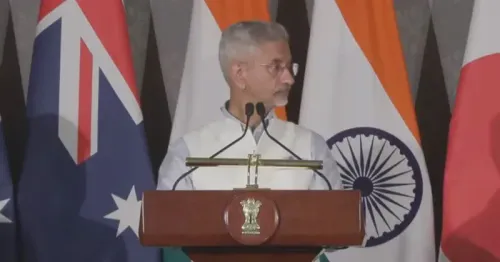
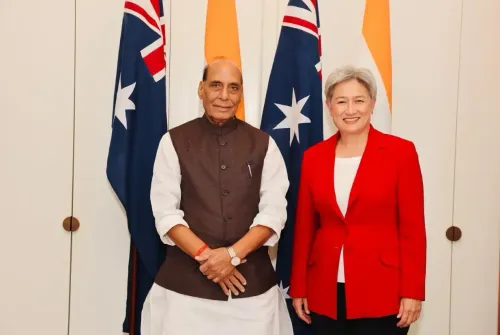
Union External Affairs Minister Dr. S. Jaishankar co-chaired the 17th Foreign Ministers' Framework Dialogue with Australian FM Senator Penny Wong on 26 May 2026, reviewing the Comprehensive Strategic Partnership across energy, defence, critical minerals, cyber, space and Indo-Pacific issues.
Key Takeaways
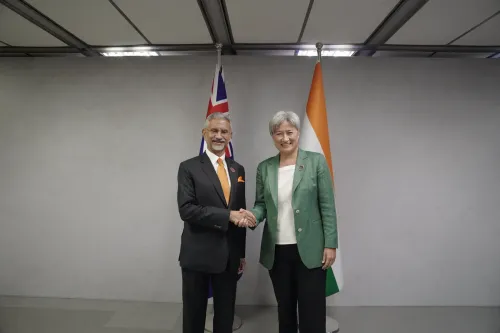
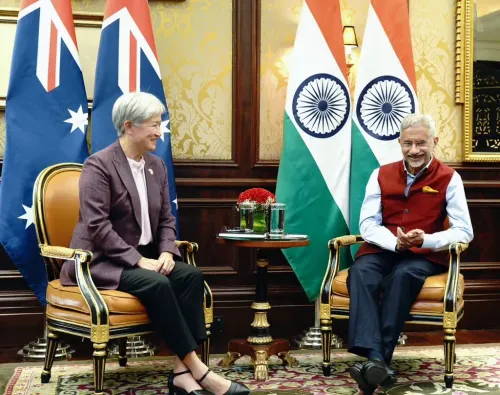
Jaishankar and Australian FM Senator Penny Wong co-chaired the 17th Foreign Ministers' Framework Dialogue on 26 May 2026 .
The talks reviewed the India-Australia Comprehensive Strategic Partnership , first established in June 2020 .
The agenda spanned renewable and nuclear energy , defence and maritime security , critical minerals , cyber issues , space , and science and technology .
Both ministers exchanged views on the Indo-Pacific and the situation in West Asia , aligning on regional and multilateral issues.
The India-Australia Economic Cooperation and Trade Agreement , in force since December 2022 , underpins the economic pillar reviewed at the dialogue.
Both countries are Quad members, deepening convergence on maritime domain awareness and technology supply chains.
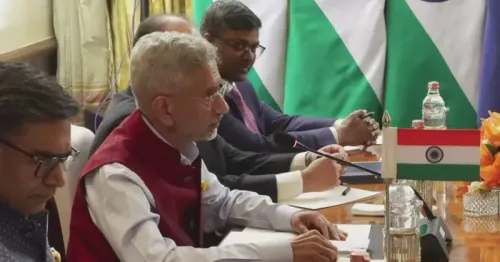
Union External Affairs Minister Dr. S. Jaishankar co-chaired the 17th Foreign Ministers' Framework Dialogue with Australian Foreign Minister Senator Penny Wong on the evening of Tuesday, 26 May 2026, marking the latest in a series of structured annual engagements between the two nations. The talks reviewed the full breadth of the India-Australia Comprehensive Strategic Partnership across economic, security, and technology domains. The meeting underscored the growing depth of bilateral ties between the two Indo-Pacific democracies.
Context
The Foreign Ministers' Framework Dialogue is the principal annual mechanism through which India and Australia take stock of their bilateral relationship at the ministerial level. The 17th edition of this dialogue, held in 2026, covered an expansive agenda that Dr. Jaishankar described as reflecting 'the strength and expanse of India-Australia ties.' The format has been held annually since the early 2010s and has grown in scope alongside the elevation of the bilateral relationship.
According to Dr. Jaishankar's post, the two ministers reviewed progress on economic and energy issues — including renewable and nuclear energy — as well as defence and maritime security cooperation, science and technology, cyber issues, critical minerals, space, and sports. The breadth of the agenda reflects how comprehensively the two countries have institutionalised their partnership over the past decade.
Policy Backdrop
The India-Australia Comprehensive Strategic Partnership was established at a virtual leaders' summit in June 2020, upgrading a relationship that had been steadily deepening since 2014 through regular high-level exchanges and growing convergence on Indo-Pacific security. The partnership framework formalised cooperation across defence, economic, energy, and technology pillars, providing the architecture that the Foreign Ministers' Dialogue reviews each year.
A landmark in the economic dimension came with the India-Australia Economic Cooperation and Trade Agreement, signed in April 2022 and entering into force in December 2022. Both countries are also members of the Quad — alongside the United States and Japan — which has further aligned their positions on maritime domain awareness, technology supply chains, and regional stability in the Indo-Pacific.
The inclusion of critical minerals and nuclear energy on the 2026 dialogue agenda reflects a broader strategic imperative. Australia holds some of the world's largest reserves of critical minerals essential to clean-energy transitions and defence supply chains, making it a natural partner for India as it accelerates its own energy and technology ambitions.
Stakeholders and Impact
The dialogue's outcomes carry direct relevance for defence forces on both sides, which have expanded joint exercises and maritime cooperation under the Comprehensive Strategic Partnership. Energy companies and the critical minerals sector in both countries stand to benefit from any deepened frameworks emerging from ministerial-level alignment on supply chains and clean energy.
Dr. Jaishankar and Senator Wong also exchanged views on the Indo-Pacific, the situation in West Asia, and other regional, global, and multilateral issues — signalling that the dialogue serves not only as a bilateral stocktaking exercise but also as a platform for coordinating positions on shared geopolitical concerns. Senator Wong has been a central figure in Australia's Indo-Pacific diplomatic architecture since taking office in June 2022 under the Albanese government.
What's Next
The 17th dialogue sets the stage for follow-up action across its wide agenda, with the critical minerals and clean-energy tracks likely to see the most near-term institutional activity given global supply-chain pressures. Observers will watch for any announcements emerging from the 2026 Quad Foreign Ministers' Meeting or a potential leaders' summit, which would build on the bilateral groundwork laid at this dialogue. The regularity and expanding scope of the Framework Dialogue format suggests that the 18th edition will carry an even broader remit as both countries deepen integration across technology and security domains.
Point of View
Nuclear energy and cyber security. The inclusion of West Asia in the agenda is notable — it suggests both capitals are coordinating on a geopolitical canvas that extends well beyond the Indo-Pacific. For Dr. Jaishankar, the dialogue is consistent with India's broader strategy of deepening ties with like-minded democracies to diversify supply chains and build resilient technology partnerships. The annual cadence and expanding scope of this format make it one of the more underappreciated pillars of India's multi-alignment foreign policy.
NationPress
12 Oct 2026
Frequently Asked Questions
What is the India-Australia Foreign Ministers' Framework Dialogue?
It is the principal annual ministerial mechanism through which India and Australia review bilateral cooperation under their Comprehensive Strategic Partnership, covering defence, energy, trade, technology and regional issues.
What was discussed at the 17th India-Australia Foreign Ministers' Dialogue?
The 17th dialogue, held on 26 May 2026, covered renewable and nuclear energy, defence and maritime security, critical minerals, cyber issues, space, science and technology, and regional matters including the Indo-Pacific and West Asia.
What is the India-Australia Comprehensive Strategic Partnership?
It is a bilateral framework established at a virtual leaders' summit in June 2020 that formalises cooperation between India and Australia across defence, economic, energy and technology domains.
Who is Senator Penny Wong?
Senator Penny Wong is Australia's Minister for Foreign Affairs, serving since June 2022 under the Albanese government, and is a key figure in Australia's Indo-Pacific diplomatic engagement.
Why are critical minerals important to India-Australia relations?
Australia holds some of the world's largest critical mineral reserves essential for clean energy and defence supply chains, making it a strategically important partner as India accelerates its energy transition and technology ambitions.