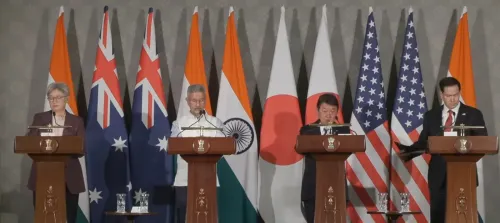
Jaishankar, Penny Wong review India-Australia strategic partnership at 17th dialogue
Synopsis
India and Australia's 17th Foreign Ministers' Framework Dialogue in New Delhi was more than a diplomatic check-in — it mapped active progress on uranium trade, CECA negotiations, critical minerals, and Quad initiatives. With PM Modi also meeting Wong separately, the visit signals that the Comprehensive Strategic Partnership is moving from framework to execution across multiple high-stakes sectors.
Key Takeaways
Jaishankar and Australian FM Senator Penny Wong co-chaired the 17th Foreign Ministers' Framework Dialogue in New Delhi on 26 May .
Talks covered renewable and nuclear energy , defence , critical minerals , cyber issues , space , and the Indo-Pacific .
India is in discussions to expand energy trade to include uranium supplies , with nuclear sector reforms cited as an enabler.
Bilateral trade framework has progressed from ECTA to the more comprehensive CECA .
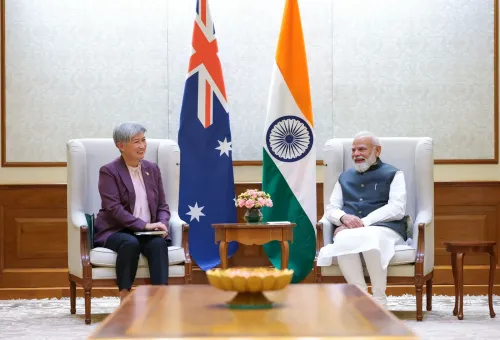
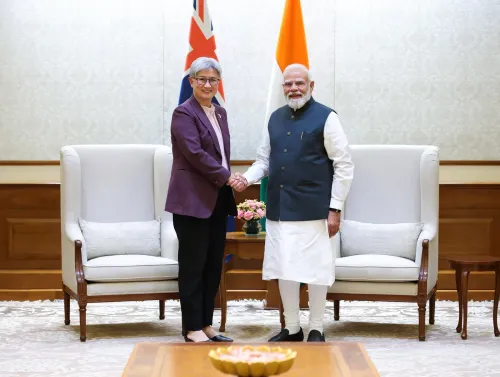
PM Modi also met Wong separately, discussing defence, trade, technology, and supply chain resilience.
Wong announced new Quad initiatives including an energy security initiative and support for port infrastructure in Fiji .
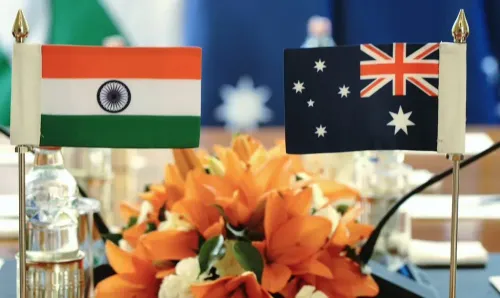
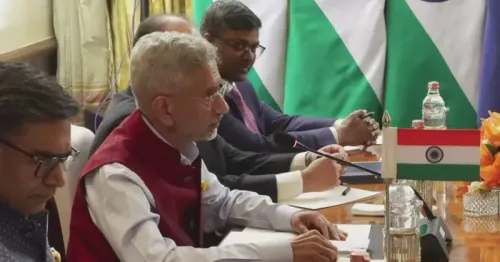
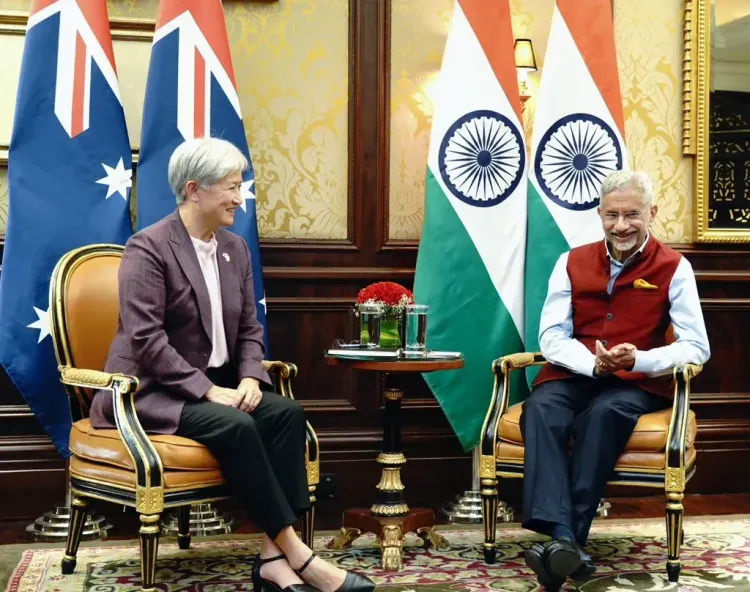
External Affairs Minister S. Jaishankar on Tuesday, 26 May co-chaired the 17th Foreign Ministers' Framework Dialogue with Australian Foreign Minister Senator Penny Wong in New Delhi, reviewing the breadth of the India-Australia Comprehensive Strategic Partnership. The talks spanned economic cooperation, energy, defence, critical minerals, space, and the Indo-Pacific strategic landscape.
Key Developments from the Dialogue
Jaishankar described the session as 'productive', noting that both sides reviewed 'steady progress' across a wide range of sectors. The dialogue covered renewable and nuclear energy, defence and maritime security cooperation, science and technology, cyber issues, critical minerals, and space and sports. 'Our talks demonstrated the strength and expanse of India-Australia ties,' Jaishankar said.
On the economic front, Jaishankar highlighted the transition from the Economic Cooperation and Trade Agreement (ECTA) to the more expansive Comprehensive Economic Cooperation and Agreement (CECA) as a marker of deepening trade ties. He also pointed to ongoing discussions on expanding energy trade into uranium supplies, noting that India's nuclear sector has undergone reforms that are expected to accelerate nuclear energy growth.
What the Australian Side Brought to the Table
Wong arrived in New Delhi having already announced a set of new Quad initiatives earlier on Tuesday, including an energy security initiative, cooperation on critical minerals, and support for port infrastructure in Fiji. Her visit to India also included a separate call on Prime Minister Narendra Modi, where the two discussed defence, trade, technology, and supply chain resilience.
'Happy to receive Senator Penny Wong, Minister for Foreign Affairs of Australia. We discussed the growing India-Australia Comprehensive Strategic Partnership in areas such as defence, trade, technology and ensuring supply chain resilience. India and Australia will continue to work for a free, open, secure and prosperous Indo-Pacific,' PM Modi said after the meeting.
Ministerial Architecture and Bilateral Momentum
Jaishankar noted that the two countries' 'somewhat complex ministerial architecture is working,' with different ministers meeting across portfolios. He recalled recent high-level engagements, including a Prime Ministers' meeting in November and a visit by the Australian Speaker in January, as evidence of sustained bilateral momentum. Defence exchanges and exercises, space cooperation talks, and critical minerals discussions were all cited as active tracks.
Regional and Global Issues
Both sides exchanged views on the Indo-Pacific, the situation in West Asia, and other regional, global, and multilateral issues. This comes amid a broader pattern of India and Australia deepening strategic alignment within the Quad framework, as both nations seek to diversify supply chains and reinforce a rules-based Indo-Pacific order. The 17th edition of the framework dialogue underscores how institutionalised the bilateral relationship has become since the partnership was elevated to a Comprehensive Strategic Partnership.
The next steps across several active tracks — including CECA negotiations, uranium supply discussions, and space cooperation — are expected to be followed up at the working level in the coming weeks.
Point of View
A shift from ECTA to CECA, and critical minerals cooperation that directly addresses both countries' China-exposure in supply chains. India and Australia are building the institutional scaffolding for a relationship that could rival India-US ties in strategic depth within the decade. The Quad angle adds another layer: Wong's announcement of new Quad initiatives on the same day signals coordinated messaging, not coincidence. The real test will be whether CECA negotiations, stalled on sensitive agricultural and services chapters, can be concluded before domestic political calendars in both countries tighten.
NationPress
15 Sept 2026
Frequently Asked Questions
What was discussed at the India-Australia Foreign Ministers' Framework Dialogue on 26 May?
The 17th Foreign Ministers' Framework Dialogue between EAM S. Jaishankar and Australian FM Senator Penny Wong covered the full breadth of the India-Australia Comprehensive Strategic Partnership, including renewable and nuclear energy, defence and maritime security, critical minerals, space, cyber issues, and regional matters such as the Indo-Pacific and West Asia.
What is the India-Australia Comprehensive Strategic Partnership?
The Comprehensive Strategic Partnership is the highest tier of bilateral engagement between India and Australia, encompassing defence, trade, technology, energy, and people-to-people ties. It was formally established in 2020 and has since been backed by institutional mechanisms including the annual Foreign Ministers' Framework Dialogue.
What is the difference between ECTA and CECA in the India-Australia context?
The Economic Cooperation and Trade Agreement (ECTA), signed in 2022, was an interim trade pact that provided early market access. The Comprehensive Economic Cooperation and Agreement (CECA) is a broader, more ambitious trade framework currently under negotiation, covering goods, services, investment, and other areas.
What Quad initiatives did Penny Wong announce during her India visit?
Wong announced several new Quad initiatives on 26 May, including an energy security initiative, cooperation on critical minerals, and support for port infrastructure in Fiji. These were announced alongside her bilateral engagements in New Delhi.
Did PM Modi meet Australian FM Penny Wong?
Yes, Prime Minister Narendra Modi met Senator Penny Wong on 26 May in New Delhi. They discussed the India-Australia Comprehensive Strategic Partnership across defence, trade, technology, and supply chain resilience, with Modi reaffirming India's commitment to a free, open, secure, and prosperous Indo-Pacific.