Why is the US Congress Supporting India as a Key Global Stability Partner?
Synopsis
In a recent discussion, US lawmakers emphasized India's vital role in maintaining global stability. As geopolitical challenges mount, bipartisan support in Congress is crucial for strengthening US-India relations. This partnership could lead to a transformative era of cooperation and peace. Discover the insights shared by key representatives.
Key Takeaways
India is a crucial ally for global stability.
Bipartisan support in Congress is essential for strengthening US-India relations.
Strategic partnership could lead to a transformative era of peace .
Congress emphasizes long-term institutional ties over short-term political changes.
China's influence poses significant geopolitical challenges .
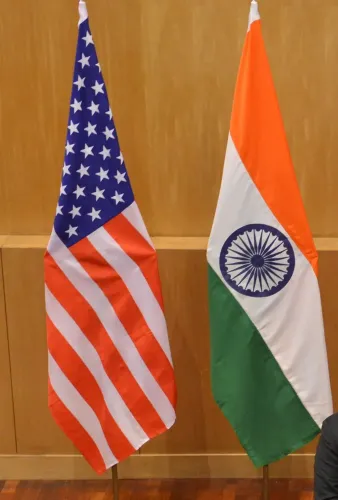
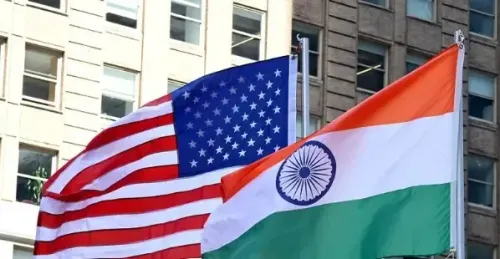
Washington, Jan 13 (NationPress) Leading lawmakers from both the Republican and Democratic parties highlighted that India has become a crucial player in global stability, asserting that bipartisan leadership in the US Congress will continue to be the cornerstone of the relationship, even as geopolitical tensions escalate.
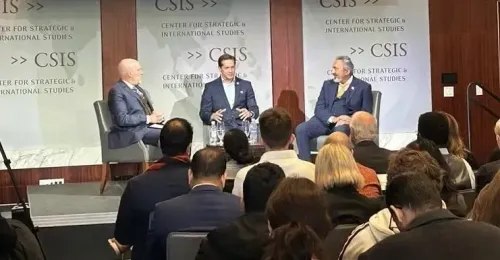
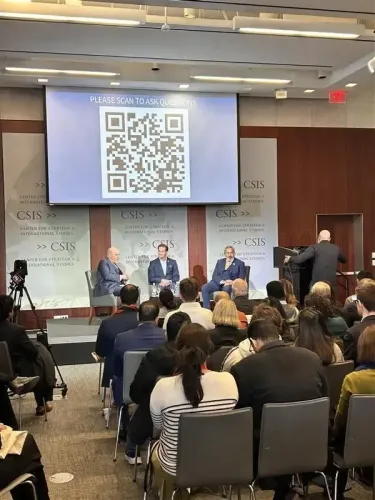
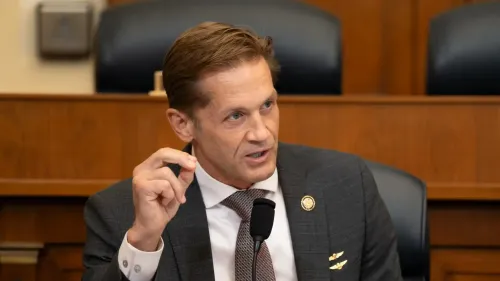
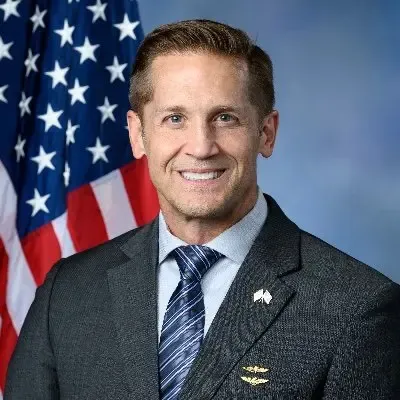
During a fireside chat organized by the Center for Strategic and International Studies (CSIS), Representative Rich McCormick, co-chair of the Congressional Caucus on India and Indian Americans, remarked that the partnership with India is vital not only for US interests but for the global framework.“India is our most critical ally for the future, not just for the United States and India, but for the overall stability of the globe,” McCormick stated.
He pointed out that the strategic stakes are remarkably high, especially with China’s increasing presence in the Indo-Pacific region. “Considering the regional security impacted by Chinese influence, 70% of the trade passing through that area involves Taiwan, and our shared views on economics and human advancement are significant,” he explained.
McCormick characterized the alliance between the world's oldest democracy and its largest as potentially groundbreaking. “If we unite two of the three largest economies in the near future… we could pave the way for a century of peace if approached correctly,” he added.
Conversely, he warned that failure to foster this relationship could lead to serious repercussions. “If we mismanage this, it could be disastrous… An alignment with Russia and China would destabilize everything,” he cautioned.
Representative Ami Bera, the longest-serving Indian American in Congress, reiterated that US-India relations have transcended multiple administrations. “From the Clinton era to Trump and now Biden, India has been pivotal to our Indo-Pacific strategy,” Bera noted.
He emphasized that bipartisan support for India in Washington is strong. “This is not about Democrats or Republicans. The caucus is among the largest on Capitol Hill, and we must ensure we navigate this correctly,” he insisted.
Bera identified Beijing as the key strategic rival influencing US perspectives. “Our primary adversary is clearly Beijing, and this will define global competition moving forward,” he said, adding that new international frameworks will be established around shared values, democracy, free markets, and entrepreneurship.
Both lawmakers affirmed that Congress plays a stabilizing role, regardless of the shifting dynamics in White House diplomacy. Bera mentioned that lawmakers recently endorsed a bipartisan resolution reaffirming the significance of relations with India. “This signals that as a separate branch of government, Congress remains steadfast in recognizing the importance of this alliance,” he said.
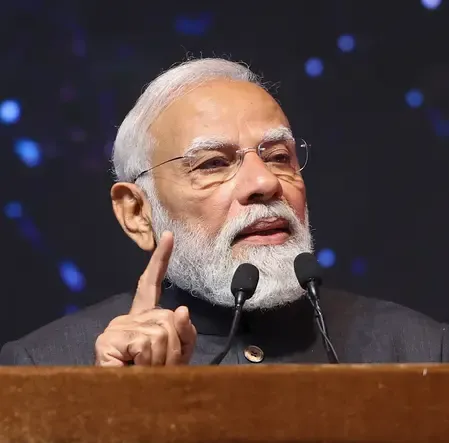
McCormick acknowledged Congress’s awareness of India’s domestic priorities, despite occasional differences. “Prime Minister Modi is strongly nationalistic in a positive sense… He aims to drive productivity and technological advancements in his country,” he remarked.
He added that while there may be disagreements, particularly over energy and defense procurement, shared values ultimately dominate. “In the end, I believe he recognizes our importance because we share a common outlook,” McCormick stated.
The discussion underscored Congress’s belief that enduring institutional ties, rather than fleeting political changes, will dictate the trajectory of US-India relations.
Point of View
It's clear that the enduring ties between the US and India are vital for global stability. Bipartisan support in Congress reflects a strategic understanding of the geopolitical landscape. Strengthening this relationship is essential, not just for these nations, but for the broader international community.
NationPress
30 Sept 2026
Frequently Asked Questions
What is the significance of US-India relations?
US-India relations are crucial for maintaining global stability, especially in the context of rising geopolitical tensions, particularly from China.
How do bipartisan efforts affect US-India ties?
Bipartisan efforts in Congress ensure a consistent and strong approach to US-India relations, transcending political changes and focusing on long-term strategic goals.
What role does Congress play in US-India relations?
Congress plays a stabilizing role, reaffirming the importance of US-India ties through bipartisan resolutions and active engagement, regardless of White House diplomacy.
Why is India considered a vital partner for the US?
India is seen as a vital partner due to its status as the largest democracy and its economic potential, which align with US interests in promoting democracy and free markets.
What challenges do US-India relations face?
Challenges include differing views on energy and defense procurement and the need to navigate China's growing influence in the region.