Are US Lawmakers Correct in Naming China as Their Main Adversary and Supporting India?
Synopsis
In a significant discussion, U.S. lawmakers declared China as the primary adversary of the United States while advocating for a strong partnership with India. They believe this alliance is essential for global stability and regional security, emphasizing the importance of shared democratic values.
Key Takeaways
China is viewed as a primary strategic adversary of the United States.
India's partnership is crucial for maintaining global balance.
The competition with China shapes U.S. foreign policy.
Technology access is vital for India's growth.
The Quad alliance is essential for regional security.
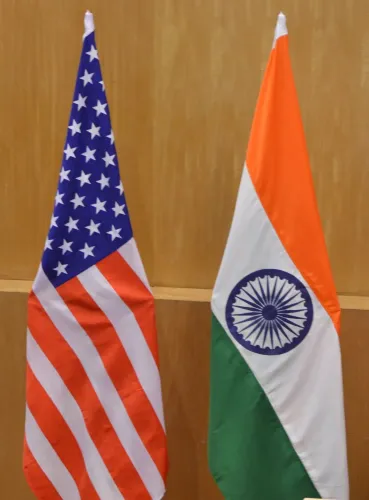
Washington, Jan 13 (NationPress) Prominent American legislators have recognized China as the leading strategic foe of the United States and positioned India as a vital democratic counterbalance essential for sustaining global equilibrium and stability in the Indo-Pacific region.
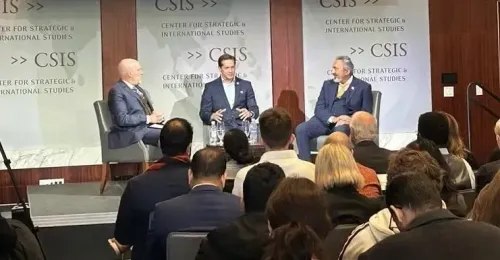
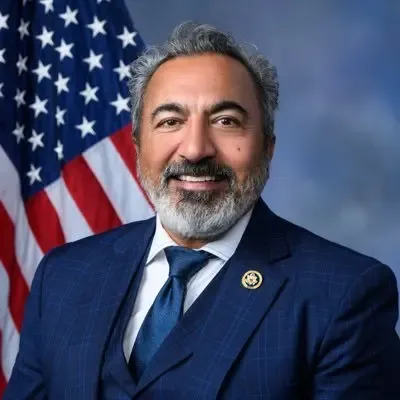
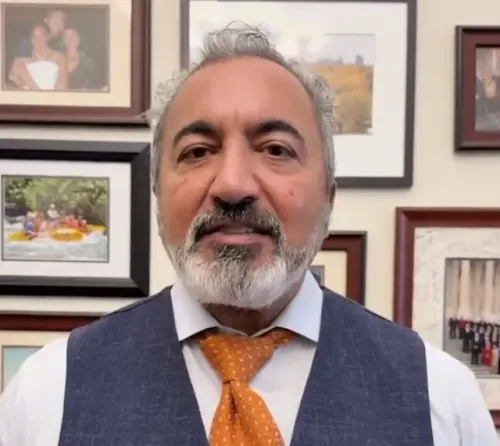
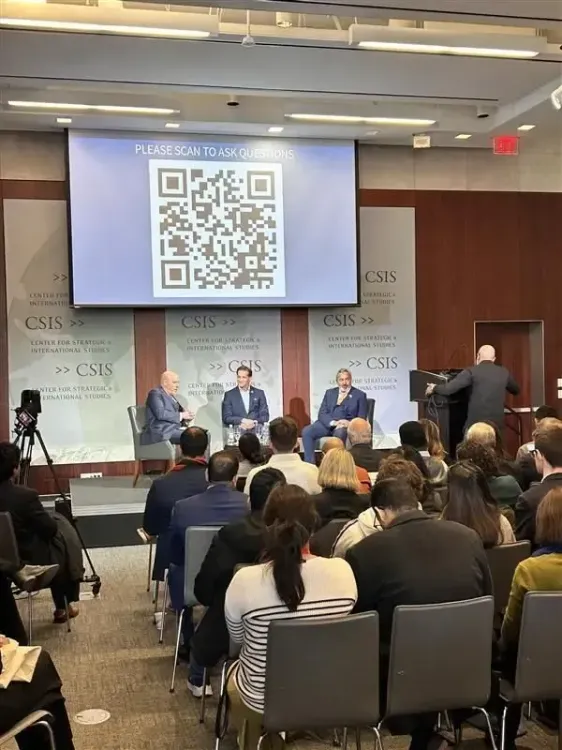
Speaking at a CSIS forum, Representative Ami Bera stated there is no uncertainty in Washington’s view of Beijing. “We know clearly who our adversary is in Beijing,” he remarked.
Bera noted that the rivalry with China is influencing U.S. foreign policy across security, technology, and economics. “That’s going to be the leading competition in the world,” he stated, emphasizing that new global frameworks would revolve around “shared values, democracy, free markets, and entrepreneurship.”
Representative Rich McCormick cautioned that mismanaging relations with India could lead to dire repercussions amid China’s ascendance. “If they start aligning with Russia and China, that will upset everything for us,” he warned.
McCormick added that the partnership between India and the United States could significantly influence the forthcoming century. “If we unite… we could genuinely usher in a new era of peace that could last 100 years if we approach this correctly,” he asserted.
Both legislators contrasted China’s governance model with that of India. Bera characterized China as following an alternate path. “China is a very different country with a different model,” he said, further commenting, “We don’t have to speculate about what Xi Jinping intends to do. He communicates it clearly.”
McCormick noted that China’s economic growth has been marked by unfair practices. “They’ve been cheating their way to the top through the World Trade Organization,” he said, cautioning against permitting Beijing to dictate global standards.
Technology emerged as a pivotal theme in this competition. McCormick warned against restricting India’s access to advanced U.S. technology. “If we start limiting access to our products, that’s detrimental for us as a nation,” he claimed, arguing that exclusion would redirect partners towards Chinese alternatives.
Bera stressed the significance of the Quad alliance involving the United States, India, Japan, and Australia. “The reason I know the Quad’s so vital is that Beijing despises it,” he pointed out.
The lawmakers also emphasized India’s expanding role in regional security. Bera declared India essential for maintaining “maritime security and freedom of navigation” in the Indian Ocean, cautioning against repeating past mistakes in the Indo-Pacific.
McCormick stated that India’s democratic diversity provides it an advantage over China’s centralized governance. “The United States and India must align similarly in how we engage with our populations,” he said, contrasting this with China’s “monolithic” approach.
Point of View
This discourse underscores the urgency of reevaluating alliances in the context of shifting global power dynamics. As the U.S. faces challenges from China, fostering a strong partnership with India could be pivotal in ensuring a stable and democratic world order. Our commitment to democracy and free markets should guide our strategies moving forward.
NationPress
3 Oct 2026
Frequently Asked Questions
Why do U.S. lawmakers consider China a main adversary?
Lawmakers view China as a strategic adversary due to its aggressive foreign policies, economic practices, and governance model that contrasts sharply with democratic values.
What role does India play in U.S. foreign policy?
India is seen as a critical ally in maintaining regional stability and security in the Indo-Pacific, providing a democratic counterbalance to China's influence.
How does technology factor into U.S.-India relations?
Technology is central to the U.S.-India partnership, with concerns that restricting access to advanced U.S. technology could push India towards Chinese alternatives.
What is the Quad alliance?
The Quad is a strategic alliance involving the United States, India, Japan, and Australia, aimed at promoting a free and open Indo-Pacific.
What are the implications of U.S.-India alignment?
A strong U.S.-India alliance could potentially reshape global dynamics, fostering peace and stability in the face of rising challenges from China and other authoritarian regimes.