Are US Congressmen Downplaying Trade Tensions and Highlighting Long-term Ties with India?
Synopsis
US lawmakers are addressing ongoing trade frictions with India while emphasizing the importance of a long-term partnership. Despite challenges, leaders like Ami Bera and Rich McCormick believe that the strategic relationship will prevail. Explore their perspectives on investment, agriculture, and cooperation between two major economies.
Key Takeaways
Long-term partnership between the US and India is emphasized.
Trade frictions are acknowledged but viewed as temporary.
US lawmakers believe in India's potential for investment growth.
Agricultural challenges play a crucial role in trade discussions.
Technological advancements in India are noteworthy.
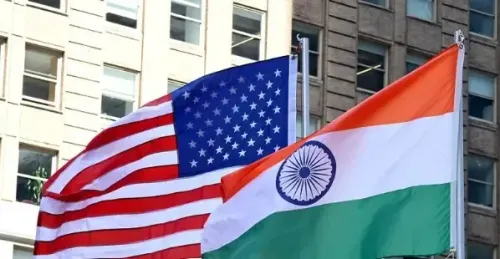
Washington, Jan 13 (NationPress) US legislators recognized ongoing trade tensions with India, yet emphasized that both nations are devoted to a long-term strategic and economic alliance that transcends temporary disagreements over tariffs, visas, and market entry.
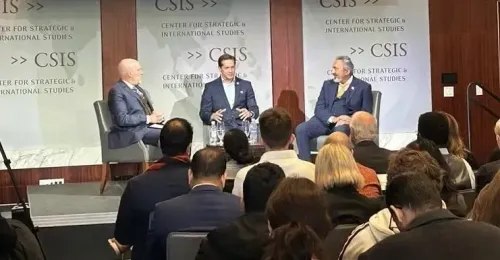
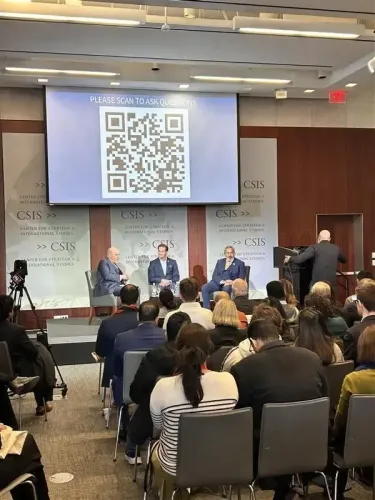
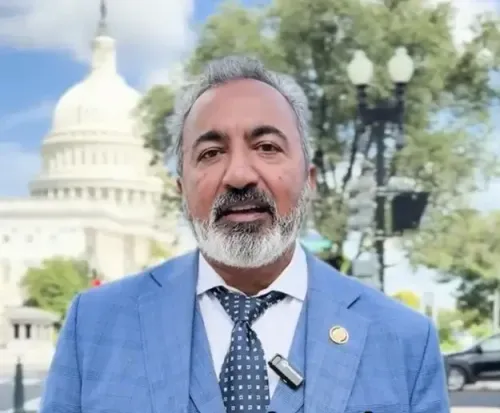
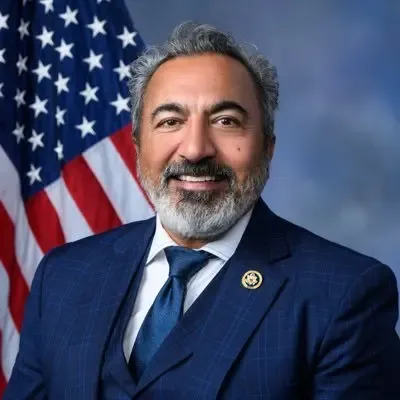
During a CSIS event, Representative Ami Bera mentioned that despite intermittent conflicts, the fundamental direction of the partnership remains robust. “When you converse with the business sector, they’re focusing on the long term. They understand,” he stated.
Bera reminisced about his trip to India amidst increased tensions. “I departed on a Friday, arrived on Saturday, and encountered $100,000 H-1B visa complications… 50 percent tariff. Therefore, there were numerous friction points,” he remarked. “However, the reality is… they comprehend.”
He underscored that US firms still regard India as a key investment hub. “You won’t observe American enterprises making multibillion-dollar investments in Pakistan. That’s all occurring in India,” Bera added.
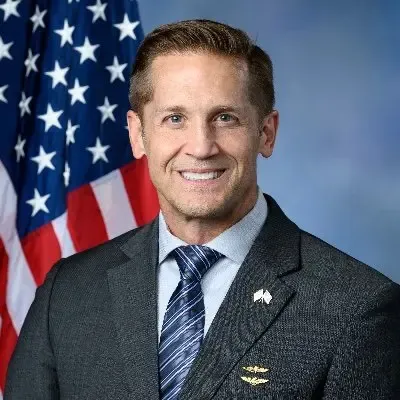
Representative Rich McCormick suggested that economic disagreements should be assessed within a broader strategic framework. “We must ensure there’s equilibrium, that there’s mutual commitment,” he stated, noting that perfect parity is unrealistic. “It won’t be flawlessly balanced. Anyone who’s married knows that.”
McCormick characterized himself as a pro-trade legislator skeptical of punitive tariffs. “I’m a fair trade advocate. I genuinely believe that tariffs are contrary to capital growth,” he expressed.
He contended that economic openness ultimately enhances societies. “If you consider what’s beneficial for business, it’s advantageous for individuals. It promotes upward mobility,” McCormick noted, drawing from his experience as an emergency room physician.
The legislators also touched on agriculture, a delicate subject in US–India trade discussions. McCormick acknowledged India’s self-sufficiency. “India… is indeed self-sufficient in agriculture, which is remarkable for a country of over 1.4 billion people,” he mentioned, while proposing that niche markets could still grow.
Bera recognized the political challenges in India. “The agricultural aspect is just complicated with India… due to the subsistence farmers,” he commented, referencing protests regarding agricultural policies.
McCormick pointed out that India’s demographic and growth trajectory provide long-term benefits. “India is one of only two nations worldwide that is still experiencing population growth,” he remarked.
He also highlighted India’s technological proficiency. “They successfully landed a spacecraft on the dark side of the moon for under $80 million… not billion, million dollars,” McCormick stated.
Bera noted that economic interactions have persisted despite diplomatic tensions. “You continue to observe that the high-frequency data on trade and investment still indicate a genuine increase,” he remarked.
The legislators asserted that Congress recognizes India’s domestic challenges, including energy requirements. McCormick mentioned that acquiring discounted Russian oil, though contentious, reflects India’s priorities. “He’s pursuing this for the best interests of his nation, allowing him to grow his economy with affordable energy,” he said.
Despite the disagreements, both lawmakers affirmed that the strategic rationale for collaboration remains overwhelmingly strong. “We are focused on the long game,” Bera concluded.
Point of View
I believe that the emphasis on long-term strategic relations between the US and India is crucial. Despite temporary trade tensions, the commitment to mutual growth and cooperation is paramount. This perspective aligns with the need for understanding and addressing each other's domestic challenges while fostering economic ties.
NationPress
23 Sept 2026
Frequently Asked Questions
What are the main trade issues between the US and India?
The primary trade issues include tariffs, visa restrictions, and market access, which create friction in the bilateral relationship.
Why do US lawmakers believe in a long-term partnership with India?
Lawmakers like Ami Bera emphasize that despite occasional tensions, the underlying trajectory of US-India relations is strong, with significant investment potential.
How does agriculture impact US-India trade talks?
Agriculture is a sensitive topic in trade discussions, as India’s self-sufficiency and local farming conditions present unique challenges.
What benefits do lawmakers see in India's growth?
Lawmakers recognize India's growing population and technological advancements as key factors that will contribute to long-term economic benefits for both countries.
Are US companies investing more in India than Pakistan?
Yes, US companies are making multibillion-dollar investments primarily in India, as it is seen as a more favorable investment destination compared to Pakistan.