India-US defence ties hold firm despite trade tensions, USPACOM chief's visit signals resolve
Synopsis
Admiral Paparo's second visit to India in under a year — as Washington weighs new tariffs on New Delhi — is the clearest signal yet that US-India defence ties are being deliberately insulated from economic friction. With Secretary of State Rubio due in India on 19 October, the two countries appear to be doubling down on strategic convergence even as their trade relationship grows more complicated.
Key Takeaways
Admiral Samuel J Paparo of USPACOM completed a six-day visit to India in October 2026 — his second trip this year.
Washington is reportedly considering additional tariffs on India over Russian oil imports and a trade imbalance favouring New Delhi.
Analyst Srinivaasan Balakrishnan warned trade tensions could 'put a ceiling' on the India-US military relationship without breaking it.
Professor Uday Chandra of Ashoka University noted that sustained economic coercion could erode political trust over time.
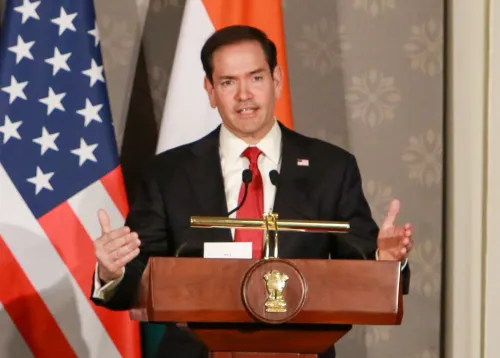
US Secretary of State Marco Rubio is scheduled to visit India on 19 October 2026 .
India has reiterated its preference for strategic autonomy, declining to adopt a 'bloc mentality' in the Indo-Pacific.
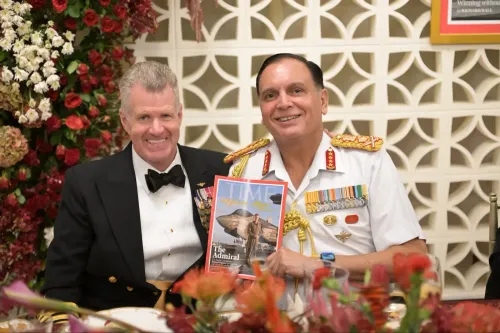
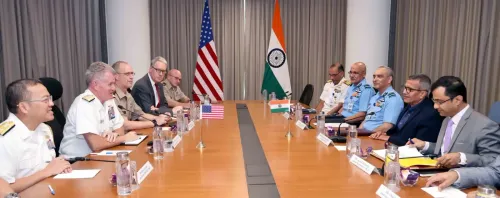
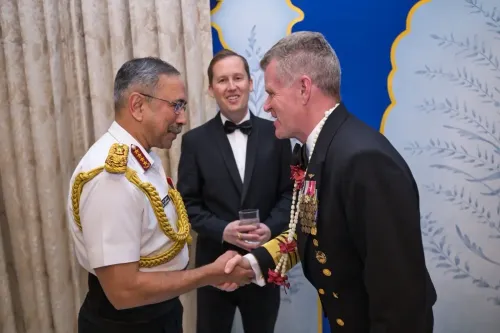
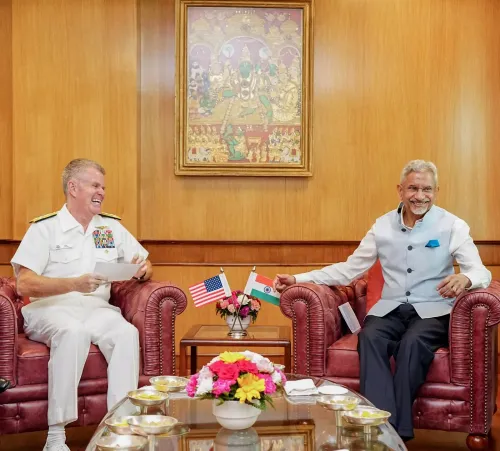
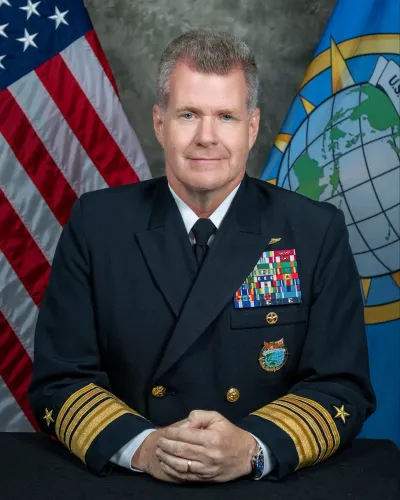
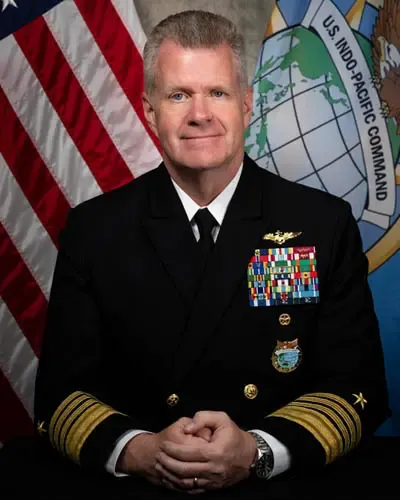
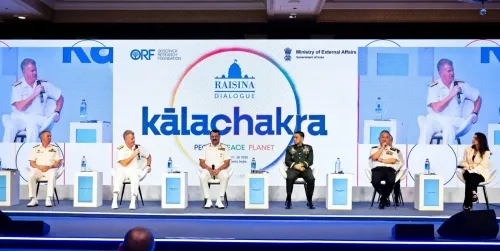
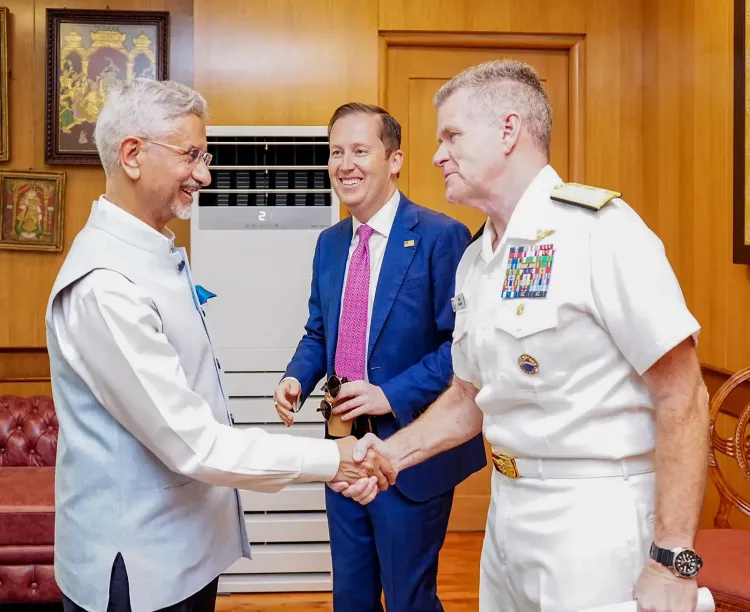
Admiral Samuel J Paparo, Commander of the United States Pacific Command (USPACOM), concluded a six-day official visit to India this week — his second trip to the country in 2026 — meeting senior Indian defence officials and other dignitaries in engagements that analysts say signal Washington's commitment to insulating the bilateral military relationship from mounting trade friction.
The Visit in Context
Paparo's latest visit follows an earlier trip to India in February 2026 and comes at a diplomatically charged moment: Washington is reportedly weighing additional tariffs on New Delhi over India's continued purchase of Russian oil and the trade imbalance that currently favours India. The back-to-back visits — unusual in their frequency — are being read by regional analysts as a deliberate signal that defence engagement will not be held hostage to economic disagreements.
The visit also arrives just weeks before US Secretary of State Marco Rubio is scheduled to travel to India on 19 October, further underlining Washington's interest in sustaining strategic engagement with New Delhi on regional security.
What Analysts Are Saying
Srinivaasan Balakrishnan, Director of Strategic Engagements and Partnerships at the Delhi-based Indic Researchers Forum, cautioned that while trade tensions are unlikely to rupture the defence relationship, they can constrain its depth. 'Trade tensions will not break the India-US military relationship, but they can put a ceiling on it. India does not want a security partnership where economic coercion becomes a test of political loyalty,' Balakrishnan said.
'The military channel will remain open, but trust deepens when both sides see each other as partners, not instruments,' he added.
Uday Chandra, a political science professor at Ashoka University, echoed the concern about longer-term political trust. 'Admiral Paparo's second visit this year suggests that military-to-military engagement may continue despite friction on other fronts. If tariffs become part of a longer pattern of economic coercion against India, they will inevitably affect political trust on both sides,' Chandra said.
India's Indo-Pacific Calculus
According to Balakrishnan, India views itself as a resident power in the Indo-Pacific rather than as Washington's strategic counterweight to China. 'Its priority is a stable Indian Ocean, secure sea lanes and freedom of action,' he said, adding that New Delhi would cooperate with the US, Japan, and Australia — but 'without accepting a bloc mentality that limits its strategic autonomy.'
This framing is consistent with India's longstanding multi-alignment posture and its reluctance to formalise any arrangement that could be perceived as an anti-China alliance, even as it deepens bilateral defence cooperation through expanded military exercises and enhanced maritime security coordination.
The Washington-Beijing Backdrop
Paparo's visit also coincides with a recent meeting between US President Donald Trump and Chinese President Xi Jinping in Washington, where both sides sought to ease trade disputes without resolving their broader strategic differences. According to Balakrishnan, this fragile Washington-Beijing understanding presents India with an opening to further consolidate its position as a key security actor in the Indo-Pacific — a space New Delhi has been methodically expanding since the formalisation of the Quad framework.
With Rubio's India visit on the horizon and defence ties backed by deepening institutional frameworks, the coming weeks will test whether Washington and New Delhi can compartmentalise economic friction and keep the strategic partnership on its upward trajectory.
Point of View
Yet the pressure to choose sides — between Washington and Moscow on energy, between Washington and Beijing on trade — is intensifying. The Rubio visit will be the first real test of whether the two governments can move beyond reassuring rhetoric and establish the kind of reciprocal frameworks that make the partnership resilient to political weather changes in both capitals.
NationPress
10 Oct 2026
Frequently Asked Questions
Why did Admiral Paparo visit India in October 2026?
Admiral Samuel J Paparo, Commander of USPACOM, visited India for six days to meet senior Indian defence officials and other dignitaries, marking his second official trip to the country in 2026. The visit is widely seen as a signal that US-India military ties will remain insulated from ongoing trade tensions over tariffs and oil imports.
What trade tensions are affecting India-US relations?
Washington is reportedly considering additional tariffs on India over New Delhi's continued purchase of Russian oil and a trade imbalance that currently favours India. Analysts warn that if tariffs escalate into a pattern of economic coercion, they could erode political trust and constrain the depth of the bilateral defence partnership.
When is US Secretary of State Marco Rubio scheduled to visit India?
Marco Rubio is scheduled to visit India on 19 October 2026, just weeks after Admiral Paparo's defence engagements. The back-to-back high-level visits underscore Washington's interest in sustaining strategic engagement with New Delhi on regional security.
How does India view its role in the Indo-Pacific?
India describes itself as a 'resident power' in the Indo-Pacific with priorities centred on a stable Indian Ocean, secure sea lanes, and freedom of strategic action. New Delhi has stated it will cooperate with the US, Japan, and Australia without accepting a 'bloc mentality' that limits its strategic autonomy.
How does the Trump-Xi meeting affect India's strategic position?
The recent Washington meeting between President Donald Trump and President Xi Jinping, which eased but did not resolve US-China trade disputes, is seen by analysts as presenting India with an opportunity to further strengthen its position as a key security player in the Indo-Pacific, given the fragility of the Washington-Beijing understanding.