US Indo-Pacific Command chief Admiral Paparo visits India to deepen defence ties
Synopsis
US Indo-Pacific Command chief Admiral Samuel J. Paparo's second India visit in 2025 signals that the India-US defence partnership is accelerating — moving beyond hardware deals into digital transformation, energy resilience, and emerging tech. With Quad commitments layered atop India's BRICS balancing act, New Delhi's multi-alignment strategy is being stress-tested at the highest military levels.
Key Takeaways
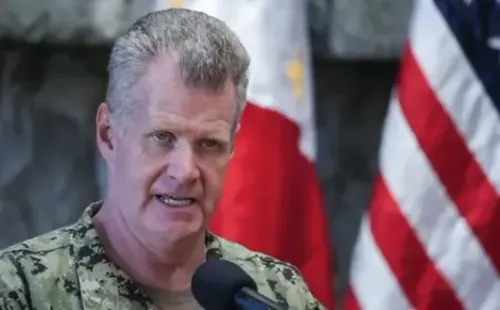
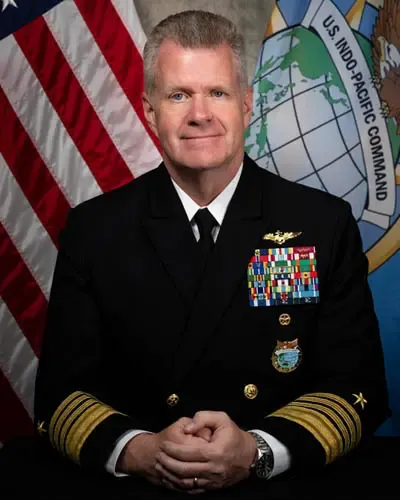
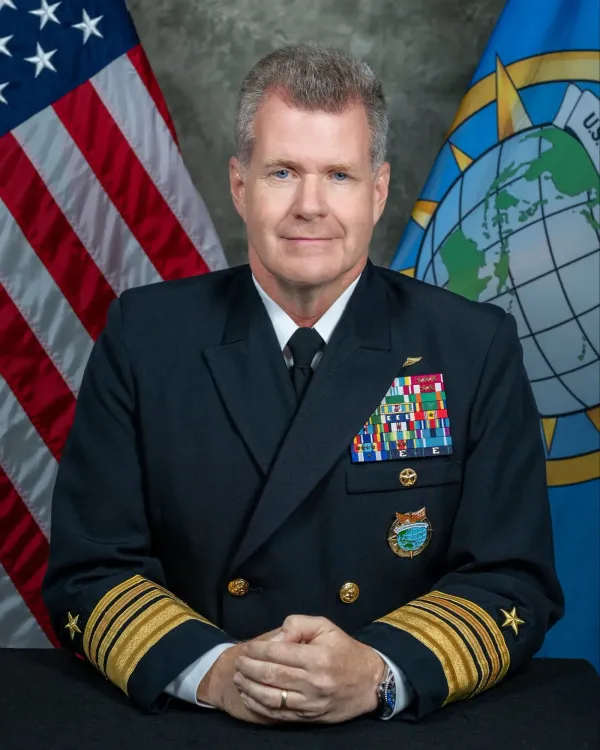
Paparo , Commander of US Indo-Pacific Command , arrived in New Delhi on 4 October 2025 for talks on defence cooperation.
The agenda covers digital transformation , emerging technologies , regional strategic stability , and defence energy resilience .
Paparo's previous India visit was from 14–19 February 2025 , during which he met the Chief of Defence Staff , the Chief of Naval Staff , and toured HAL Tejas facilities in Bengaluru .
The US Embassy described the visit as underscoring the Major Defence Partnership and the US's 'enduring presence and interests in the Indian Ocean region.' India remains a Quad member alongside the US, Japan, and Australia, while simultaneously maintaining active engagement with BRICS — reflecting its multi-alignment doctrine.
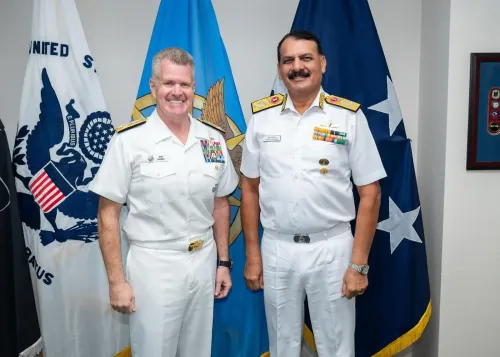
Admiral Samuel J. Paparo, Commander of the US Indo-Pacific Command (USINDOPACOM), arrived in New Delhi on Saturday, 4 October 2025, for a high-level visit aimed at advancing defence cooperation and strengthening military-to-military ties between India and the United States. The visit was confirmed by the US Embassy in India, which outlined a substantive agenda centred on shared security priorities in the Indo-Pacific.
Key Agenda Items
According to the US Embassy, Admiral Paparo's engagements with Indian counterparts will focus on several critical areas: harnessing digital transformation and emerging technologies, maintaining regional strategic stability, strengthening defence energy resilience, and navigating an increasingly competitive technology landscape.
'Admiral Paparo's visit underscores the strength of the Major Defence Partnership and reaffirms the United States' enduring presence and interests in the Indian Ocean region,' the Embassy said in a statement.
Building on a February Visit
This is not Paparo's first visit this year. He last travelled to India from 14–19 February 2025, during which he met with then Chief of Defence Staff General Anil Chauhan and then Chief of the Naval Staff Admiral Dinesh Kumar Tripathi in New Delhi to discuss regional maritime security and joint operational capabilities.
During that visit, Admiral Paparo also travelled to Chandimandir in Haryana, where he joined US Ambassador to India Sergio Gor for operational briefings at the Indian Army's Western Command headquarters with Lt. Gen. Manoj Kumar Katiyar. He subsequently visited Bengaluru to tour the National Flight Test Centre and inspect HAL Tejas facilities, highlighting the growing emphasis on aerospace and technology partnerships.
The Broader India-US Defence Architecture
India-US defence cooperation has expanded significantly over the past two decades, anchored by foundational logistics agreements, increasingly frequent joint military exercises, and initiatives to co-produce advanced military technology. According to an expert assessment presented at the US Army Command and General Staff College, the bilateral defence relationship is described as 'really strong and growing.'
Both nations are also members of the Quad, alongside Japan and Australia, which serves as a key multilateral security framework in the Indo-Pacific. Notably, India has simultaneously maintained its strategic autonomy, continuing its active participation in BRICS and engaging with multiple major powers — a balancing act that underscores New Delhi's long-held doctrine of multi-alignment.
What This Visit Signals
The back-to-back high-level military visits in a single year reflect the accelerating pace of India-US defence engagement. Both nations are building, according to the US Embassy, 'a defence partnership equipped to meet the challenges of the future — from emerging technology to maritime security.' The focus on digital transformation and energy resilience points to a defence relationship evolving well beyond traditional hardware transfers and joint exercises.
All eyes will now be on what specific agreements or frameworks emerge from Paparo's current visit, and whether they advance the technology co-production agenda that both sides have publicly prioritised.
Point of View
Short on deliverables — finally produces frameworks that survive domestic political cycles on both sides.
NationPress
3 Oct 2026
Frequently Asked Questions
Why is Admiral Samuel Paparo visiting India in October 2025?
Admiral Paparo is visiting India to advance defence ties and military-to-military cooperation, with a focus on digital transformation, emerging technologies, regional strategic stability, and defence energy resilience. The US Embassy confirmed the visit underscores the strength of the India-US Major Defence Partnership.
When did Admiral Paparo last visit India before this trip?
Admiral Paparo last visited India from 14 to 19 February 2025. During that trip, he met the Chief of Defence Staff and the Chief of Naval Staff, visited the Western Command headquarters in Chandimandir, and toured HAL Tejas facilities in Bengaluru.
What is the India-US Major Defence Partnership?
The Major Defence Partnership is a framework that elevates India to the highest tier of US defence relationships, enabling advanced technology transfers, joint military exercises, and defence co-production. It has been built over two decades and is anchored by foundational logistics agreements and growing interoperability initiatives.
How does India's participation in Quad relate to its BRICS membership?
India is a member of the Quad alongside the US, Japan, and Australia, which focuses on Indo-Pacific security. Simultaneously, India maintains active participation in BRICS, reflecting its longstanding doctrine of strategic autonomy and multi-alignment — engaging multiple major powers without entering a formal US-led military alliance.
What are the key areas of focus in India-US defence cooperation?
India-US defence cooperation spans foundational logistics pacts, joint military exercises, advanced technology co-production, maritime security, and, increasingly, digital transformation and defence energy resilience. Expert assessments describe the bilateral defence relationship as 'really strong and growing.'