CM Dhami appoints tutors in Uttarakhand govt nursing colleges
Synopsis
The Chief Minister's Office of Uttarakhand announced on 19 October 2026 that tutors have been appointed in government nursing colleges across the state, with CM Pushkar Singh Dhami citing improved education and quality training for future healthcare workers as the key objective.
Key Takeaways
Tutors appointed in Rajkiya (Government) Nursing Colleges across Uttarakhand as announced by the CMO on 19 October 2026 .
CM Pushkar Singh Dhami stated the move aims to provide better education and quality training to nursing students.
The intervention separates dedicated teaching roles from clinical duties, directly strengthening training quality.
Uttarakhand has pursued healthcare workforce expansion since state formation in 2000 , with a focus on hilly and remote districts.
Exact number of tutors appointed, colleges covered, and budget details have not yet been officially released.
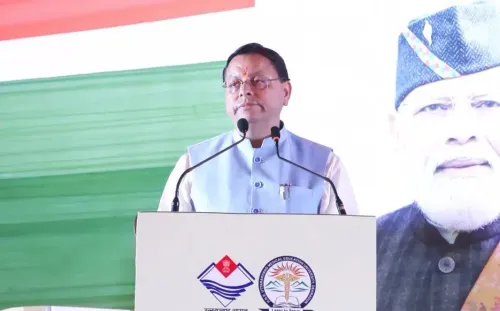
The gap between a nursing classroom and a working ward has long haunted Uttarakhand's hill districts — and the state government just made a targeted move to close it. The Chief Minister's Office of Uttarakhand announced on Monday, 19 October 2026 that tutors have been appointed across Rajkiya (Government) Nursing Colleges in the state, a step Chief Minister Pushkar Singh Dhami framed as essential to preparing the next generation of healthcare workers.
Quoting CM Dhami directly, the post stated: 'राजकीय नर्सिंग कॉलेजों में विद्यार्थियों को बेहतर शिक्षा एवं गुणवत्तापूर्ण प्रशिक्षण उपलब्ध कराने के लिए ट्यूटर्स की नियुक्ति की गई है, ताकि भविष्य के स्वास्थ्यकर्मियों को बेहतर ढंग से तैयार किया जा सके।' — 'Tutors have been appointed in government nursing colleges to provide better education and quality training to students, so that future healthcare workers can be prepared more effectively.'Why faculty appointments matter in Uttarakhand's nursing colleges
Uttarakhand, a state carved out in 2000, has steadily expanded its medical and nursing education footprint to address chronic healthcare workforce shortages — particularly in remote, high-altitude districts where community health infrastructure is thinly stretched. Government nursing colleges are the primary pipeline for nurses and paramedical staff serving those communities. When those colleges are under-staffed, the quality of training degrades before a single patient is ever seen.
Appointing dedicated tutors — rather than relying on hospital-based staff to double as trainers — is a structural intervention. It separates the teaching function from the clinical workload, giving students consistent, accountable instruction. Several Indian states have moved in this direction in recent years, responding to national-level pushes to standardise paramedical education quality and reduce the gap between rural and urban healthcare delivery.
Dhami's incremental healthcare workforce strategy
CM Pushkar Singh Dhami, in office since 2021, has repeatedly positioned healthcare workforce development alongside infrastructure expansion as twin pillars of the state's public health agenda. This announcement follows that pattern — a targeted, lower-cost intervention that does not require new buildings or large capital expenditure, but directly strengthens outcomes at institutions already operating.
Specific details — including the exact number of tutors appointed, which colleges are covered, and any associated budget allocation — have not yet been released in official figures. Those rollout specifics will determine the real-world scale of impact.
For nursing students in a state where the nearest medical college can be hours away by road, a qualified tutor in the classroom is not a bureaucratic headline. It is the difference between a degree and a skill.
Point of View
Faculty-focused intervention that fits a broader national pattern of states reinforcing paramedical training infrastructure rather than building new facilities. For CM Dhami, it reinforces a governance narrative centred on incremental, deliverable health-sector improvements ahead of what remains a politically competitive state. The real test, however, lies in the implementation detail — scale, coverage, and accountability mechanisms — none of which have yet been disclosed, leaving the policy's impact an open question.
NationPress
19 Oct 2026
Frequently Asked Questions
Why has Uttarakhand appointed tutors in government nursing colleges?
CM Pushkar Singh Dhami stated the appointments are aimed at providing better education and quality training to nursing students so that future healthcare workers are more effectively prepared for their roles.
How many tutors have been appointed in Uttarakhand nursing colleges?
The exact number of tutors appointed has not been officially released as of the announcement on 19 October 2026. Further details on scale and coverage are awaited.
Which nursing colleges in Uttarakhand are covered by the tutor appointment?
The announcement refers to Rajkiya (Government) Nursing Colleges across Uttarakhand. Specific colleges covered have not been listed in the official communication.
What is the healthcare workforce situation in Uttarakhand?
Uttarakhand has faced longstanding healthcare workforce shortages, especially in remote hilly districts, since its formation as a state in 2000. Government nursing colleges are the primary source of nurses and paramedical staff for these areas.
How does this fit into India's broader nursing education policy?
Several Indian states have increased faculty recruitment in government nursing colleges to align with national standards for healthcare delivery and address shortages in rural and remote areas. Uttarakhand's move follows this pattern.