CM Samrat Choudhary Greets Bihar on Navratri's Seventh Day
Synopsis
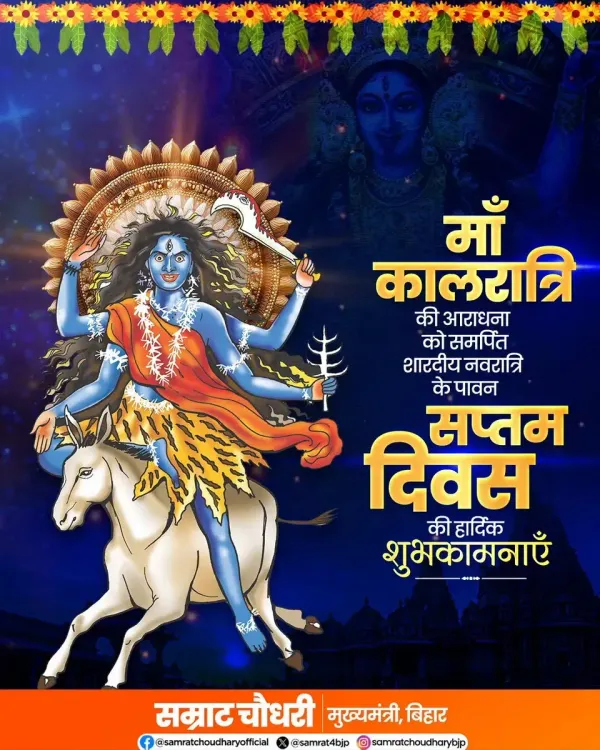
Bihar Chief Minister Samrat Choudhary marked the seventh day of Sharadiya Navratri by invoking the blessings of Maa Kalaratri, praying for peace, prosperity, and positive energy for all devotees across Bihar and beyond.
Key Takeaways
Bihar CM Samrat Choudhary posted Navratri greetings on Saturday, October 17, 2026 , the seventh day of Sharadiya Navratri.
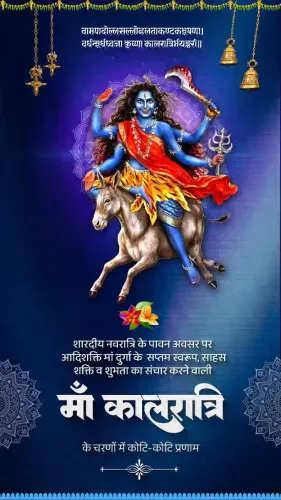
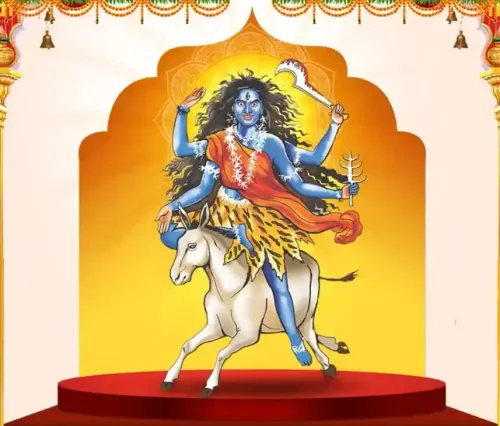
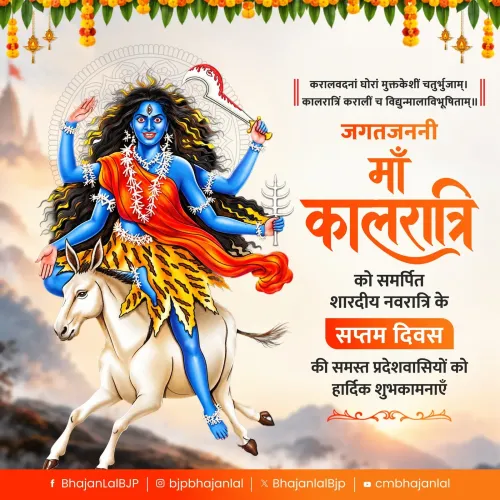
The message invoked Maa Kalaratri , the seventh form of Goddess Durga, associated with the destruction of ignorance and darkness.
He prayed for happiness, peace, prosperity, and positive energy for all.
Sharadiya Navratri is one of India's most widely observed autumn festivals, culminating in Dussehra.
The post reflects the broader BJP practice of cultural outreach to Hindu devotees in Hindi-speaking states during major religious occasions.
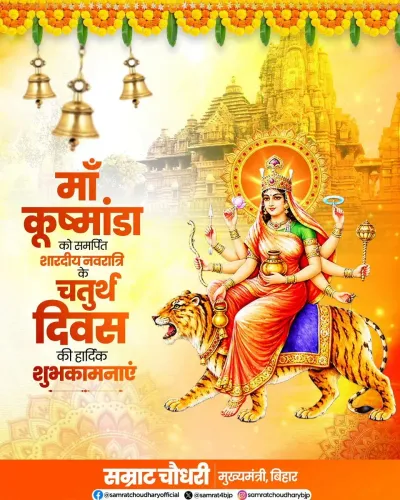
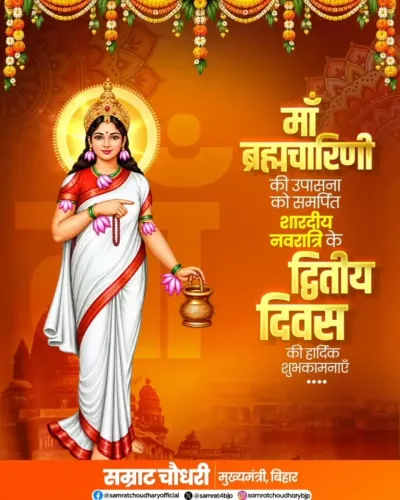
On the seventh day of Sharadiya Navratri, Bihar Chief Minister Samrat Choudhary extended warm greetings to devotees, invoking the blessings of Maa Kalaratri — the fierce seventh form of Goddess Durga — and praying for happiness, peace, and prosperity for all.
In his post on X on Saturday, October 17, 2026, the Chief Minister wrote: 'Maa Kalaratri ki kripa se sabke jeevan mein sukh, shanti, samridhi evam khushhaali ka sanchar ho' — 'May the grace of Maa Kalaratri bring happiness, peace, prosperity, and well-being into everyone's life.' He added a prayer that the goddess remove all suffering and fill life with fresh energy and positivity.
Who Is Maa Kalaratri and Why the Seventh Night Matters
Maa Kalaratri is revered as the destroyer of ignorance and darkness. Worshipped on the seventh night of Navratri, she is depicted with a dark complexion, four arms, and a fierce form — yet her devotees believe her ferocity is directed entirely at evil. In Bihar and across the Hindi belt, the seventh night draws large temple gatherings and community prayers.
Sharadiya Navratri — the autumn edition of the nine-night festival dedicated to Goddess Durga — is one of the most widely observed religious occasions in India. It culminates in Dussehra, marking the victory of good over evil, with processions and public celebrations that hold deep cultural resonance in Bihar.
BJP Leaders and Festival Outreach in the Hindi Belt
For senior BJP leaders in Hindi-speaking states, Navratri greetings are more than a formality — they are a consistent thread of cultural affirmation woven through the political calendar. Chief Minister Choudhary's message, tagged #MaaKalaratri, follows a well-established practice of using social media to connect with Hindu devotees at peak religious moments. In a state as devout as Bihar, the rhythm of festivals and the rhythm of governance often run in parallel.
Point of View
High-visibility calendar that cumulatively shapes a leader's public persona as a culturally rooted figure. As Dussehra approaches, expect this cadence to intensify.
NationPress
17 Oct 2026
Frequently Asked Questions
What did Bihar CM Samrat Choudhary post on Navratri's seventh day?
Bihar CM Samrat Choudhary posted greetings invoking Maa Kalaratri's blessings, praying for happiness, peace, prosperity, and positive energy for all on the seventh day of Sharadiya Navratri.
Who is Maa Kalaratri and when is she worshipped?
Maa Kalaratri is the seventh form of Goddess Durga, worshipped on the seventh night of Navratri. She is associated with the destruction of ignorance and evil.
What is Sharadiya Navratri?
Sharadiya Navratri is the nine-night autumn festival dedicated to Goddess Durga, observed across India and culminating in Dussehra, which marks the victory of good over evil.
Why do BJP leaders post Navratri greetings on social media?
Senior BJP leaders, especially in Hindi-speaking states, routinely post religious festival greetings to engage with Hindu devotees, affirm cultural traditions, and strengthen their connection with the electorate.
What comes after the seventh day of Navratri?
The eighth and ninth days follow — Ashtami and Navami — before the festival culminates in Dussehra, marked by large processions and public celebrations across Bihar and India.