Arunachal CMO hails Gajraj Corps' Yak Mela 2026 at Chuna High Ground
Synopsis
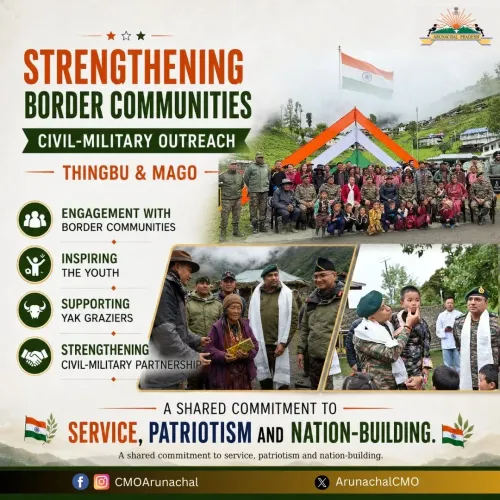
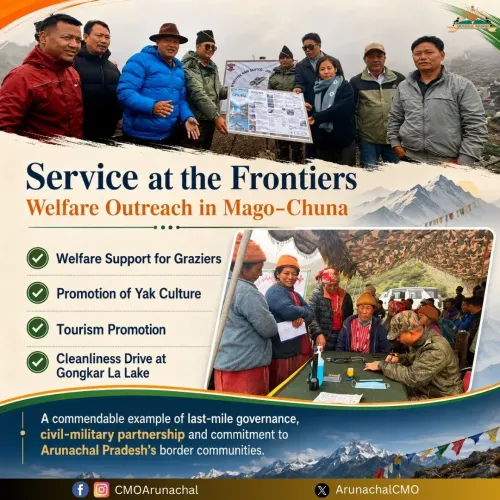
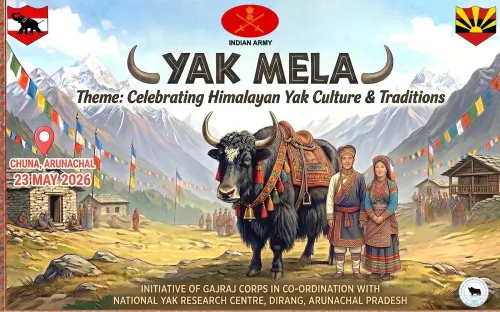
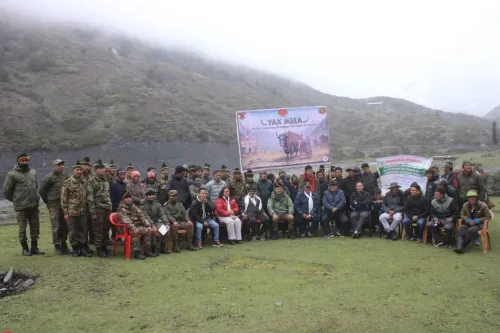
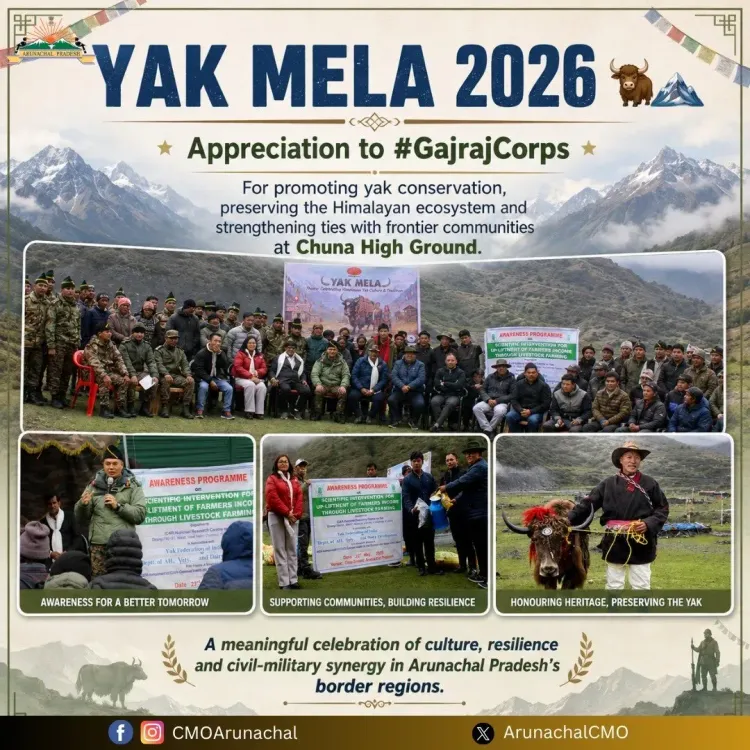
The Arunachal Pradesh CMO on 29 May 2026 commended Gajraj Corps for holding Yak Mela 2026 at Chuna High Ground, highlighting yak conservation, indigenous heritage and civil-military cooperation along India's northeastern frontier with China.
Key Takeaways
The Chief Minister's Office of Arunachal Pradesh publicly praised Gajraj Corps (IV Corps) for organising Yak Mela 2026 at Chuna High Ground on 29 May 2026 .
Gajraj Corps , headquartered in Tezpur, Assam , is responsible for security along the Line of Actual Control in Arunachal Pradesh and conducts regular civic outreach.
The event supports yak herders and frontier tribal communities whose pastoral livelihoods face pressure from climate change and out-migration.
Civil-military cultural outreach in the region traces back to Operation Sadbhavana , launched in the early 2000s.
Yak melas serve as livestock showcases, veterinary camps and market-linkage platforms aligned with the National Livestock Mission .
The CMO's endorsement signals strong alignment between the Arunachal Pradesh state government and the Indian Army's civic programme in border districts.
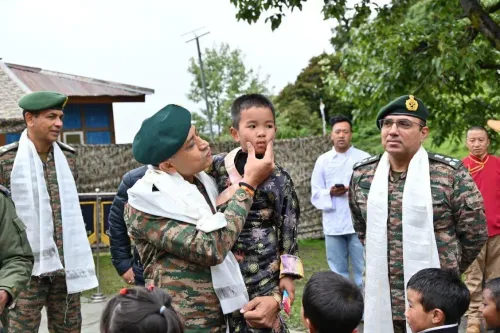
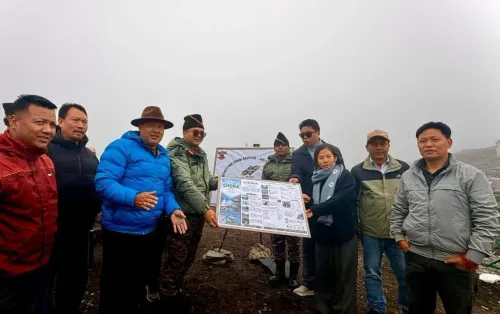
The Chief Minister's Office of Arunachal Pradesh on Friday, 29 May 2026, commended the Gajraj Corps of the Indian Army for organising Yak Mela 2026 at Chuna High Ground, calling the initiative a reflection of heritage, resilience and civil-military partnership in the state's frontier communities.
Context
The Arunachal CMO's post described it as 'heartening to witness Gajraj Corps promoting yak conservation and supporting frontier communities through Yak Mela 2026 at Chuna High Ground.' The statement praised the event as a 'commendable initiative' that brings together cultural heritage and strategic outreach in one of India's most sensitive border regions.
Gajraj Corps, formally the IV Corps of the Indian Army and headquartered in Tezpur, Assam, is the primary formation responsible for security operations along the Line of Actual Control in Arunachal Pradesh. Beyond its defence mandate, the Corps has a long record of civic engagement with communities in the state's high-altitude districts.
Policy Backdrop
Civil-military outreach of this nature traces its lineage to Operation Sadbhavana, the Indian Army's flagship civic-action programme launched in the early 2000s across northeastern and Jammu and Kashmir border districts. Under Sadbhavana, army formations have funded schools, medical camps, skill-development workshops and cultural events to build trust with frontier populations.
Yak melas have emerged as a recurring format within this framework, serving simultaneously as livestock showcases, veterinary camps and market-linkage platforms for indigenous herders. The events align with the National Livestock Mission, under which the central government supports conservation of high-altitude breeds including the yak, which is central to the pastoral economy of Arunachal Pradesh's mountain tribes.
The broader context is significant: Arunachal Pradesh shares a long and contested border with China, and the Indian state has consistently used development and cultural-outreach programmes to reinforce ties with communities in districts closest to the Line of Actual Control.
Stakeholders and Impact
The primary beneficiaries of Yak Mela 2026 are yak herders and frontier tribal communities whose high-altitude pastoral livelihoods depend on the animal for milk, meat, fibre, transport and draught power. These communities face compounding pressures from climate-induced pasture degradation and out-migration of younger generations to urban centres.
Events like the Yak Mela provide herders access to veterinary services, improved breeding information and potential buyers, giving a direct economic boost alongside the cultural validation of their traditions. For the army, such initiatives strengthen people-to-people bonds that are considered strategically important in border districts where community confidence in state institutions is a national-security asset.
The Arunachal Pradesh government's public endorsement of the event signals alignment between the state administration and the army's civic programme, reinforcing the civil-military partnership the CMO's post explicitly cited.
What's Next
Attention will now turn to whether the Arunachal Pradesh Animal Husbandry and Veterinary Department announces follow-up conservation measures or market-linkage schemes building on the Yak Mela platform. State-level rollout of yak-specific components under the National Livestock Mission remains a key policy lever to watch.
Any subsequent announcements from IV Corps or the state government regarding the scale, outcomes and next edition of the mela will indicate how institutionalised this civil-military cultural initiative is becoming along India's northeastern frontier.
Point of View
Embedding the Indian state's presence in high-altitude communities that might otherwise feel administratively distant. The explicit framing around 'heritage and resilience' taps into a broader government narrative that positions northeastern indigenous cultures as living proof of India's civilisational continuity in its frontier territories. As climate stress and out-migration thin the ranks of traditional yak herders, the institutionalisation of such events under army patronage may become an increasingly important pillar of both conservation policy and border-area development strategy.
NationPress
20 Sept 2026
Frequently Asked Questions
What is Yak Mela 2026 in Arunachal Pradesh?
Yak Mela 2026 is a community event organised by Gajraj Corps (IV Corps of the Indian Army) at Chuna High Ground in Arunachal Pradesh, aimed at promoting yak conservation, supporting frontier tribal herders and strengthening civil-military ties.
What is Gajraj Corps and where is it based?
Gajraj Corps, formally known as IV Corps of the Indian Army, is headquartered in Tezpur, Assam. It is responsible for security operations along the Line of Actual Control in Arunachal Pradesh and regularly conducts civic-action programmes in border districts.
What is Operation Sadbhavana?
Operation Sadbhavana is the Indian Army's flagship civic-action programme, active since the early 2000s in northeastern states and Jammu and Kashmir. It funds schools, medical camps, skill-development workshops and cultural events to build trust with frontier communities.
Why is yak conservation important in Arunachal Pradesh?
Yak rearing is central to the pastoral economy of Arunachal Pradesh's high-altitude tribes, providing milk, meat, fibre and transport. The population faces threats from climate-induced pasture loss and out-migration, making conservation efforts and market linkages critical for community livelihoods.
How does the National Livestock Mission support yak herders?
The National Livestock Mission is a central government scheme that includes components for conserving indigenous high-altitude breeds like the yak. It supports breeding improvement, veterinary services and market linkages for herders in states like Arunachal Pradesh.