India rejects UN rapporteur report at UNGA, warns of credibility crisis
Synopsis
India didn't just push back — it called out the UN's credibility problem twice in one week. At the UNGA Third Committee, diplomat Anuj Swarup rejected a Special Rapporteur's report on Indian youth as 'hearsay dressed up as a UN report,' pointing to anonymous footnotes generalising about 1.4 billion people. The double broadside — targeting both the rapporteur and the Human Rights Commissioner — signals a sharper, more systematic Indian challenge to the multilateral human rights architecture.
Key Takeaways
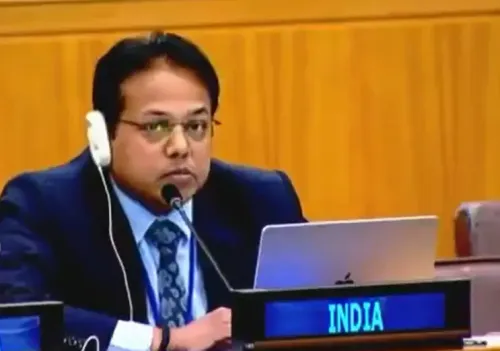
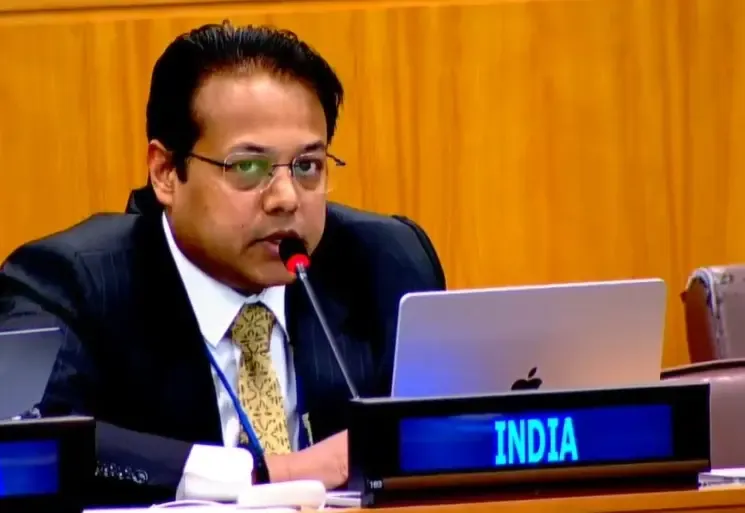
Anuj Swarup , First Secretary at India's UN Mission in Geneva, rejected Special Rapporteur Gina Romero 's report 'outright' at the UNGA Third Committee on 17 October 2026 .
India objected to claims about Indian youth resting on an anonymous, unattributed 'submission' — calling it 'hearsay dressed up as a UN report.' This was the second such warning in a week; on Wednesday India also accused Human Rights Commissioner Volker Türk of double standards.
Commissioner Türk himself had said on 7 September that India's handling of youth protests showed 'the best response is dialogue with youth leaders.' India cited Parliament's amendment of the Public Examinations Act — doubling penalties for paper leaks and creating fast-track courts in every state — as evidence of democratic responsiveness.
Rapporteur Romero acknowledged India as 'the biggest democracy in the world' but maintained her criticism.
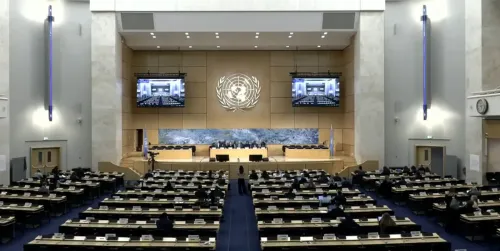
Indian diplomat Anuj Swarup on 17 October 2026 rejected 'outright' a report by UN Special Rapporteur Gina Romero on the Rights to Freedom of Peaceful Assembly and of Association, warning that arbitrary, unverifiable submissions are eroding the credibility of the United Nations and its institutions. The rebuke was delivered at a meeting of the UN General Assembly's Third Committee in New York, which handles social and humanitarian affairs.
India's Core Objection
Swarup, a First Secretary at India's UN Mission in Geneva, took sharp exception to a claim in Romero's report that 'young people from India reported retaliation or stigmatisation for discussing mental health or gender justice.' The footnote supporting the claim cited only a 'submission' without identifying any source. 'A sweeping charge against the world's largest youth population, resting on anonymous and unverified claims is not evidence,' Swarup told the committee. He further stated: 'It is hearsay dressed up as a UN report, and my delegation rejects it outright.'
Swarup argued that a mandate holder relying on anonymous inputs to generalise for 1.4 billion people 'does a disservice to the very mandate she holds.' He described the level of reporting as 'precisely the reason that the United Nations and its institutions have lost credibility.'
A Second Warning in One Week
This was, notably, the second occasion within the same week that India raised alarms about the UN human rights mechanism. On Wednesday, Swarup had criticised UN Human Rights Commissioner Volker Türk for what India called double standards in reporting on violent responses to protests globally. 'Violent responses to protests in our neighbourhood, as well as in the West, have gone uncommented,' Swarup said, adding that 'such double standards contribute to loss of trust' in the High Commissioner.
India Cites Internal Democratic Response
Swarup also highlighted what he called an irony within Romero's own report — that it acknowledged young Indians had created a satirical political movement, referring to the Cockroach Janta Party. 'In which repressive state does a satirical youth party question the government, march on the capital and then sit across the table with senior national leaders?' he asked rhetorically.
He pointed to remarks made by Commissioner Türk himself on 7 September, when Türk stated: 'The recent protests in India showed the best response is dialogue with youth leaders, not the excessive use of force.' Swarup argued this was consistent with India's own account. When students protested over irregularities in public examinations, the government engaged constructively, and within weeks Parliament amended the Public Examinations Act — doubling punishments for paper leaks, carrying out a systemic examination overhaul, and establishing fast-track courts in every state to prosecute individuals involved in exam fraud.
Rapporteur's Response
Responding to India's criticism, Romero acknowledged that 'India is the biggest democracy in the world' and that the country has 'several participatory bodies and scenarios to include the voices of youths.' However, she maintained her position, noting, 'But also, we have youths in the streets protesting.' Romero, a Colombian activist, was appointed rapporteur by the UN Human Rights Council. Special Rapporteurs serve in a personal capacity and are not UN staff members; they receive no salary.
What This Signals
India's two interventions in a single week represent an increasingly assertive posture at multilateral forums on the question of human rights scrutiny. The pushback signals that New Delhi intends to contest what it views as procedurally weak UN reporting more vigorously — a trend that will likely shape India's engagement with the Human Rights Council in the months ahead.
Point of View
The UN's internal coherence is itself the story. India's assertiveness will likely embolden other democracies facing similar scrutiny to adopt the same playbook.
NationPress
17 Oct 2026
Frequently Asked Questions
Why did India reject the UN Special Rapporteur's report on peaceful assembly?
India rejected the report because it relied on anonymous, unattributed submissions to make sweeping claims about Indian youth, including allegations of retaliation for discussing mental health and gender justice. Diplomat Anuj Swarup called it 'hearsay dressed up as a UN report' at the UNGA Third Committee on 17 October 2026.
Who is Gina Romero and what did her report say?
Gina Romero is a Colombian activist appointed by the UN Human Rights Council as Special Rapporteur on the Rights to Freedom of Peaceful Assembly and of Association. Her report stated that young people from India reported retaliation or stigmatisation for discussing mental health or gender justice, citing an anonymous 'submission' without identifying the source.
What did India say about UN Human Rights Commissioner Volker Türk?
India accused Commissioner Türk of double standards on Wednesday, the day before the rapporteur rebuke, saying violent responses to protests 'in our neighbourhood, as well as in the West, have gone uncommented' in his reports. India also cited Türk's own 7 September statement praising India's dialogue-first approach to youth protests.
How did India respond to student protests over exam irregularities?
According to Swarup, when students protested over public examination irregularities, the government engaged constructively with youth, and Parliament subsequently amended the Public Examinations Act. The amendment doubled punishments for paper leaks, overhauled the examination system, and established fast-track courts in every state to prosecute exam fraud.
What is the UNGA Third Committee?
The UN General Assembly's Third Committee handles social, humanitarian, and cultural issues, including human rights matters. It is one of six main committees of the General Assembly and meets annually in New York, providing a platform for member states to engage with UN special rapporteurs and human rights bodies.