Indian teen Tarangini Sharma urges UNHRC for digital safety standards
Synopsis
A 14-year-old from Rajasthan took the floor at the UN Human Rights Council in Geneva to demand that the world stop treating digital safety as an afterthought. Tarangini Sharma's call for safety-by-design, algorithmic audits, and a global innovation fund for marginalised women puts an Indian teenager at the centre of a debate that will shape how AI and platforms are regulated worldwide.
Key Takeaways
Tarangini Sharma , aged 14 , representing RSKS India , addressed the UNHRC 63rd Session in Geneva on 25 September 2026 .
She called for safety-by-design standards for digital platforms and AI developers to protect women from deepfakes and cyber-violence.
Sharma demanded independent gender-impact audits of algorithms and rapid multilingual reporting systems backed by trained human reviewers.
She urged member states to establish specialised cyber-violence units and strengthen cross-border digital evidence preservation .
Sharma proposed a global innovation fund to support women-led organisations building safety tools for rural women, women with disabilities, and women in public life.
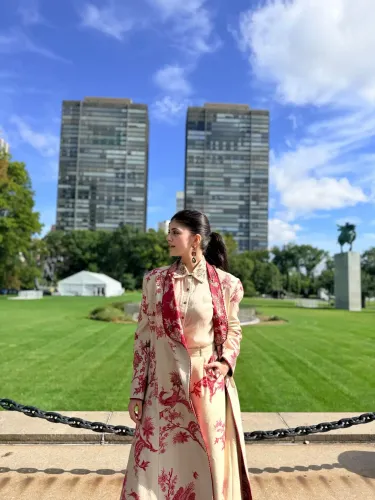
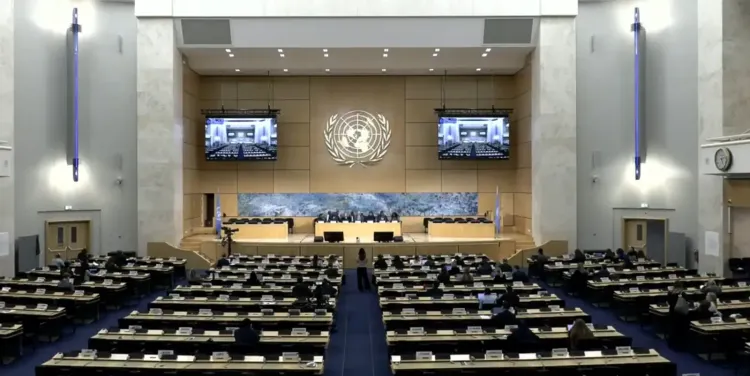
A 14-year-old Indian youth advocate, Tarangini Sharma of Rajasthan Samgrah Kalyan Sansthan (RSKS India), addressed the 63rd Session of the United Nations Human Rights Council (UNHRC) in Geneva, Switzerland on 25 September 2026, calling for binding global standards to protect women and girls from technology-facilitated violence. Sharma delivered her remarks during an Interactive Dialogue with the Human Rights Council Advisory Committee, drawing international attention to deepfakes, non-consensual intimate imagery, and the systemic failures that leave survivors without adequate redress.
What Sharma Said at the Council
Speaking via virtual intervention, Sharma told delegates that digital violence does not remain behind a screen. 'No woman should ever have to choose between using technology and protecting her dignity, safety and life,' she told the Council. She cited fabricated images capable of disrupting a girl's education, doxxing that can drive women from public life, and cyberstalking that may escalate beyond the digital sphere as concrete illustrations of the harm at stake.
Sharma also pointed to structural gaps survivors face: fragmented legal protections across jurisdictions, sluggish platform response times, and reporting mechanisms that can compound rather than relieve trauma. Her core message was pointed — digital safety must be embedded into technology from the design stage, not retrofitted after harm occurs.
Key Demands Placed Before the UNHRC
Sharma's intervention outlined a multi-pronged agenda. She called for survivor-centred global standards requiring safety-by-design from digital platforms and artificial intelligence developers. She demanded rapid multilingual reporting systems backed by trained human reviewers, and stronger protections specifically against abusive deepfakes and non-consensual intimate imagery.
She further urged member states to establish specialised cyber-violence units, reinforce cross-border preservation of digital evidence, and guarantee survivors timely legal, psychosocial, and emergency assistance. On the question of algorithmic accountability, Sharma proposed independent gender-impact audits of AI-driven content systems.
A Global Innovation Fund for Marginalised Women
Placing inclusion at the heart of her address, Sharma proposed the creation of a global innovation fund to support women-led organisations developing accessible digital safety solutions. The fund, she argued, should specifically target rural women, women with disabilities, and women active in public life — groups disproportionately exposed to online abuse yet least served by existing mechanisms.
'Technology must expand women's freedom, not multiply the reach of perpetrators,' she said, challenging the international community to translate principles into measurable action with clear timelines and accountability indicators.
Context and Significance
Sharma's address comes as the UNHRC Advisory Committee deepens its examination of technology-facilitated gender-based violence against women and girls — a theme that has gained urgency globally with the rapid proliferation of generative AI tools capable of producing realistic deepfake imagery. Notably, India has been among countries where non-consensual intimate imagery cases have risen sharply in recent years, and youth advocates from the country have increasingly engaged multilateral human rights forums to shape international norm-setting.
'Innovation must move forward, but women's safety, dignity and freedom must move forward with it,' Sharma concluded, in remarks that drew the attention of delegates present at the ongoing session.
Whether the UNHRC Advisory Committee incorporates her specific proposals — including the innovation fund and algorithmic audits — into its forthcoming recommendations will be closely watched by civil society organisations working on digital rights.
Point of View
Accountability indicators, cross-border evidence frameworks — that Sharma explicitly named. Without those, the session risks producing another well-intentioned resolution that platforms acknowledge, then quietly shelve.
NationPress
25 Sept 2026
Frequently Asked Questions
Who is Tarangini Sharma and why did she address the UNHRC?
Tarangini Sharma is a 14-year-old youth advocate affiliated with Rajasthan Samgrah Kalyan Sansthan (RSKS India) who spoke at the 63rd Session of the UN Human Rights Council in Geneva on 25 September 2026. She participated in an Interactive Dialogue with the UNHRC Advisory Committee to call for stronger global protections against technology-facilitated violence targeting women and girls.
What specific demands did Tarangini Sharma make at the UNHRC?
Sharma called for safety-by-design standards for digital platforms and AI developers, rapid multilingual reporting systems with trained human reviewers, stronger safeguards against abusive deepfakes and non-consensual intimate imagery, and independent gender-impact audits of algorithms. She also urged states to set up specialised cyber-violence units and guarantee survivors timely legal, psychosocial, and emergency support.
What is the UNHRC Advisory Committee examining in its 63rd Session?
The UNHRC Advisory Committee is examining technology-facilitated gender-based violence against women and girls at the ongoing 63rd Session. The topic has gained urgency with the rapid spread of generative AI tools capable of producing realistic deepfake imagery.
What is the global innovation fund proposed by Tarangini Sharma?
Sharma proposed a global innovation fund to support women-led organisations developing accessible digital safety solutions specifically for rural women, women with disabilities, and women active in public life — groups she identified as disproportionately exposed to online abuse yet least served by existing platforms and legal mechanisms.
Why does Sharma's UNHRC intervention matter for India?
India has seen a notable rise in non-consensual intimate imagery and deepfake abuse cases, and currently lacks a comprehensive standalone federal law targeting AI-generated digital violence against women. Sharma's intervention at a global norm-setting forum could influence how international standards are framed — standards that India would then face pressure to implement domestically.