NHRC chief flags digital arrest scams, cites ₹52,976 crore loss in six years

Synopsis
Indians have reportedly lost nearly ₹53,000 crore to cybercrimes in six years, with digital arrest scams — where fraudsters pose as police to extort victims — accounting for 8% of that toll. The NHRC is now pushing for these scams to be recognised as a distinct legal offence, a move that could reshape how India investigates, prosecutes and compensates victims of one of its fastest-growing fraud categories.
Key Takeaways
NHRC Chairperson Justice V.
Ramasubramanian called for stronger legal safeguards against digital arrest scams on 9 June in New Delhi .
Indians have reportedly lost ₹52,976 crore to cybercrimes over the past six years ; nearly 8% of losses are linked to digital arrest scams.
Digital arrest scams involve fraudsters impersonating law enforcement to coerce victims into transferring money through fear and intimidation.
Participants recommended recognising digital arrest scams as a distinct legal offence to improve investigation, prosecution and victim redressal.
The NHRC flagged disproportionate impact on elderly citizens and called for faster fund recovery, better SOPs and stronger inter-agency coordination.
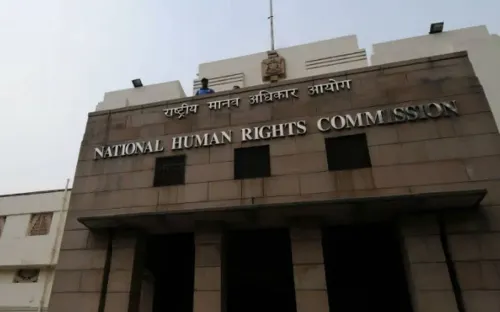
National Human Rights Commission (NHRC) Chairperson Justice V. Ramasubramanian on Tuesday, 9 June called for stronger legal and institutional safeguards against digital arrest scams, warning that these cyber-enabled frauds pose a growing threat to the rights, dignity and security of Indian citizens. The remarks came at an Open House Discussion on 'Safeguarding Human Rights against Digital Arrest Scams' organised by the NHRC in hybrid mode in New Delhi.
Scale of the Threat
Justice Ramasubramanian highlighted that Indians have reportedly lost approximately ₹52,976 crore to cybercrimes over the past six years. Of this, nearly 8% of losses were attributed specifically to digital arrest scams — a scheme in which fraudsters impersonate law enforcement officials and coerce victims into transferring money by exploiting fear and intimidation.
'Victims face significant challenges in recovering even a part of the amount lost, as the legal and procedural processes are often lengthy, costly and distressing. At times, the process of recovery becomes more painful than the process of losing money,' Justice Ramasubramanian said.
Key Demands and Suggestions
The NHRC chief stressed the urgent need to improve recovery mechanisms, plug loopholes in the existing legal framework, strengthen law enforcement response, and develop standard operating procedures (SOPs) to combat such scams. He also floated the idea of introducing alerts during prolonged OTT calls as a preventive measure against digital fraud.
NHRC member Justice Bidyut Ranjan Sarangi acknowledged gaps in existing processes for addressing digital fraud and expressed hope that multi-stakeholder discussions would yield practical solutions. NHRC member Vijaya Bharathi Sayani framed cybercrime prevention as a governance imperative, stating: 'Preventive action is not only a matter of technology and regulation but also a responsibility of good governance. Therefore, our collective goal should be to ensure that no one becomes a victim of such frauds.'
Disproportionate Impact on the Elderly
NHRC Secretary General Bharat Lal noted in his opening remarks that cybercrimes disproportionately affect elderly persons — including retired officials, professionals, industrialists and bankers — causing both financial losses and significant psychological distress. He added that cybercriminals are increasingly exploiting personal data obtained through leaks and other sources to target vulnerable individuals, raising serious concerns about data privacy and protection.
What Participants Recommended
Among the concrete proposals that emerged from the discussion was the recognition of digital arrest scams as a distinct offence under the existing legal framework, which would facilitate more effective investigation, prosecution and victim redressal. Participants also advocated for stronger protections for senior citizens, faster recovery of defrauded funds, greater accountability across the digital ecosystem, enhanced public awareness campaigns, and improved coordination among law enforcement agencies, financial institutions and telecom service providers.
This comes amid a broader national conversation on cybercrime governance, with Prime Minister Narendra Modi having previously addressed the menace of digital arrest scams in his Mann Ki Baat broadcasts. The NHRC discussion signals a rights-based dimension to the debate that has so far been dominated by policing and regulatory responses. How quickly the Centre translates these recommendations into legislative or regulatory action will determine whether this session marks a turning point or remains advisory.
Point of View
Not merely a policing problem. Yet the gap between NHRC recommendations and legislative action in India is historically wide. The proposal to classify digital arrest scams as a distinct offence is sensible, but without a clear timeline or a government commitment to amend the Bharatiya Nyaya Sanhita or the IT Act, it risks becoming another well-intentioned advisory. The ₹52,976 crore loss figure — spread over six years — also deserves scrutiny: if only 8% is tied to digital arrest scams, the remaining 92% of cybercrime losses are receiving far less institutional attention than they warrant.
NationPress
23 Oct 2026
Frequently Asked Questions
What is a digital arrest scam?
A digital arrest scam is a form of cybercrime in which fraudsters impersonate law enforcement or government officials and threaten victims with fake 'digital arrest' to coerce them into transferring money. Victims are typically kept on prolonged video or voice calls and manipulated through fear and intimidation.
How much have Indians lost to digital arrest scams?
According to figures cited by NHRC Chairperson Justice V. Ramasubramanian, Indians have reportedly lost around ₹52,976 crore to cybercrimes over the past six years. Nearly 8% of those losses — roughly ₹4,238 crore — are attributed specifically to digital arrest scams.
What did the NHRC recommend to tackle digital arrest fraud?
The NHRC recommended recognising digital arrest scams as a distinct legal offence, developing standard operating procedures for law enforcement, improving fund recovery mechanisms, strengthening protections for senior citizens, and enhancing coordination among police, banks and telecom providers.
Who is most at risk from digital arrest scams?
NHRC Secretary General Bharat Lal stated that elderly persons — including retired officials, professionals, industrialists and bankers — are disproportionately targeted. Cybercriminals increasingly exploit personal data obtained through leaks to identify and approach vulnerable individuals.
What happens next after the NHRC discussion?
The NHRC's Open House Discussion was a consultative exercise; its recommendations are advisory in nature. For the proposals to take effect, the Centre would need to initiate legislative amendments or issue regulatory directions to law enforcement agencies, financial institutions and telecom providers.