How has the Indian government saved Rs 8,000 crore from cyber criminals?

Synopsis
Union Home Minister Amit Shah revealed that Indian agencies have successfully saved over Rs 8,000 crore from cyber criminals. This significant achievement highlights the government's commitment to combatting organized cyber crime, with an emphasis on enhancing technology and collaboration among various sectors. The ongoing fight against cyber fraud is crucial in our increasingly digital world.
Key Takeaways
Over Rs 8,000 crore saved from cyber criminals.
Strong collaboration among banks and law enforcement.
Focus on enhancing technological capabilities.
Understanding the cyber-fraud ecosystem .
Importance of victim protection and evidence preservation.
New Delhi, Feb 10 (NationPress) Emphasizing the importance of combating systemic cyber crime, Union Home Minister Amit Shah stated on Tuesday that law enforcement agencies, spearheaded by the Indian Cyber Crime Coordination Centre (I4C), have successfully saved or frozen more than Rs 8,000 crore from a total of Rs 20,000 crore lost to fraudsters by November 30, 2025.
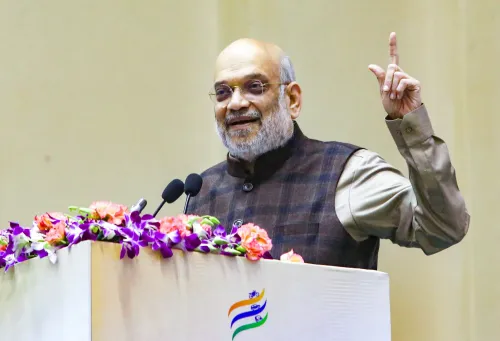
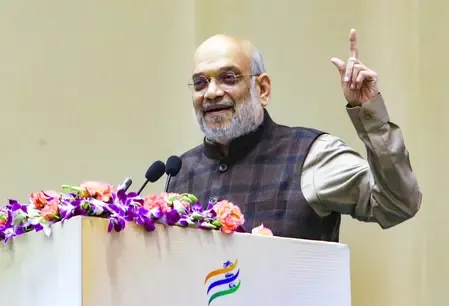
Speaking at the National Conference on Tackling Cyber-Enabled Frauds and Dismantling the Ecosystem organized by the Central Bureau of Investigation (CBI), HM Shah noted that 82 lakh cyber crime complaints were filed by November 30, 2025, with 1.84 lakh of these cases resulting in FIRs.
He emphasized that efforts to curb cyber crime and recover funds must escalate.
Encouraging the 562 delegates present at the conference to elevate the fight against cyber crime, HM Shah remarked, “Cyber criminals are now functioning in a structured manner and often stay two steps ahead of law enforcement in technology utilization.”
He characterized cyber crime as a significant global threat, asserting the government's commitment to safeguarding citizens. Since 2020, a strong anti-cybercrime framework has been established, featuring the real-time reporting system of the I4C.
Shah mentioned that 62 banks and financial entities have already joined this secure framework, with plans to include all cooperative banks by December 31.
Earlier, on the social media platform X, the Home Minister expressed, “Cyber crime poses a serious threat globally. Our administration is determined to protect citizens from it. Today, I will address the National Conference on Tackling Cyber-Enabled Frauds and Dismantling the Ecosystem organized by the CBI to enhance India's capacity to combat cyber crime.”
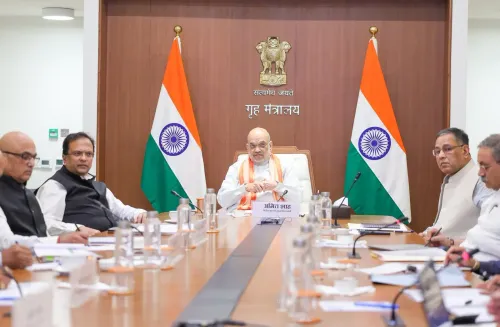
Additionally, the Home Minister presided over a ceremony for CBI officers, inaugurated the new Cybercrime Branch of the CBI, and launched the S4C Dashboard of the I4C, under the Ministry of Home Affairs.
This conference was organized by the CBI in partnership with the I4C and the Union Ministry of Home Affairs.
The CBI has been tackling cyber crime since 2000, enhancing its capabilities over the years. In 2022, it established the Cybercrime Investigation Division to bolster its specialized response.
The agency acts as the main body for investigating cyber crime impacting the Central government and its departments, addressing both cyber-dependent crimes and cyber-enabled frauds, as stated by officials.
The conference took place at a pivotal time when, under Prime Minister Narendra Modi's leadership, India's swift digital transformation has notably improved access to banking, governance, and communication, while also exposing new vulnerabilities to organized cyber criminal networks.
As per officials, the conference's main aims included fostering a mutual understanding of the scale, trends, and evolving nature of cyber-enabled fraud in India.
It also aimed to analyze the three essential pillars of the cyber-fraud ecosystem: the financial pillar, involving mule accounts and money laundering; the telecom pillar, covering misuse of SIM/eSIM and digital infrastructure; and the human pillar, which includes cyber slavery and trafficking into scam operations.
The conference aimed to enhance cooperation among law enforcement agencies, banks, telecom providers, regulators, and technology platforms.
Furthermore, it explored the application of artificial intelligence and data analytics to streamline investigations with limited resources, along with improving mechanisms for prompt fraud reporting, real-time fund tracking, timely evidence preservation, and better victim safeguarding.
This conference sought to establish a cohesive strategy to combat cyber-enabled fraud, focusing on enhancing prevention, investigation, technology integration, inter-agency collaboration, and victim-centered frameworks.
Point of View
It is essential to recognize the government's proactive approach in addressing the rising tide of cyber crime. With Amit Shah at the forefront, the establishment of the I4C and the ongoing efforts to enhance inter-agency cooperation demonstrate a commitment to safeguarding the digital landscape. These initiatives are vital in fostering a secure environment for citizens amidst rapid technological advancements.
NationPress
13 Sept 2026
Frequently Asked Questions
What measures is the government taking to combat cyber crime?
The government, led by the I4C, is enhancing its cybercrime infrastructure, increasing collaboration among banks and law enforcement, and leveraging advanced technologies like AI for effective investigations.
How much money has been saved from cyber crime?
As of November 30, 2025, over Rs 8,000 crore has been saved or frozen from a total of Rs 20,000 crore lost to cyber criminals.
What are the key pillars of the cyber-fraud ecosystem?
The three critical pillars of the cyber-fraud ecosystem include the financial pillar, telecom pillar, and human pillar, each addressing different facets of cyber crime.
How is the CBI involved in tackling cyber crime?
The CBI has been investigating cyber crime since 2000, establishing specialized divisions and collaborating with the I4C to strengthen its response capabilities.
Why is cyber crime a significant concern?
Cyber crime poses major threats to individuals and organizations, especially as digital transformation increases vulnerabilities that can be exploited by organized criminal networks.