India at UN urges 'sustained attention' to terrorism as rights threat
Synopsis
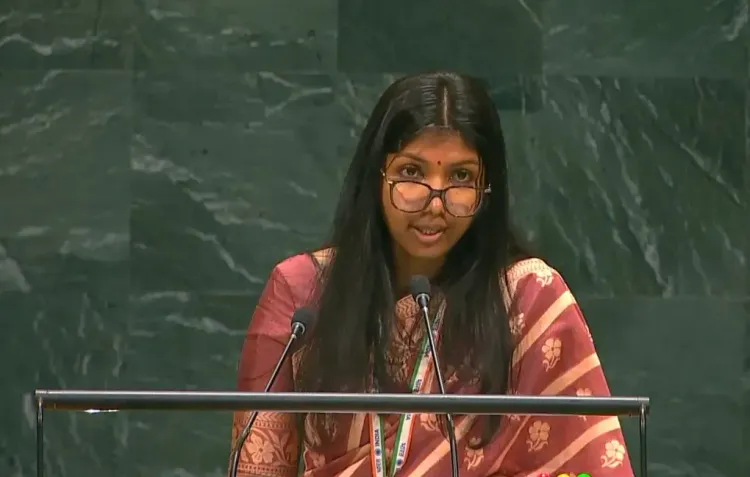
At the UN General Assembly in New York, India's diplomat Bhavika Mangalanandan pressed the Human Rights Council to treat terrorism with 'zero tolerance' — while simultaneously calling out the 'weaponisation' of human rights and urging equal weight for economic and development rights. The statement carries a pointed edge at countries that seek to justify certain forms of terrorism in multilateral forums.
Key Takeaways
India called on the UN Human Rights Council on 31 October 2026 to give 'sustained attention' to terrorism as a grave threat to human rights.
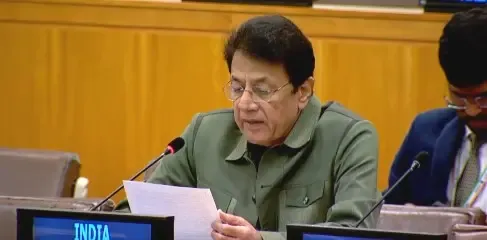
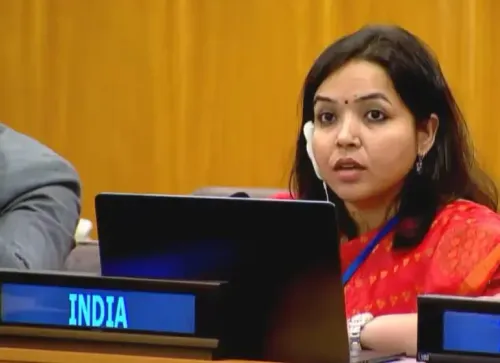
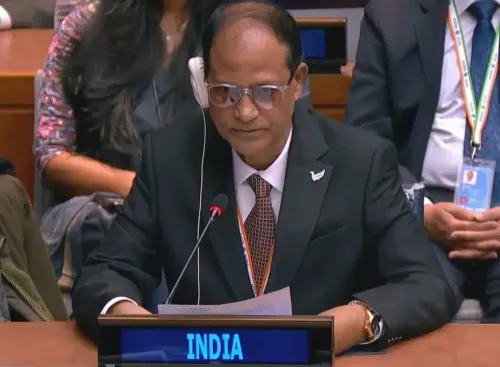
Bhavika Mangalanandan , First Secretary at India's UN Mission, made the appeal during the UN General Assembly debate in New York .
India backed the UNHRC's July 2026 resolution on international cooperation to prevent and combat terrorism, adopted in Geneva .
India criticised 'double standards' and attempts to 'weaponise' human rights within the Council, warning it undermines credibility.
India endorsed the Universal Periodic Review over country-specific mandates, calling the former a more equitable and cooperative mechanism.
India argued that economic, social and cultural rights deserve equal attention to civil and political rights, especially for developing nations.
India on 31 October 2026 called on the UN Human Rights Council (UNHRC) to maintain 'sustained attention' to the threat of terrorism, describing it as one of the gravest dangers to the enjoyment of human rights — above all, the right to life. The appeal was made at the UN General Assembly in New York during a debate on the Human Rights Council's annual report.
India's Core Argument at the General Assembly
Bhavika Mangalanandan, First Secretary at India's UN Mission, addressed member states on Friday, stating that 'terrorism remains among the gravest threats to the enjoyment of human rights, above all, the right to life.' She urged the Council to treat this threat with 'zero tolerance' and to ensure it receives the sustained focus it warrants.
Mangalanandan noted that the Human Rights Council had already acknowledged this danger through a resolution on international cooperation adopted in July 2026 in Geneva. That resolution called on the international community to 'take the steps necessary to enhance cooperation to prevent and combat terrorism,' and re-emphasised that terrorism in all its forms is directed at 'the destruction of human rights, fundamental freedoms and democracy.'
India's Criticism of Double Standards and Politicisation
India's diplomat did not limit her remarks to terrorism. Mangalanandan was sharply critical of what she described as efforts to 'weaponise' the human rights agenda and apply double standards — conduct she said undermines the Council's credibility. 'Human rights are best advanced through dialogue, capacity building and genuine partnerships, and not by politicisation, selectivity or double standards,' she said. 'This is critical if the Council is to speak in one voice and dispel the allegation of weaponisation of human rights.'
This language carries pointed geopolitical weight. The July resolution runs counter to attempts by certain countries — particularly Pakistan, according to analysts — to draw tendentious distinctions between different categories of terrorist acts and justify some forms of political violence.
On Country-Specific Mandates and the Universal Periodic Review
Mangalanandan also cautioned against country-specific mandates pursued without the engagement of the countries concerned, warning that such approaches 'seldom improve the situation on the ground' and instead 'deepen divisions within the Council.' She endorsed the Universal Periodic Review (UPR) — conducted every four to five years — as the more appropriate platform, citing its cooperative framework that treats all member states equally.
The UPR process draws on self-reporting by countries, assessments from UN bodies and independent experts, and civil society inputs, making it less susceptible to unilateral political targeting, India argued.
Rights of the Developing World: A Broader Agenda
India also pushed back against what Mangalanandan called a 'blinkered approach' that prioritises civil and political rights while neglecting economic, social, cultural rights and the right to development. 'All human rights must be treated in a fair and equal manner on the same footing and with the same emphasis,' she said.
She pointed to structural barriers in developing nations — poverty, debt, and limited access to financing and technology — as 'the most immediate obstacles to the enjoyment of human rights,' calling for international cooperation rather than coercion to address them.
India's intervention signals its continued push within multilateral forums to reframe the human rights discourse around inclusivity, development, and a zero-tolerance approach to terrorism — a posture that will likely shape its engagement ahead of the next UNHRC session.
Point of View
India's push for development rights and economic equity reflects its broader 'Global South' positioning, attempting to build a coalition around a more expansive definition of human rights. The tension between these two goals — calling out terrorism sponsors while also resisting Western-led country mandates — defines India's increasingly assertive, non-aligned multilateral strategy.
NationPress
31 Oct 2026
Frequently Asked Questions
What did India say at the UN Human Rights Council debate on 31 October 2026?
India's First Secretary Bhavika Mangalanandan urged the UN Human Rights Council to give 'sustained attention' to terrorism, describing it as one of the gravest threats to the right to life. She also criticised double standards and the 'weaponisation' of human rights within the Council.
Which UN resolution on terrorism did India refer to?
India referenced a UNHRC resolution on international cooperation adopted in July 2026 in Geneva. It called on the international community to enhance cooperation to prevent and combat terrorism, and re-emphasised that terrorism targets the destruction of human rights, fundamental freedoms and democracy.
Why did India criticise country-specific mandates at the UN?
India argued that country-specific mandates pursued without the engagement of the country concerned 'seldom improve the situation on the ground' and instead deepen divisions within the Council. It endorsed the Universal Periodic Review as a more equitable, cooperative alternative.
What is India's position on economic and development rights at the UN?
India stressed that economic, social and cultural rights — and the right to development — deserve the same attention as civil and political rights. It pointed to poverty, debt and lack of access to financing and technology as the most immediate human rights obstacles for much of the developing world.
Which country was implicitly targeted by India's remarks on terrorism justification?
While India did not name a country directly, reports indicate the remarks were directed at Pakistan , which has been accused in multilateral forums of seeking to draw distinctions between different forms of terrorism. India called for a 'zero tolerance' approach without exception.