Maharashtra targets 400 GCCs, 4 lakh jobs under Fadnavis's ₹50,000 crore push
Synopsis
Maharashtra is not just chasing GCC numbers — it is engineering a six-city innovation network. With 400 centres, 4 lakh jobs, and ₹50,000 crore on the table, CM Fadnavis is betting that a multi-city ecosystem from Mumbai to Chhatrapati Sambhajinagar can outcompete Bengaluru and Hyderabad as India's GCC capital by 2026.
Key Takeaways
CM Devendra Fadnavis announced targets of 400 new GCCs , 4 lakh high-skilled jobs , and ₹50,000 crore in investments at the GCCProj Leadership Summit on 11 August .
Pune became India's second-largest GCC office market in 2025 , doubling its centre count year-on-year.
Maharashtra's GCC model spans six cities : Mumbai, Pune, Navi Mumbai, Nagpur, Nashik, and Chhatrapati Sambhajinagar.
Policy incentives include wage subsidies , higher FSI , interest subvention , and a single-point approval system for investors.
A Davos agreement was signed to set up an AI research and innovation centre at BKC, Mumbai .
GCCs are central to Maharashtra's $1 trillion economy target, according to Fadnavis.
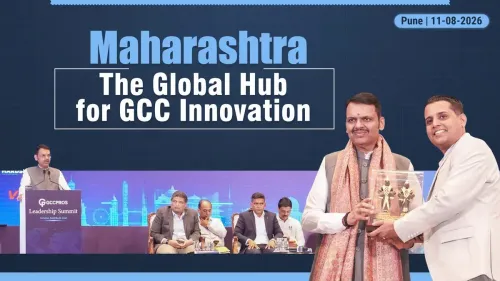
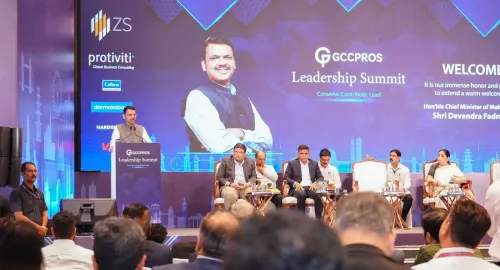
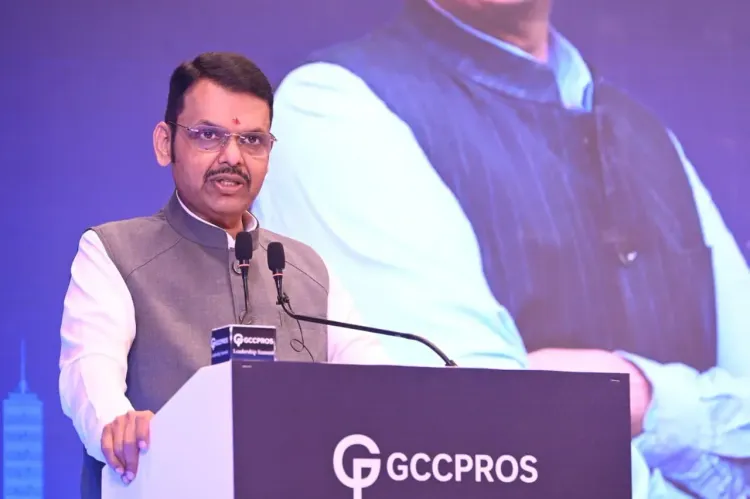
Maharashtra Chief Minister Devendra Fadnavis on Tuesday, 11 August declared that the state government is committed to positioning Maharashtra as India's most preferred destination for Global Capability Centres (GCCs), setting an ambitious target of 400 new GCCs, 4 lakh high-skilled jobs, and ₹50,000 crore in fresh investments. The announcement came at the GCCProj Leadership Summit in Pune, where Fadnavis laid out a detailed policy roadmap underpinned by infrastructure, talent, and administrative reform.
From Back-Office to Innovation Powerhouse
Fadnavis underscored a fundamental shift in how GCCs operate within India. Once associated primarily with low-cost support functions, these centres have evolved into high-value nodes driving engineering, product development, and strategic decision-making for global enterprises.
'By 2030, Global Capability Centres will no longer be limited to support operations. They will serve as core hubs for engineering, artificial intelligence, product development, cybersecurity, financial services, data analytics, and research and development,' CM Fadnavis said, adding that key strategic decisions for global enterprises will increasingly originate from these centres.
Maharashtra's Multi-City GCC Ecosystem
Rather than concentrating growth in a single metro, Fadnavis outlined a networked model spanning six specialised cities. Mumbai is positioned as the financial and institutional headquarters; Pune as the engineering, automotive, technology, and product development hub; Navi Mumbai as a global business and technology centre; Nagpur as a specialised technology and shared services hub; Nashik as an industrial engineering and technical capability centre; and Chhatrapati Sambhajinagar as an advanced manufacturing and automotive innovation centre.
Notably, Pune emerged as India's second-largest office market for GCCs in 2025, doubling its centre count compared to the previous year. Fadnavis expressed confidence that Pune would lead the nation in the GCC sector by the end of 2026.
Policy Incentives and Infrastructure Commitments
The state's GCC policy encompasses wage subsidies, capital and rental support, interest subvention, and R&D assistance. Additional provisions include higher Floor Space Index (FSI), flexible land use, prioritised land allotment, digital data infrastructure, and round-the-clock operational support.
However, Fadnavis was candid that financial incentives alone cannot sustain long-term competitiveness. 'Subsidies can attract initial investment, but a lasting ecosystem relies on talent, infrastructure, ease of doing business, quality of life, university research, and trust between government and industry,' he said.
AI Talent Pipeline and Administrative Reform
With artificial intelligence reshaping demand across sectors, Fadnavis called on industry and academia to collaborate on building a future-ready talent pipeline. Rising demand spans AI engineers, data analysts, cybersecurity experts, semiconductor engineers, quantitative finance specialists, and life sciences researchers.
'Industry must guide universities on what skills will be needed over the next five years, rather than focusing on what was required five years ago,' he stated. The Chief Minister also highlighted a Davos agreement to establish an AI research, application, and innovation centre at BKC in Mumbai.
On administrative efficiency, the state is developing a single-point contact system for GCC investors to streamline approvals. 'Investors shouldn't have to wait weeks or months for approvals. A single point person and unified system will handle establishment, expansion, and issue resolution,' Fadnavis assured.
Broader Economic Vision
Deputy Chief Minister Sunetra Ajit Pawar reaffirmed the state's commitment to world-class infrastructure, connectivity, and digital integration, noting that Pune's blend of IT, manufacturing, and skilled talent makes it a natural launchpad for AI, robotics, and advanced R&D. Fadnavis framed GCCs as central to Maharashtra's larger goal of achieving a $1 trillion economy, bringing not just capital but institutional knowledge and global best practices. The next phase of the policy's rollout will test whether execution matches the ambition on display in Pune.
Point of View
Which have decade-long head starts in GCC density and talent depth. Fadnavis is right that subsidies alone do not build ecosystems — but the single-point approval promise has been made before by multiple state governments and rarely survives contact with bureaucratic reality. The 2026 deadline for Pune to lead the nation in GCCs is ambitious; whether the talent pipeline — particularly in AI and semiconductors — can be built fast enough to match the infrastructure rollout will determine whether this is a genuine inflection point or another well-crafted summit announcement.
NationPress
12 Aug 2026
Frequently Asked Questions
What is Maharashtra's GCC target announced by CM Fadnavis?
Maharashtra aims to establish 400 new Global Capability Centres , generate 4 lakh high-skilled jobs , and attract ₹50,000 crore in investments, as announced by Chief Minister Devendra Fadnavis at the GCCProj Leadership Summit in Pune on 11 August.
Why is Pune significant in Maharashtra's GCC strategy?
Pune emerged as India's second-largest GCC office market in 2025, doubling its centre count compared to the previous year. CM Fadnavis expressed confidence that Pune would lead the country in the GCC sector by the end of 2026, backed by its strengths in engineering, automotive, and technology.
What incentives does Maharashtra offer to GCC investors?
The state's GCC policy includes wage subsidies, capital and rental support, interest subvention, R&D assistance, higher Floor Space Index, flexible land use, prioritised land allotment, and a single-point contact system to fast-track approvals and resolve operational issues.
How does Maharashtra's multi-city GCC model work?
Rather than concentrating GCCs in one city, Maharashtra has designated six specialised hubs: Mumbai for finance, Pune for engineering and tech, Navi Mumbai for global business, Nagpur for shared services, Nashik for industrial engineering, and Chhatrapati Sambhajinagar for advanced manufacturing and automotive innovation.
What role will GCCs play in Maharashtra's $1 trillion economy goal?
CM Fadnavis positioned GCCs as central to Maharashtra's $1 trillion economy target, arguing they bring not just investment capital but institutional knowledge, global best practices, and high-value leadership opportunities that accelerate broader economic transformation.