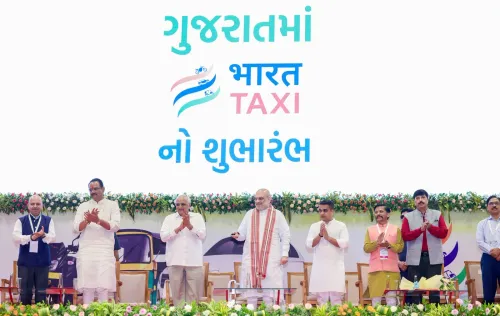
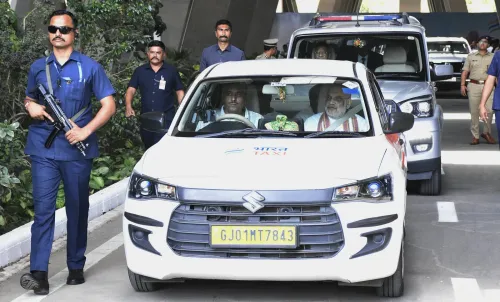
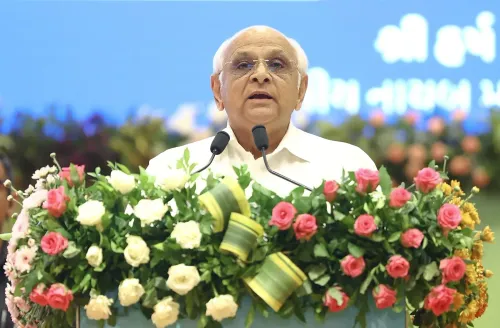
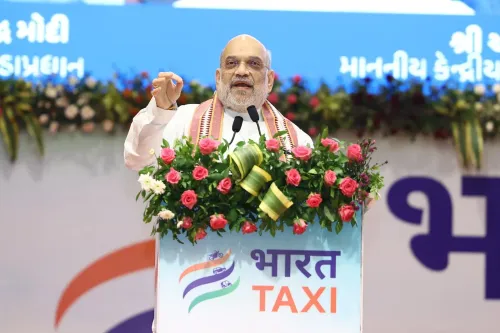
CM Bhupendra Patel Launches Bharat Taxi Statewide in Gujarat
Synopsis
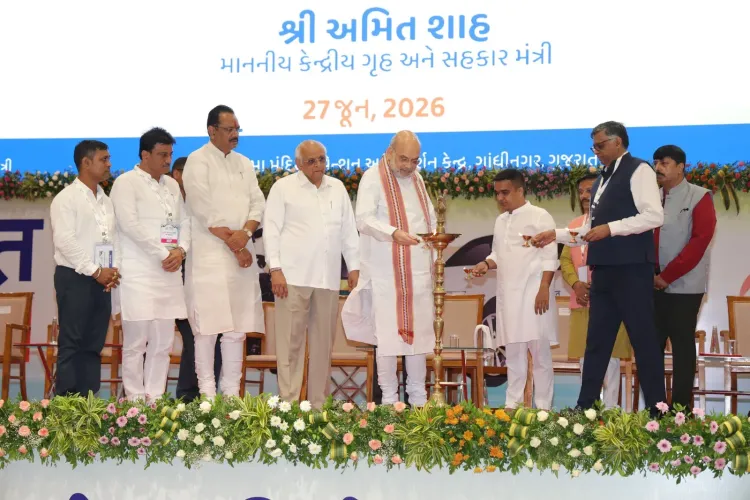
Union Minister Amit Shah inaugurated Bharat Taxi's statewide rollout in Gujarat at Mahatma Mandir, Gandhinagar on 27 June 2026. The cooperative taxi service, which brands drivers as 'Sarathis', follows a successful pilot and aims to deliver economic prosperity through driver-owned cooperatives rather than private platform models.
Key Takeaways
Bharat Taxi was launched statewide across Gujarat on 27 June 2026 at Mahatma Mandir, Gandhinagar .
The inauguration was performed by Union Minister of Home Affairs and Cooperation Amit Shah , witnessed by CM Bhupendra Patel .
The service follows a pilot project and brands its drivers as Sarathis , emphasising cooperative ownership over conventional employment.
The governing philosophy is 'not exploitation, but prosperity through cooperation,' positioning the model as an alternative to private ride-hailing platforms.
Several MoUs were signed at the event to support the platform's technology and operational expansion.
Top-performing Sarathis from the pilot phase were felicitated at the launch event.
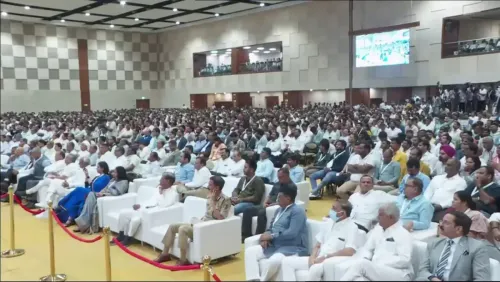
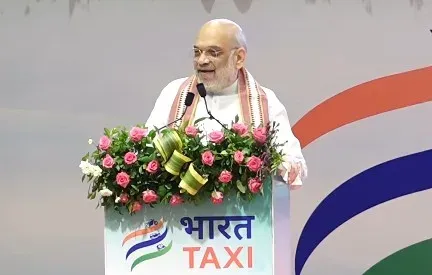
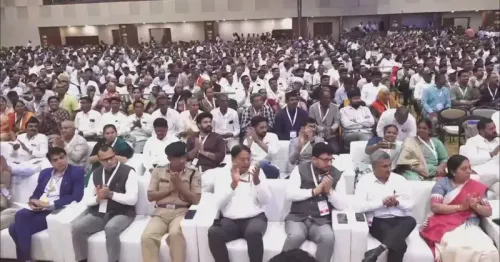
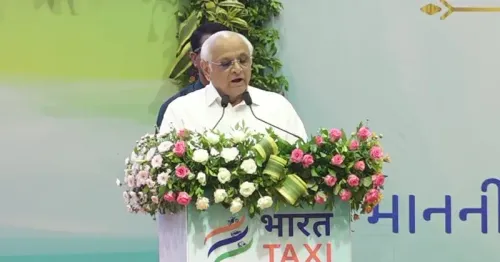
Gujarat Chief Minister Bhupendra Patel on Saturday, 27 June 2026, witnessed the statewide launch of Bharat Taxi — a cooperative-model ride-hailing service — at Mahatma Mandir, Gandhinagar. The rollout was inaugurated by Union Minister of Home Affairs and Cooperation Amit Shah, marking what Patel described as a historic day for mobility in India.
Context
Posting in Gujarati, CM Patel wrote that 'આજનો દિવસ ઐતિહાસિક બની રહેશે' ('today will be a historic day') for India's mobility sector. The statewide expansion follows the conclusion of a pilot project, the results of which informed the broader rollout across Gujarat. The service brands its drivers not as 'drivers' but as Sarathis — a Sanskrit word for charioteer — to signal a shift in how the platform values its workforce.
The event also included a felicitation ceremony honouring Sarathis who performed best during the pilot phase. Several MoUs were signed at the event to modernise and expand the Bharat Taxi platform, though the specific partners and terms of those agreements were not detailed in the post.
Policy Backdrop
Bharat Taxi is a product of India's expanding cooperative policy framework, anchored by the Ministry of Cooperation — established in July 2021 — which was created to give focused institutional attention to India's cooperative sector. The ministry, led by Amit Shah, has been working to extend the cooperative model beyond its traditional strongholds in dairy and agriculture into new sectors such as urban mobility.
Gujarat has long served as a laboratory for cooperative experiments, with the Amul dairy cooperative — founded in 1946 — standing as the country's most cited example of driver-owned collective enterprise. The Bharat Taxi model draws on that legacy, positioning driver-ownership and reduced commission structures as an alternative to private ride-hailing platforms. The governing philosophy, as stated in the post, is 'શોષણ નહીં, પણ સહકારથી સમૃદ્ધિ' — 'not exploitation, but prosperity through cooperation.'
Stakeholders and Impact
The primary beneficiaries of the Bharat Taxi model are taxi drivers and cooperative societies in Gujarat. By restructuring the driver's relationship with the platform — from employee or contractor to cooperative member — the model aims to increase earnings and provide greater economic security. CM Patel expressed confidence that Gujarat's Sarathis would become the highest-earning drivers in the country.
The statewide launch signals an intent to scale beyond the cities or districts covered in the pilot. For commuters, the service represents a new entrant into a market currently dominated by private technology-driven platforms. The MoUs signed at the event are expected to bring technology and operational support to help Bharat Taxi compete at scale, though specifics remain to be disclosed.
What's Next
With Gujarat completing its statewide rollout, the Ministry of Cooperation may look to replicate the Bharat Taxi model in other states, using Gujarat's experience as a template. Further technology integrations and partnership announcements are anticipated as the service matures. The broader question is whether the cooperative taxi model can sustain itself against established private platforms and deliver on its promise of superior driver incomes.
Point of View
Which has sought since 2021 to reframe the cooperative movement as a modern economic tool rather than a relic of agrarian India. By deploying the model in urban mobility — one of the fastest-growing and most contested economic sectors — the government is directly challenging private platform capitalism on ideological as well as commercial grounds. Gujarat's role as the launch state is deliberate: it carries the symbolic weight of the Amul legacy and offers a politically friendly environment for demonstrating early success. Whether the model can scale nationally and deliver on its driver-income promises will determine if this becomes a replicable blueprint or remains a well-publicised experiment.
NationPress
26 Sept 2026
Frequently Asked Questions
What is Bharat Taxi and how does it work?
Bharat Taxi is a cooperative-model taxi service in which drivers, called Sarathis, are members of a cooperative rather than contractors for a private platform. The model aims to give drivers a greater share of earnings and collective ownership, reducing dependence on commission-heavy private apps.
Who launched Bharat Taxi in Gujarat?
Union Minister of Home Affairs and Cooperation Amit Shah inaugurated the statewide launch of Bharat Taxi at Mahatma Mandir, Gandhinagar on 27 June 2026 , in the presence of Gujarat Chief Minister Bhupendra Patel .
What does 'Sarathi' mean in the context of Bharat Taxi?
'Sarathi' is a Sanskrit word meaning charioteer. Bharat Taxi uses the term instead of 'driver' to signal that its operators are valued partners in a cooperative enterprise, not merely hired workers.
Has Bharat Taxi been tested before the Gujarat statewide launch?
Yes, Bharat Taxi was run as a pilot project before the statewide rollout. The Gujarat launch on 27 June 2026 followed the conclusion of that pilot, and top-performing Sarathis from the pilot were felicitated at the launch event.
Will Bharat Taxi expand beyond Gujarat?
No official announcement of expansion to other states has been made yet. However, the Ministry of Cooperation has been working to extend cooperative models nationally, and Gujarat's rollout is widely seen as a template that could be replicated in other states.