Goyal Eyes Trade Surge with Egypt After Diplomatic Trust
Synopsis
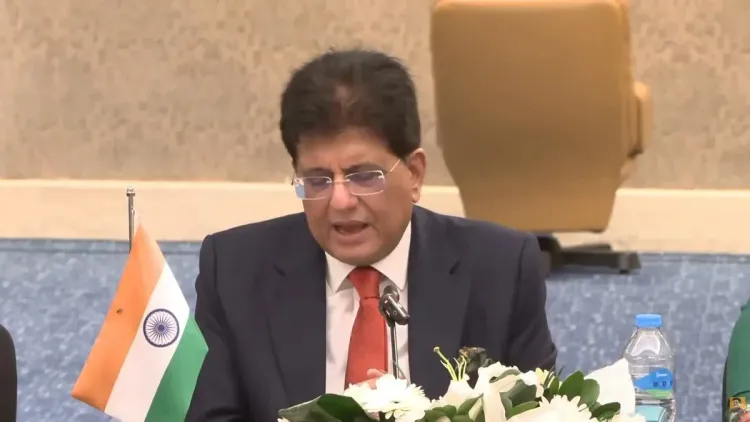
Commerce Minister Piyush Goyal publicly thanked Egypt for its role as a trusted partner of India and called for converting that diplomatic goodwill into concrete gains in trade and investment, building on the strategic partnership forged during PM Modi's 2023 Cairo visit.
Key Takeaways
Piyush Goyal on November 15, 2026 thanked Egypt for 'standing by India as a trusted and reliable partner.' He framed the bilateral relationship as entering an execution phase — moving from goodwill to trade and investment outcomes.
India and Egypt elevated ties to a strategic partnership during PM Modi 's June 2023 visit to Cairo.
Egypt is strategically positioned as a gateway for Indian exports into Africa and the Mediterranean region.
The India–Egypt Joint Trade Committee is the key institutional mechanism to watch for follow-through on Goyal's call.
India's engagement with Egypt fits a broader pattern of converting Global South political support into commercial partnerships.
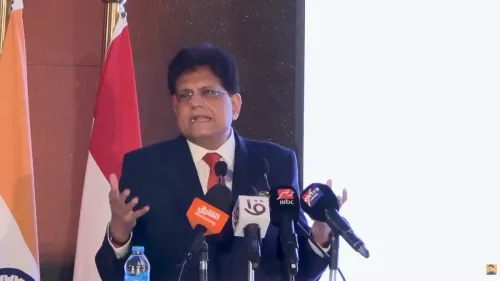
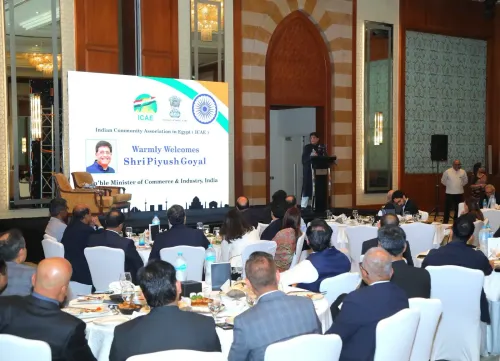
Diplomatic goodwill is now on the clock. Union Commerce and Industry Minister Piyush Goyal on Sunday, November 15, 2026, publicly acknowledged Egypt's role as a steadfast partner of India and issued a pointed call to convert that political trust into concrete gains in trade and investment.
Posting on X, Goyal stated: 'We thank Egypt for standing by India as a trusted and reliable partner. Our task now is to turn that trust into greater trade and investment.' The phrasing was deliberate — gratitude paired immediately with a commercial imperative, signalling that the relationship has moved beyond symbolism into execution mode.
From Non-Aligned Roots to Strategic Partnership
The India–Egypt relationship stretches back to the Non-Aligned Movement era, but it was significantly upgraded in June 2023 when Prime Minister Narendra Modi visited Cairo and elevated ties to a strategic partnership. That visit placed trade facilitation and investment promotion at the centre of the bilateral agenda. Goyal's statement on Sunday reads as a direct follow-through on the commitment made then — a nudge to both sides that diplomatic capital has a shelf life.
Egypt as India's Gateway to Africa and the Mediterranean
The commercial logic is hard to ignore. Egypt sits at the intersection of Africa, the Mediterranean, and the Middle East — a geography that makes it a natural distribution hub for Indian exporters seeking access to multiple markets through a single relationship. India's broader push to deepen ties with Global South partners has explicitly targeted this kind of strategic geography: political support in multilateral forums converted into investment corridors and diversified trade routes.
Indian industry has long eyed Egypt's large consumer base, its role in the African Continental Free Trade Area, and its infrastructure connecting the Suez Canal zone to European and sub-Saharan markets. For Egyptian investors, India offers scale, manufacturing depth, and technology partnerships — a complementarity that bilateral trade figures have only partially captured so far.
What the Joint Trade Committee Will Need to Deliver
The immediate institutional watch-point is the India–Egypt Joint Trade Committee, the principal mechanism for translating ministerial intent into binding trade facilitation measures. Any progress on a bilateral investment treaty or new tariff arrangements would give Goyal's public call real structural teeth. The minister's framing — 'our task now' — sets an expectation of urgency, and the committee's next session will be measured against exactly that standard.
India's engagement with Egypt is no longer a function of historical goodwill alone. The Commerce Minister has just made it a performance target — and the clock is running.
Point of View
Then immediately set a commercial deliverable against it, keeping partners accountable to a results-based agenda. By invoking Egypt's reliability in the same breath as trade and investment targets, the minister is signalling that the Modi government views diplomatic friendships as working assets, not ceremonial ones. Egypt's geographic position — straddling Africa, the Mediterranean, and Middle Eastern supply chains — makes it a priority node in India's effort to diversify export markets beyond its traditional partners. The real test will be whether institutional mechanisms like the Joint Trade Committee can keep pace with the ministerial ambition being telegraphed publicly.
NationPress
15 Nov 2026
Frequently Asked Questions
Why is Piyush Goyal talking about India-Egypt trade?
Commerce Minister Piyush Goyal has called on India and Egypt to convert their strong diplomatic trust into greater bilateral trade and investment, building on the strategic partnership established during PM Modi's June 2023 visit to Cairo.
What is the current status of India-Egypt relations?
India and Egypt upgraded their bilateral relationship to a strategic partnership in June 2023 when PM Narendra Modi visited Cairo. Ties span trade, investment, and cooperation in multilateral forums, with roots going back to the Non-Aligned Movement era.
Why is Egypt important for Indian trade?
Egypt serves as a geographic gateway for Indian exports into Africa and the Mediterranean region. Its location at the intersection of multiple markets, combined with its role in the African Continental Free Trade Area and proximity to the Suez Canal, makes it a strategic hub for Indian commerce.
What is the India-Egypt Joint Trade Committee?
The India-Egypt Joint Trade Committee is the principal bilateral mechanism for advancing trade facilitation measures, negotiating investment agreements, and implementing commercial cooperation between the two countries.
How does India's engagement with Egypt fit its Global South strategy?
India has systematically worked to convert political goodwill with Global South partners into concrete trade and investment flows. Egypt exemplifies this approach — shared positions in multilateral forums are being paired with commercial corridors and investment partnerships.