Piyush Goyal Meets Egypt's Trade Minister, Eyes Deeper Bilateral Ties
Synopsis
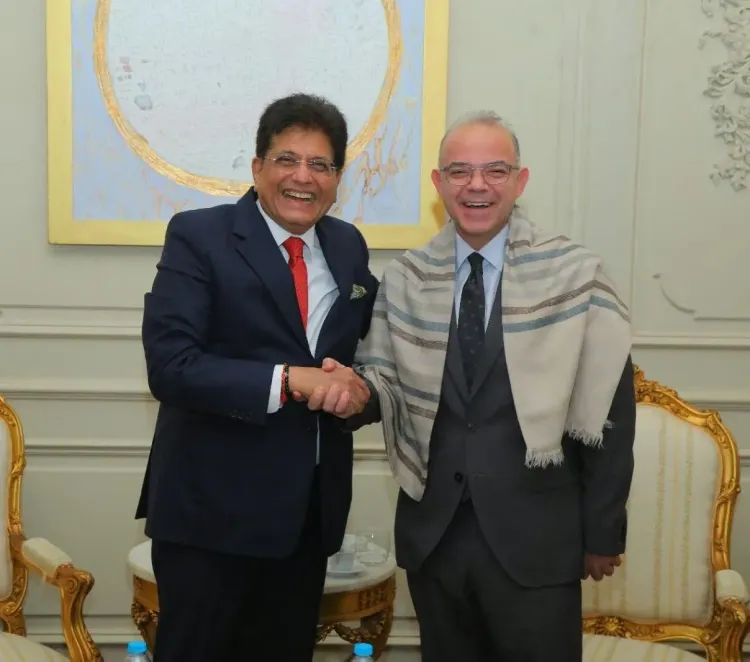
Commerce Minister Piyush Goyal met Egypt's Investment and Trade Minister Dr. Mohamed Farid Saleh on 15 November 2026, discussing bilateral trade expansion, investment flows, and new cooperation avenues — framing the engagement as a civilisational partnership with modern commercial ambitions.
Key Takeaways
Piyush Goyal met Dr.
Mohamed Farid Saleh , Egypt's Minister of Investment and Foreign Trade, on 15 November 2026 .
Talks covered expanding bilateral trade, boosting two-way investments, and finding new areas of cooperation.
India and Egypt established formal diplomatic ties in 1947 and were both founding members of the Non-Aligned Movement .
Egypt is viewed by New Delhi as a strategic gateway for Indian goods and capital into the broader African continent .
The meeting is part of India's wider push to diversify trade partnerships across North Africa and the Middle East .
Concrete follow-up — trade targets, investment frameworks, or a joint commission meeting — will determine the meeting's real impact.
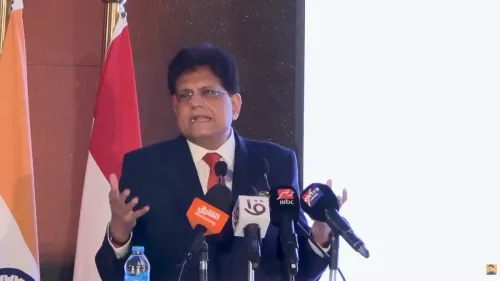
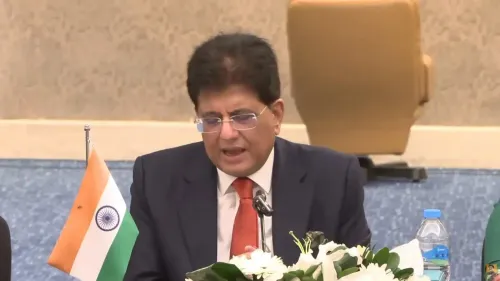
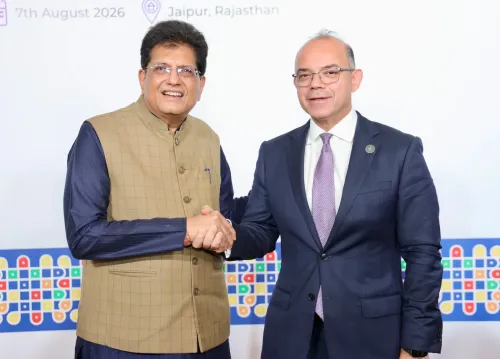
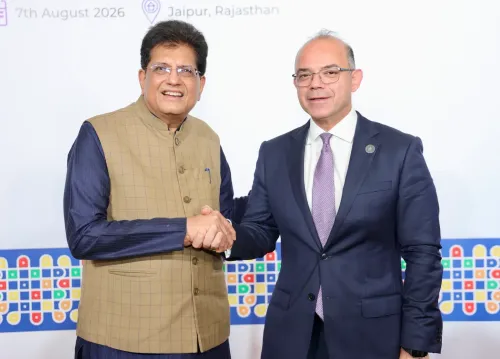
Two civilisations with 5,000-year-old roots sat across the table on Sunday, 15 November 2026 — and the conversation was squarely about the future. Union Commerce and Industry Minister Piyush Goyal met Dr. Mohamed Farid Saleh, Egypt's Minister of Investment and Foreign Trade, in a bilateral meeting focused on expanding trade, attracting investment, and unlocking new corridors of cooperation between the two countries.
What Was on the Table
Goyal described the engagement as a 'good meeting', with discussions spanning three broad pillars: growing the bilateral trade basket, boosting two-way investments, and identifying fresh avenues of cooperation. The civilisational framing — 'two ancient civilisations, a future full of possibilities' — was deliberate, echoing the warm diplomatic register India has consistently used in its outreach to Egypt.
India and Egypt have maintained formal diplomatic ties since 1947 and were among the founding members of the Non-Aligned Movement — a shared history that gives any high-level commercial dialogue an unusually deep foundation to build on.
Egypt as India's Gateway into Africa
This meeting fits a larger strategic pattern. India has been systematically widening its economic footprint across North Africa and the Middle East, seeking to reduce dependence on traditional trade corridors. Egypt is not just a bilateral partner — it is a potential pivot point: a bridge between Indian exporters and the broader African continent, sitting astride the Suez Canal, one of the world's busiest shipping lanes.
For Indian goods eyeing African markets, Egyptian logistics infrastructure and investment climate represent a significant multiplier. That is precisely why New Delhi has treated Cairo as a priority in its economic diplomacy rather than a peripheral engagement.
What to Watch Next
The real test of Sunday's warmth will come in the follow-through: concrete trade targets, investment facilitation mechanisms, and whether a joint commission meeting between the two commerce ministries materialises. Bilateral intent is cheap; a framework agreement or a specific sectoral corridor — in pharmaceuticals, textiles, or infrastructure, for instance — would signal that this meeting moved the needle.
Goyal's post struck a confident note — 'The India-Egypt partnership is set for greater heights!' The question is what institutional scaffolding gets built underneath that ambition.
Point of View
A sectoral corridor, an investment facilitation pact — or remains a well-photographed courtesy call. Given India's current trade ambitions and Egypt's post-IMF-programme reform momentum, the conditions for a substantive upgrade exist; political will on both sides now has to do the work.
NationPress
15 Nov 2026
Frequently Asked Questions
Why did Piyush Goyal meet Egypt's trade minister?
Goyal met Dr. Mohamed Farid Saleh on 15 November 2026 to discuss expanding bilateral trade between India and Egypt, boosting two-way investments, and exploring new avenues of economic cooperation.
What is the current state of India-Egypt trade relations?
India and Egypt have maintained diplomatic ties since 1947 and were both founding members of the Non-Aligned Movement. High-level bilateral trade and investment engagements have continued in recent years, with India viewing Egypt as a strategic gateway into Africa.
Who is Dr. Mohamed Farid Saleh?
Dr. Mohamed Farid Saleh is Egypt's Minister of Investment and Foreign Trade, responsible for overseeing foreign investment flows into Egypt and managing the country's external trade policy.
Why is Egypt important for India's trade strategy?
Egypt sits at a crucial geographic crossroads — bridging North Africa, the Middle East, and sub-Saharan Africa via the Suez Canal. India sees it as a strategic hub through which Indian goods and investment can access the broader African market.
What could come out of the India-Egypt trade talks?
Potential outcomes include agreed bilateral trade targets, investment facilitation mechanisms, and a joint commerce ministry commission. Concrete sectoral agreements — in pharmaceuticals, textiles, or infrastructure — would signal meaningful progress beyond the meeting itself.