Piyush Goyal pays tribute to Gandhi at Cairo's Al Horreya Park
Synopsis
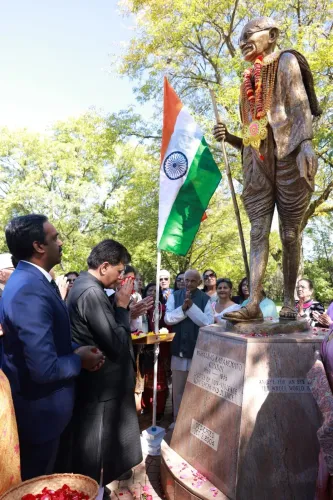
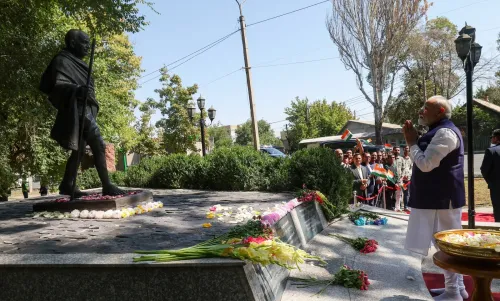
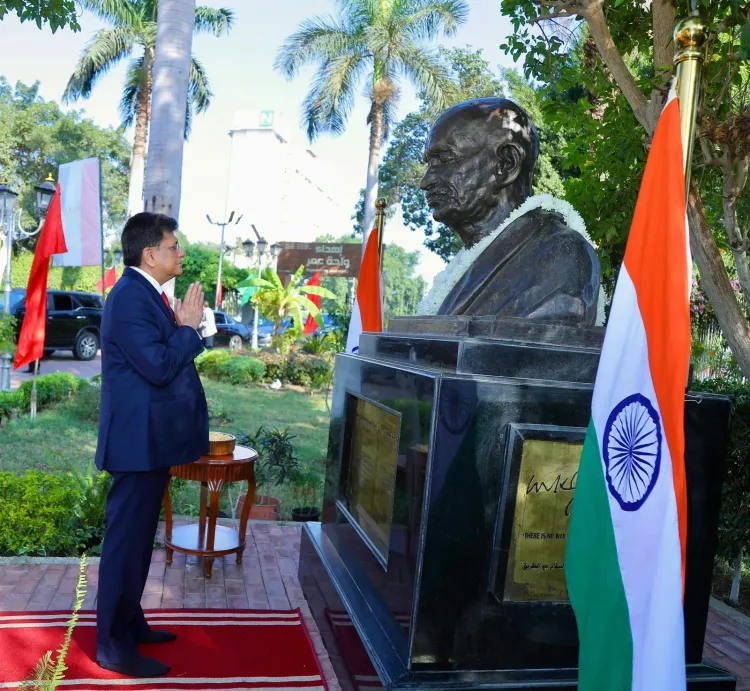
Union Commerce and Industry Minister Piyush Goyal paid floral tributes to the Mahatma Gandhi bust at Al Horreya Park in Cairo's Zamalek district on November 15, 2026, underscoring the deep historical and diplomatic ties between India and Egypt rooted in the Non-Aligned Movement.
Key Takeaways
Union Commerce and Industry Minister Piyush Goyal paid floral tributes to the Mahatma Gandhi bust at Al Horreya Park, Zamalek, Cairo on November 15, 2026 .
Goyal invoked Gandhi's philosophy of truth and non-violence as a bridge strengthening India-Egypt friendship.
India and Egypt established diplomatic relations in 1947 and were key partners in founding the Non-Aligned Movement in the 1950s.
Indian ministers routinely pay tribute at overseas Gandhi memorials as a form of cultural diplomacy during bilateral visits.
Egypt has hosted Gandhi commemorations for decades, reflecting sustained India-Egypt engagement at the people-to-people and state level.
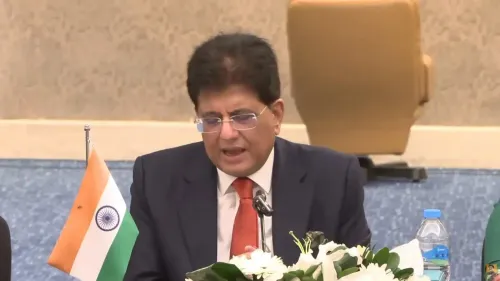
Thousands of miles from New Delhi, a floral tribute placed at a stone bust in a Cairo park carried the quiet weight of a philosophy that outlasted empires. Union Commerce and Industry Minister Piyush Goyal paid his respects to Mahatma Gandhi at the Gandhi bust in Al Horreya Park, Zamalek, Cairo, on Sunday, November 15, 2026, marking a moment of cultural diplomacy as old as India's independence itself.
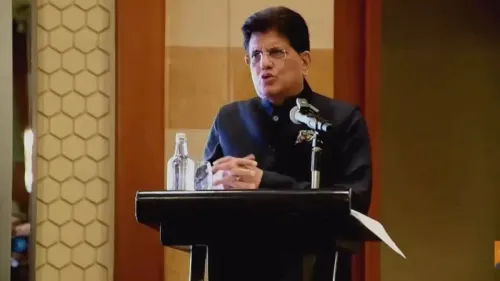
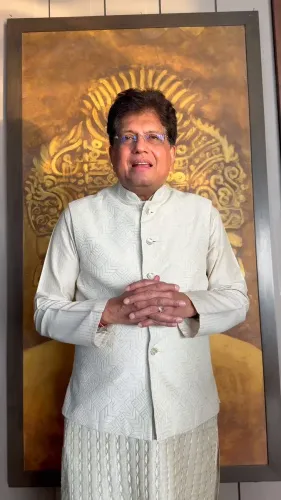
Goyal noted that Gandhi's 'message of truth and non-violence resonates deeply' even at this distance from home, adding that the Mahatma's ideals 'continue to inspire people across the world and strengthen the enduring friendship between India and Egypt.'
A bust in Zamalek and what it represents
Al Horreya Park in the upscale Zamalek district of Cairo is one of the rare public spaces outside India where a permanent Gandhi memorial stands — a physical marker of a relationship that stretches back to the earliest years of both nations' post-colonial journeys. India and Egypt established diplomatic relations in 1947, and within a decade the two countries were co-architects of the Non-Aligned Movement, with Jawaharlal Nehru and Gamal Abdel Nasser among its defining voices. That shared refusal to be drawn into Cold War blocs gave the bilateral relationship a philosophical foundation that Gandhi's presence in an Egyptian park quietly embodies.
Cultural diplomacy as a steady instrument
Indian ministers visiting partner countries have long included Gandhi memorial tributes as a standard, deliberate gesture — part cultural expression, part statecraft. The ritual is not incidental. It signals continuity, reminds hosts of a shared anti-colonial heritage, and frames contemporary trade and diplomatic conversations within a longer moral arc. Egypt has hosted such commemorations for decades, and each visit layers fresh meaning onto a standing tradition.
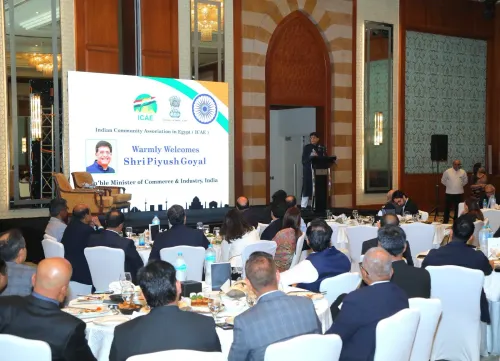
Goyal's presence in Cairo underscores the sustained momentum in India-Egypt engagement — a relationship whose full contemporary agenda, spanning trade, investment, and people-to-people ties, is likely to come into sharper focus through any follow-up statements from the visit.
Gandhi's bust in Zamalek does not need a formal summit to do its work. Sometimes a minister, some flowers, and a few honest words are enough to remind two nations how far back they go — and how much further they intend to travel together.
Point of View
Grounded in Non-Aligned Movement solidarity, has been carefully tended by successive governments, and ministerial visits accompanied by such gestures signal that New Delhi views Cairo as a strategically significant partner in Africa and the Arab world. In an era when middle powers are actively courting non-Western alignments, India's ability to frame its foreign policy in Gandhian moral language gives it a soft-power edge that few competitors can replicate. The visit's commercial or diplomatic outcomes, once disclosed, will reveal how effectively the warm symbolism is being translated into concrete deliverables.
NationPress
15 Nov 2026
Frequently Asked Questions
Why did Piyush Goyal visit Cairo in November 2026?
The exact purpose of Goyal's Cairo visit has not been officially detailed, but he paid floral tributes to the Mahatma Gandhi bust at Al Horreya Park, Zamalek, on November 15, 2026, as part of his engagements in Egypt.
Where is the Mahatma Gandhi bust in Cairo?
The Mahatma Gandhi bust is located in Al Horreya Park in the Zamalek district of Cairo, Egypt, and has long been a site for official Indian tributes during bilateral visits.
What is the history of India-Egypt diplomatic relations?
India and Egypt established diplomatic relations in 1947 and went on to co-found the Non-Aligned Movement in the 1950s under leaders Nehru and Nasser, forging a relationship rooted in shared anti-colonial values.
Why do Indian ministers pay tribute at Gandhi memorials abroad?
Indian ministers routinely pay tribute at overseas Gandhi memorials as a form of cultural diplomacy, using Gandhi's globally recognised ideals of truth and non-violence to reinforce bilateral goodwill and people-to-people connections.
What role does Egypt play in India's foreign policy?
Egypt is a longstanding partner with ties dating to the Non-Aligned Movement era, and India regards it as a key interlocutor in Africa and the Arab world, with engagement spanning trade, investment, and cultural exchange.