Piyush Goyal Co-chairs First Ministerial India-Egypt JTC
Synopsis
Union Commerce Minister Piyush Goyal co-chaired the 7th India-Egypt Joint Trade Committee with Egyptian counterpart Dr. Mohamed Farid Saleh — the first ever at ministerial level — aligning Viksit Bharat 2047 with Egypt Vision 2030 and signing Minutes to advance bilateral trade and economic cooperation.
Key Takeaways
The 7th India-Egypt Joint Trade Committee was held on November 15, 2026 — the first in the committee's history to be convened at the ministerial level.
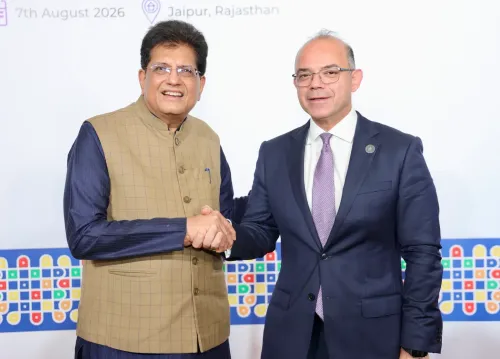
Piyush Goyal co-chaired the meeting alongside Dr.
Mohamed Farid Saleh , Egypt's Minister of Investment and Foreign Trade.
Both sides linked India's Viksit Bharat 2047 vision with Egypt's Vision 2030 framework as a shared development philosophy.
The JTC agreed to strengthen the full range of bilateral trade and economic ties and identified priority areas for future cooperation.
The formal signing of the Minutes creates a binding record and triggers the implementation phase of agreed commitments.
The elevation follows India's broader strategy of upgrading institutional dialogue with African and Middle Eastern partners under its Global South engagement.
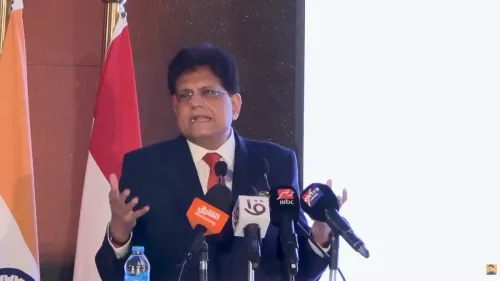
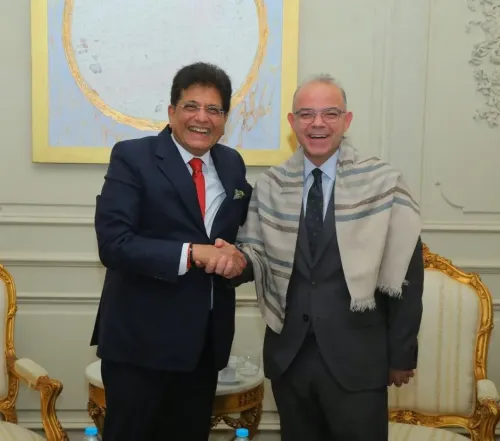
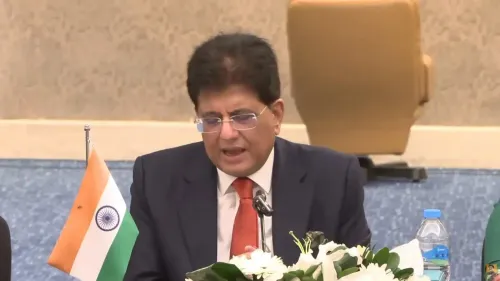
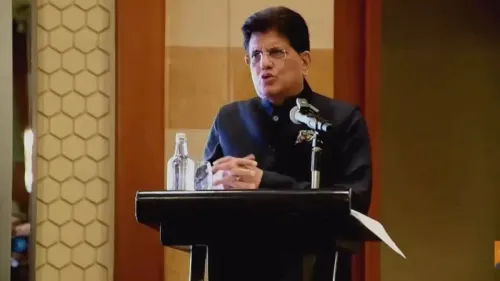
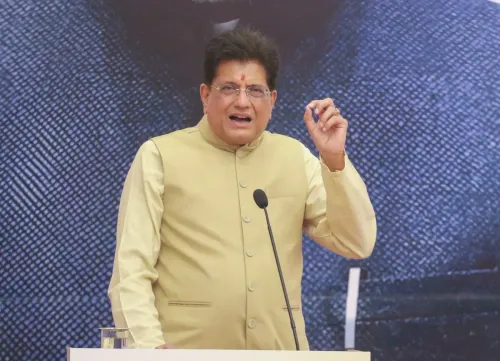
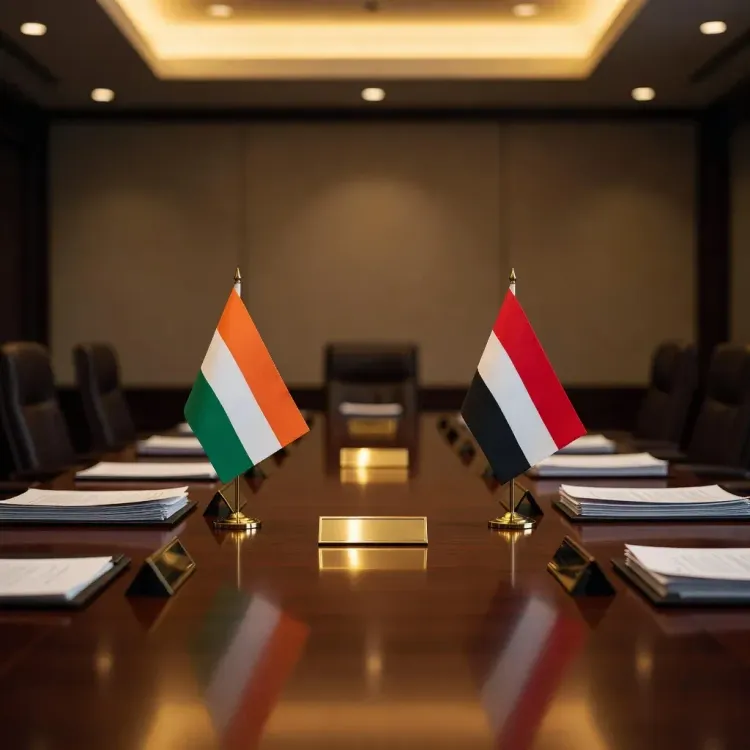
For the first time in the history of the India-Egypt Joint Trade Committee, both sides pulled their trade dialogue out of the officials' room and placed it squarely at the ministerial table — a deliberate upgrade that signals how seriously New Delhi and Cairo are treating each other as economic partners. Union Commerce and Industry Minister Piyush Goyal co-chaired the 7th India-Egypt Joint Trade Committee (JTC) on November 15, 2026, alongside Dr. Mohamed Farid Saleh, Egypt's Minister of Investment and Foreign Trade — the first time the JTC has convened at the ministerial level in its entire history.
From Officials to Ministers: Why the Elevation Matters
The India-Egypt JTC has met six times before — always at the level of officials. Elevating it to ministers is not ceremony; it compresses the decision-making cycle. When ministers sign off in the room, the mandate to implement is immediate and unambiguous. Goyal framed the moment by aligning Viksit Bharat 2047 — India's blueprint to achieve developed-economy status by the centenary of independence — with Egypt Vision 2030, Cairo's own long-term development strategy. 'Two journeys, one spirit: prosperity, dignity and opportunity for our people,' he wrote, capturing the symmetry both sides are keen to project.
The committee agreed to work closely to strengthen the 'full range' of trade and economic ties, identified priority areas for future cooperation, and formally signed the Minutes of the meeting — a procedural step that creates a binding record and sets the clock ticking on follow-up action. Each of these three outcomes is a rung on the same ladder: from dialogue, to direction, to documentation.
India's Deepening Africa-Middle East Playbook
This ministerial JTC fits neatly into a broader strategic pattern. India has systematically used Joint Trade Committees and bilateral institutional mechanisms to deepen economic links across Africa and the Middle East, explicitly framing them under its Global South engagement strategy. The technique — aligning India's long-term national vision with a partner country's own development framework — has become a signature move: it makes cooperation feel less transactional and more structural.
Egypt, sitting at the intersection of North Africa, the Arab world, and the Suez trade corridor, is a particularly valuable node in that network. Indian exporters and Egyptian investors both have skin in the game, and the identification of 'priority areas' at this meeting is the starting gun for the next phase: sector-specific negotiations that could eventually feed into a preferential trade arrangement.
What Comes Next for India-Egypt Trade
The signing of the Minutes is the floor, not the ceiling. The real test of this ministerial-level upgrade will be whether the priority sectors identified inside the room translate into tangible trade flows — contracts, investments, and regulatory facilitation — within a defined timeline. Watch for the announcement of the 8th JTC session and its location: a quick turnaround, or a session held in Cairo, would signal that both sides intend to convert the momentum of this first ministerial meeting into something durable.
India and Egypt have just drawn the roadmap. The question now is the speed of the journey.
Point of View
High-signal diplomatic move: it accelerates decision timelines without requiring a full state-visit architecture. The explicit pairing of Viksit Bharat 2047 with Egypt Vision 2030 reflects New Delhi's deliberate strategy of anchoring bilateral trade in shared long-term narratives rather than transactional deals — making partnerships harder to unwind when political winds shift. Egypt's position as a Suez-corridor economy gives India a strategically important node in its Africa-Middle East outreach. The real policy test, however, lies in whether the 'priority areas' agreed inside the room produce measurable trade flows before the next JTC convenes.
NationPress
15 Nov 2026
Frequently Asked Questions
What is the India-Egypt Joint Trade Committee?
The India-Egypt Joint Trade Committee (JTC) is a bilateral mechanism established to review and advance trade and economic ties between India and Egypt. It has met seven times in total, with the 7th session in November 2026 being the first to be held at the ministerial level.
What was decided at the 7th India-Egypt JTC?
The two sides agreed to strengthen the full range of bilateral trade and economic ties, identified priority areas for future cooperation, and formally signed the Minutes of the meeting — a step that records commitments and sets the stage for implementation.
What is Viksit Bharat 2047?
Viksit Bharat 2047 is India's national vision to achieve developed-economy status by 2047, the centenary of Indian independence. It frames India's domestic and foreign economic policy priorities, including trade partnerships with countries like Egypt.
Who represented Egypt at the ministerial JTC?
Dr. Mohamed Farid Saleh, Egypt's Minister of Investment and Foreign Trade, co-chaired the 7th India-Egypt JTC alongside India's Union Commerce and Industry Minister Piyush Goyal.
Why is the ministerial elevation of the India-Egypt JTC significant?
Raising the JTC from officials to ministers shortens the decision-making cycle and signals stronger political will. It fits India's broader strategy of deepening institutional trade ties with African and Middle Eastern nations under its Global South engagement framework.